As AI assistants begin to compare prices, recommend products and act on behalf of consumers, marketers are being forced to rethink what loyalty really means. Repeat purchase may no longer be enough when an algorithm can constantly search for a better option.
For decades, loyalty was relatively easy to measure.
A customer returned to the same supermarket, renewed the same subscription, stayed with the same airline or continued buying the same brand of skincare. Marketers interpreted repeat behaviour as preference and built loyalty programmes around it through points, rewards, upgrades and personalised offers.
Artificial intelligence is beginning to complicate that model.
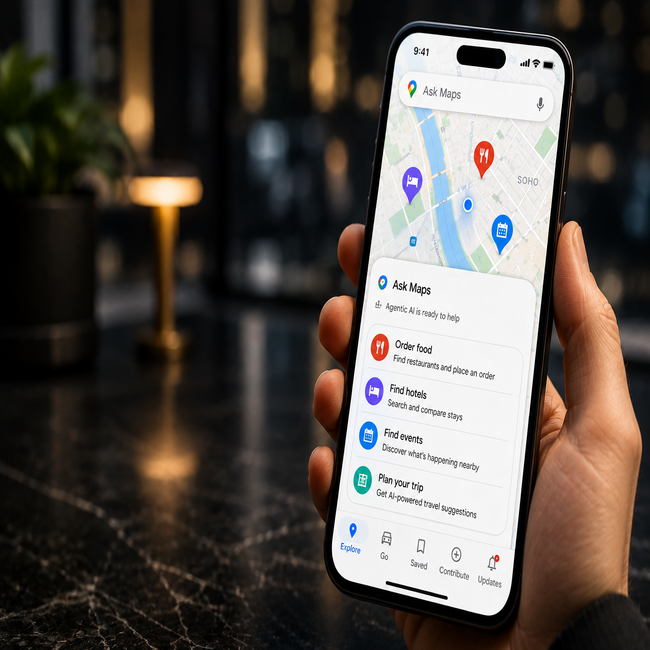
Consumers are increasingly using AI tools to research products, compare alternatives, summarise reviews and shortlist brands. The next stage could go further. Personal AI agents may manage subscriptions, evaluate renewal offers, book travel and make purchases within rules set by the user.
That creates a new intermediary between the customer and the brand.
A person may still like a company, belong to its loyalty programme and have years of purchase history. But if their AI assistant continuously compares price, quality, delivery times, cancellation terms and customer reviews, habit alone may no longer guarantee retention.
This is why loyalty is becoming more conditional.
Accenture’s 2026 Consumer Pulse Research, based on 25,590 consumers across 16 countries, offers one of the clearest signals of the shift. Seventy-four per cent of respondents said they would trust a personal AI agent more than their best friend to make a purchase on their behalf. Thirty-two per cent were prepared to delegate purchase decisions directly to an agent, while more than half said they would specify which brands the system should consider.
However, even among consumers identified as behaviourally loyal, 37% said they would allow an agent to switch brands if another option offered a better fit.
That creates an uncomfortable question for marketers.
Was the customer genuinely loyal, or was switching simply too much work?
Loyalty is moving before the purchase
Traditional loyalty strategies have mostly focused on what happens after acquisition.
A customer joins a programme, makes a transaction, collects points and receives offers designed to encourage another purchase. AI changes the competitive moment because discovery and comparison increasingly happen before the customer reaches a brand’s website, app or store.
An AI assistant looking for a hotel can evaluate price, location, amenities, cancellation policies and guest reviews within seconds. Another comparing mobile plans can assess data allowances, contract terms and customer service complaints. An agent evaluating insurance could theoretically analyse premiums, exclusions and renewal terms before presenting a shortlist.
The practical effect is that brands may be eliminated before they have an opportunity to persuade the customer directly.
That pushes loyalty much further upstream.
A brand now has to be understandable to the machine making the comparison as well as memorable to the person making the final decision.
Product descriptions need to be accurate. Prices need to be current. Policies need to be clear. Loyalty benefits need to be easy to verify. Availability and service information need to be consistent across websites, apps and third-party platforms.
If an AI system cannot confidently understand what a brand offers, that brand may never enter the consideration set.
First-party data could become particularly valuable in this environment.
Large language models can analyse public information across the internet, but brands still possess something external AI systems do not automatically have: direct knowledge of individual customers.
Purchase histories, declared preferences, service interactions and loyalty behaviour can help businesses understand what matters to a specific person.
Kelly Mahoney, Chief Marketing Officer at Ulta Beauty, described the advantage simply during an industry discussion at Cannes: “The winner is going to be the one that understands the customer.”
For marketers, the value lies not in using that knowledge to send more messages but in improving the proposition itself.
A travel company may know that a customer consistently chooses direct flights rather than the cheapest option. A beauty retailer may know that a member prioritises a particular ingredient or product category. A grocery platform may understand that reliable delivery matters more to a household than a small price reduction.
Those preferences could help a brand remain competitive when an AI agent compares alternatives.
India could become an important test market for this behaviour.
Adobe’s 2026 India research found that 60% of consumers were interested in creating a personal AI agent, the highest level reported across Asia Pacific. Fifty-five per cent said they would interact with a brand’s AI agent, while 58% were comfortable with agent-to-agent interactions. Another 61% were willing to allow their personal AI agent to communicate with a brand’s human representative.
The customer journey could therefore involve more than the traditional brand-consumer relationship.
In some cases, a customer’s agent may negotiate with a brand’s agent before either side brings a person into the conversation.
That changes what marketers are managing. Loyalty is no longer only a communications programme. It begins to involve product information, pricing, commerce infrastructure, customer service and data governance.
Personalisation is becoming a trust test
AI also promises to make personalisation far more precise.
Brands can analyse behavioural signals, predict customer needs and adapt messages or offers in real time. Yet deeper personalisation comes with a clear risk: knowing more about the customer does not necessarily mean the customer wants the brand to use everything it knows.
Amperity’s 2026 Consumer Priorities Report, based on 1,000 US consumers, illustrates this tension.
Sixty per cent said they had chosen a brand they had not previously considered because it was recommended by AI. At the same time, 75% said they were more loyal to brands that were transparent about how customer data was being used.
More than half, 57.5%, said intrusive personalisation made them less likely to purchase.
There is another significant gap.
While 72% of consumers said personalised experiences were important when choosing brands, only 15% believed the recommendations they received were consistently relevant.
The data challenges one of marketing’s long-standing assumptions: more personalisation does not automatically create more loyalty.
A reminder about an unused loyalty benefit may feel useful. A personalised offer based on information the customer does not remember sharing may feel unsettling.
The difference is often permission.
Adobe’s research across Asia Pacific reinforces this point. Duncan Egan, Adobe’s Vice President of Enterprise Marketing for Asia Pacific and Japan, has argued that consumer acceptance of AI depends on “defined, transparent contexts with options for human support.”
For loyalty marketers, that could become a useful operating principle.
AI should make the customer experience easier without making the relationship harder to understand.
Customers increasingly need to know what data is being used, why a recommendation was made and whether they can correct an assumption.
Preference centres may therefore have to evolve.
Today, they mostly allow users to control email frequency, notifications and marketing channels. In an AI-driven environment, they may need to capture more explicit choices: what information customers want brands to remember, what types of recommendations they find useful and which decisions they are comfortable allowing AI to automate.
Directly stated preferences could become more useful than simply inferring intent from every click.
Points still work, but they cannot fix bad experiences
None of this means traditional loyalty programmes are becoming irrelevant.
Points, cashback, exclusive access, free products and upgrades continue to provide tangible reasons for consumers to stay.
They also give marketers something increasingly valuable: permissioned customer data.
Antavo’s Global Customer Loyalty Report 2026, based on more than 3,000 marketing and loyalty professionals, 10,000 consumers and over 500 million member actions, found that 89% of businesses believed their loyalty programmes generated value they would not otherwise receive.
The appetite among consumers remains strong too. Four in ten said they were more likely to join a loyalty programme than they had been a year earlier.
However, the same research identified a significant operational problem. Ninety-one per cent of programme owners said they struggled to analyse loyalty data effectively.
AI could help close that gap.
Rather than sending the same discount to every inactive customer, systems can identify why engagement has dropped.
A regular shopper may stop purchasing because a favourite product is unavailable rather than because they have lost interest in the brand. An airline member may value flexible rebooking more than lounge access. A bank customer may need faster service rather than another rewards offer.
AI can help distinguish between those situations.
But it cannot compensate for a weak value proposition.
A confusing redemption process remains confusing even when AI manages it. Poor customer service still damages trust. A reward that is difficult to use will not become more valuable simply because an algorithm chose it.
Service is therefore becoming inseparable from loyalty.
Zendesk’s CX Trends 2026 research, which covered more than 11,000 consumers and business respondents across 22 countries, found that 81% wanted customer service representatives to continue conversations from where previous interactions ended.
Seventy-four per cent said they were frustrated when required to repeat information, while 95% expected companies to explain decisions made by AI.
Zendesk CEO Tom Eggemeier summed up the challenge: “AI is not the differentiator anymore. How intelligently you apply it is.”
For loyalty teams, intelligent use may be almost invisible.
AI might identify a potential delivery failure before the customer complains. It might route a complicated issue directly to the employee best equipped to handle it. It could prevent someone from receiving an advertisement for a product they just purchased.
Those interventions may create more loyalty than another promotional message celebrating the company’s AI capabilities.
The loyalty scorecard has to widen
Traditional loyalty metrics will remain useful.
Programme enrolment, repeat purchase rates, customer lifetime value, retention and active membership still reveal important behaviour.
But they may not fully explain whether a relationship is strong enough to survive AI-led comparison.
Marketers may eventually need to monitor different signals.
Does the customer instruct an AI assistant to prioritise the brand?
Are loyalty benefits visible when agents compare products?
Can an AI system accurately understand the company’s pricing and policies?
Does personalisation increase engagement without reducing trust?
How often does an automated service interaction require human intervention?
These questions point toward a distinction between behavioural loyalty and active loyalty.
Behavioural loyalty describes what the customer repeatedly did.
Active loyalty reflects whether the customer deliberately chooses to preserve the relationship after alternatives have been evaluated.
The difference could expose weaknesses hidden inside retention dashboards.
A subscription renewal may indicate satisfaction, but it could also mean the customer forgot about it. A long-standing telecom relationship might demonstrate loyalty, or simply reflect the inconvenience of switching providers.
If AI agents remove much of that inconvenience, retention becomes a more direct test of whether the relationship still offers value.
That makes loyalty an organisation-wide responsibility rather than a function sitting inside CRM or marketing.
A loyalty programme cannot promise personal treatment if customer service cannot remember the last interaction. Marketing cannot create trust if product terms are difficult to understand. An AI concierge cannot strengthen the relationship if customers cannot tell whether they are talking to a machine or reach a person when something goes wrong.
Jason Klarman, Chief Digital and Marketing Officer at Fox News Media, described loyalty simply during a Cannes discussion: “It’s a relationship that a consumer has.”
That definition may become more useful as AI reshapes the mechanics around it.
Brands are increasingly serving two audiences simultaneously. They need to remain credible and understandable to the machine doing the comparison while continuing to mean something to the human making the decision.
AI can help marketers identify needs earlier, personalise benefits and reduce friction. It can also expose weak pricing, remove switching barriers and make competitors easier to discover.
The goal, therefore, is not to make consumers loyal to an algorithm.
It is to build a relationship strong enough that the consumer tells the algorithm not to forget the brand.
In an era where comparison can happen constantly and switching may require almost no effort, loyalty will increasingly depend on something harder to manufacture than points: whether the brand continues to earn preference every time the choice is made again.
Disclaimer: All data points and statistics are attributed to published research studies and verified market research. All quotes are either sourced directly or attributed to public statements.
Related Articles