


WhatsApp removed hidden AI chatbot instructions from its help pages after researchers found guidance discouraging referrals to privacy regulators.
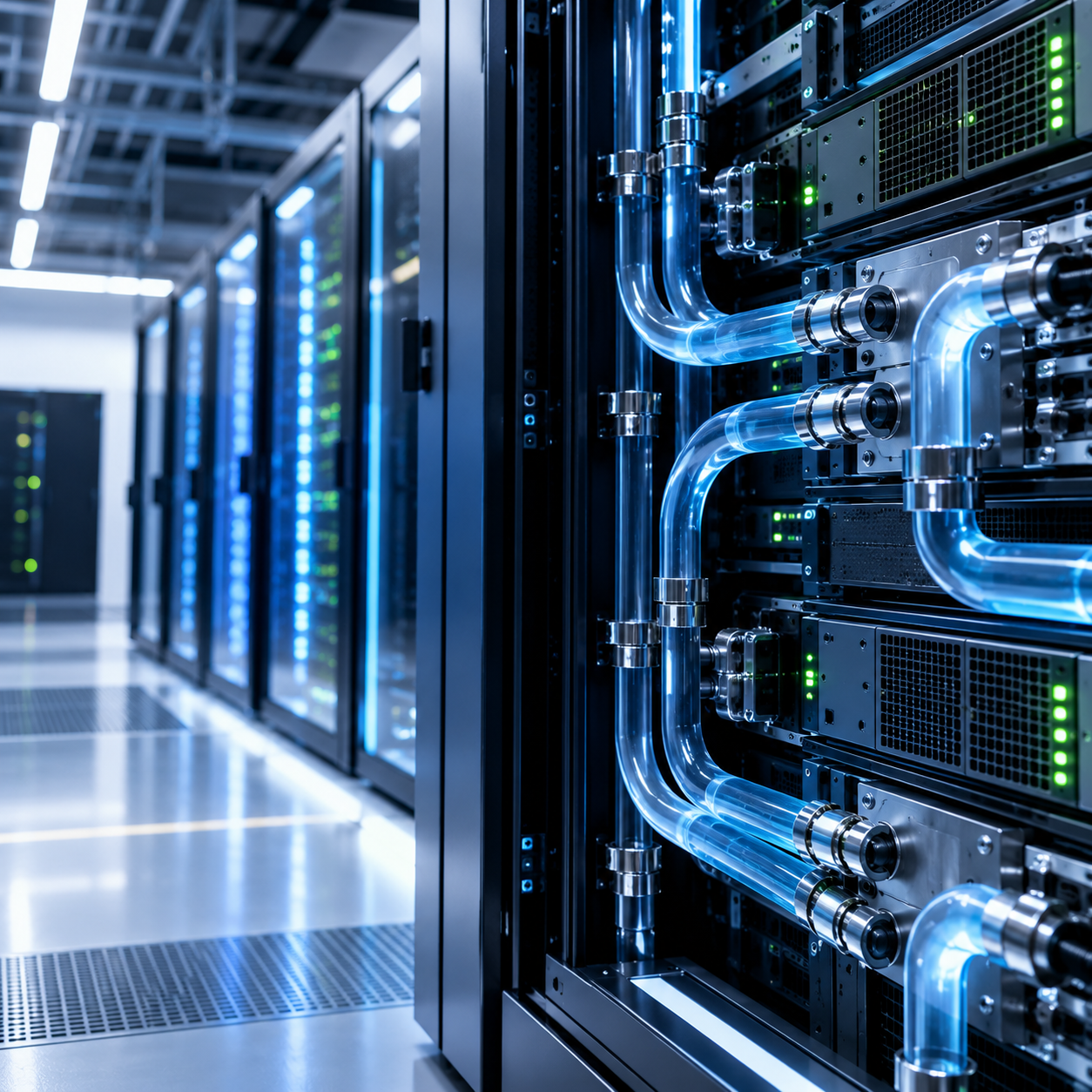
The AI data centre liquid cooling market is projected to reach $20.39 billion by 2032, growing at 34% CAGR as AI workloads drive demand for advanced cooling systems.

Union Minister Jitendra Singh highlights nuclear energy's role in powering India's AI infrastructure and data centres, citing the 100 GW nuclear capacity target by 2047.

WEF urges MENA countries to classify AI data centres as critical electricity loads amid rising power demand, water shortages and cooling challenges.

Gartner warns that over $3.5 trillion in AI infrastructure spending could face impairment risks by 2030, with revenue unlikely to support planned investments.

Global AI chip sell-off hits Indian infrastructure stocks, with Hitachi Energy, GE Vernova, Sterlite Tech and HFCL declining amid concerns over Chinese semiconductor competition.

India's AI data centre expansion faces protests over water, power and environmental concerns as Amazon, Google and Microsoft increase infrastructure investments.

AI adoption is accelerating, but scaling it requires less visible investments in governance, security, data readiness, evaluation and organisational alignment.

LinkedIn co-founder Reid Hoffman says the AI data centre investment boom is supporting the US economy and helping keep it out of recession.

IBM and Yotta have launched a sovereign agentic AI platform in India, combining watsonx Orchestrate with Shakti Cloud to deploy and govern enterprise AI agents.

Zifo’s AI-powered TLFGenix has been named runner-up in the 2026 CDISC AI Innovation Challenge for automating clinical trial tables, figures and listings.

Fuel Cycle is opening a GCC in Navi Mumbai focused on AI, engineering and product development, with an initial planned capacity of 50 employees.

Alibaba Cloud will add new cloud regions and expand data centre capacity across Europe, the Middle East and Asia as enterprise AI demand grows.

Mitsubishi Electric has unveiled a Chip-to-Grid blueprint integrating power and cooling infrastructure for AI factories powered by NVIDIA computing.

Persistent Systems has received Databricks Brickbuilder Specialisation for its iAURA 2.0 solution focused on governed AI adoption across BFSI enterprises.

Sanjay Trehan explores how AI, first-party data, hyper-personalisation and MarTech-AdTech convergence are reshaping modern customer experiences.

SBI has secured 10 acres in Telangana’s Bharat Future City for a proposed data centre as the region attracts major AI and cloud infrastructure projects.

The UN and Google have launched the UN System Data Commons, giving AI agents direct access to authoritative global statistics through an AI-ready platform.

Crusoe has raised $3.9 billion at a $30.9 billion valuation to expand its AI data centres, cloud infrastructure and modular Crusoe Spark facilities.

Anthropic says seven China-based AI labs used unauthorised distillation campaigns to extract Claude capabilities, with some activity exposing sensitive user and corporate data.

Baroda Global Shared Services has appointed Prakash Patel as CISO and Privacy Officer to strengthen cybersecurity, privacy and digital resilience.

Buildots has raised $130 million to expand its AI construction platform across data centres and major infrastructure projects, taking total funding to $297 million.

Digital Divide Data has opened its first India GCC in Dehradun for AI, robotics and generative AI, with plans to expand from 150 to up to 1,000 employees.

Sam Altman says 38,000 ChatGPT queries use roughly the water needed for one California almond, but independent analysis has questioned the comparison.
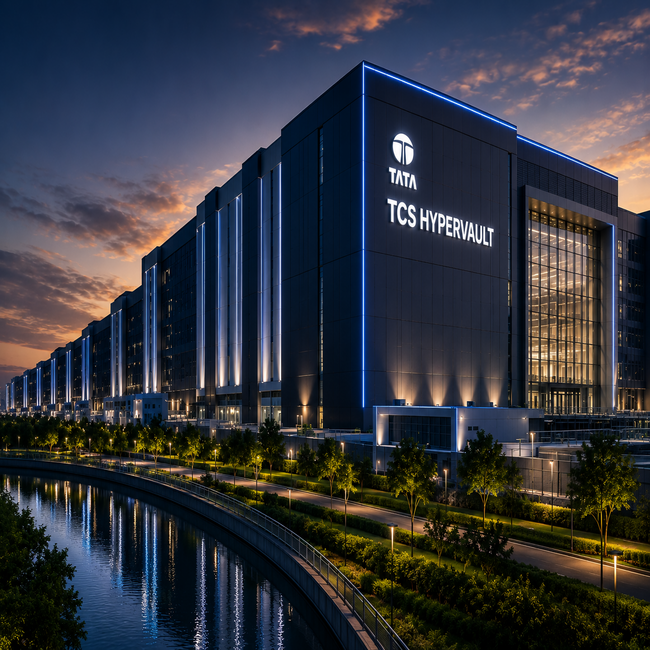
TCS' HyperVault plans a 1GW AI data centre campus in Hyderabad, with up to ₹70,000 crore investment and infrastructure for AI companies and hyperscalers.

Global AI infrastructure investment could reach $31.6 trillion by 2050 as spending on data centres, chips and computing capacity accelerates, PwC projects.

Commerce has appointed Sri Subramanian as Head of Data and AI, where he will lead data strategy, AI, analytics and efforts to translate technology into business outcomes.

Sony Music Publishing, Warner Chappell and other publishers have sued Anthropic, alleging copyrighted music was illegally obtained to train Claude AI.
AWS will deploy two million additional Nvidia GPUs across its global infrastructure in 2027 and 2028 as demand for large-scale AI computing continues to grow.

Octave Intelligence opens a 2 lakh sq ft technology centre in Hyderabad and plans to scale to 2,000 engineers across AI, software, data, cloud and product development.

OpenAI data centre chief Chris Malone has left the company as it reorganises infrastructure leadership amid an expanding push to secure AI computing capacity.

Huawei has proposed supplying over 2,000 Ascend AI chips for Egyptian government data centres as the US explores a rival offer involving Nvidia, AMD and Microsoft.

Hightouch appoints 20-year Google veteran Jitendra Kumar as Head of Commercial, Advertising to expand its agency relationships and agentic marketing business.

Ignosis AI appoints Sneha Jain as Head of Marketing to lead brand, positioning and go-to-market efforts as it expands its AI offerings for financial services.

Forcepoint appoints former Proofpoint executive Vincent Merlin as CMO to lead global marketing and accelerate adoption of its AI Data Security platform.

OpenAI Chief Economist Ronnie Chatterji highlights adaptability, analytical rigour, collaboration and independent thinking as key skills for AI economic research.

Nvidia AI server prices are reportedly set to rise by more than 15% in many cases as soaring memory costs affect Vera Rubin and Grace Blackwell systems.

Andhra Pradesh has approved a Rs 31,387 crore, 512 MW green AI data centre in Visakhapatnam, expected to create up to 1,000 jobs.

HubSpot’s Adarsh Noronha explains how AI, Loop Marketing and human-led strategy can help Indian businesses adapt to fragmented buyer journeys and drive growth.

Xebia becomes an OpenAI Select Partner to help enterprises build and scale agentic AI across data, software and business workflows.

Birlasoft’s Satinder Juneja discusses composable MarTech stacks, agentic AI, synthetic profiles and why brand trust will remain central to AI-led discoverability.
IIT Bombay's online ePGD in Computer Science and Engineering covers AI, generative AI, computer vision, cybersecurity and advanced computing systems.
Sonata Software appoints Hariprasad Rebala as Chief AI Officer to lead its AI strategy and strengthen enterprise AI transformation capabilities.

Ephicacy appoints Dr. Shekhar Thumake as Head of AI to lead enterprise AI strategy and develop agentic AI capabilities for clinical data operations.

Uniphore expands Marketing AI with AI agents that connect customer data, audience building, campaign activation and measurement across existing martech systems.

AI is reshaping digital marketing across search, content, personalisation and measurement, pushing brands to rethink data, workflows and human oversight.

L&T is entering the AI factory market with a 10,000 NVIDIA B300 GPU deployment in Chennai for US-based AI cloud company Together AI.

Island Computing will launch its sovereign cloud platform in India on August 15, targeting AI, SaaS, enterprise and regulated workloads.

Sophelio has launched a NeurIPS 2026 challenge asking AI researchers to reconstruct magnetic structures inside fusion systems without magnetic sensor data.

Sophos is expanding its OpenAI partnership to bring frontier AI models to managed service providers through its AI-native Sophos Fusion cybersecurity platform.
