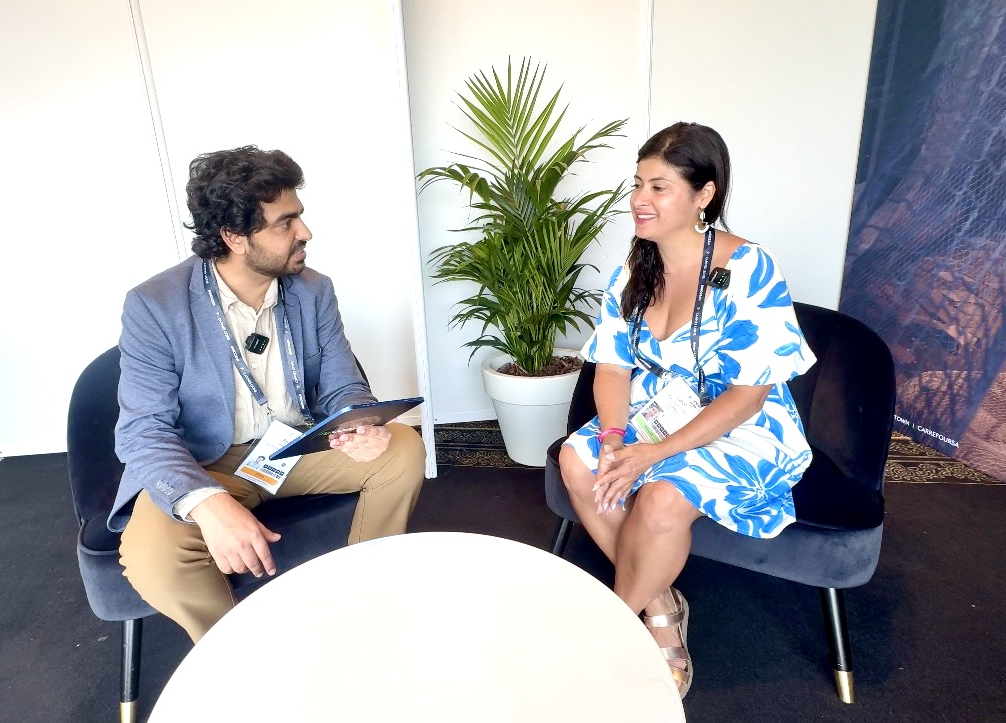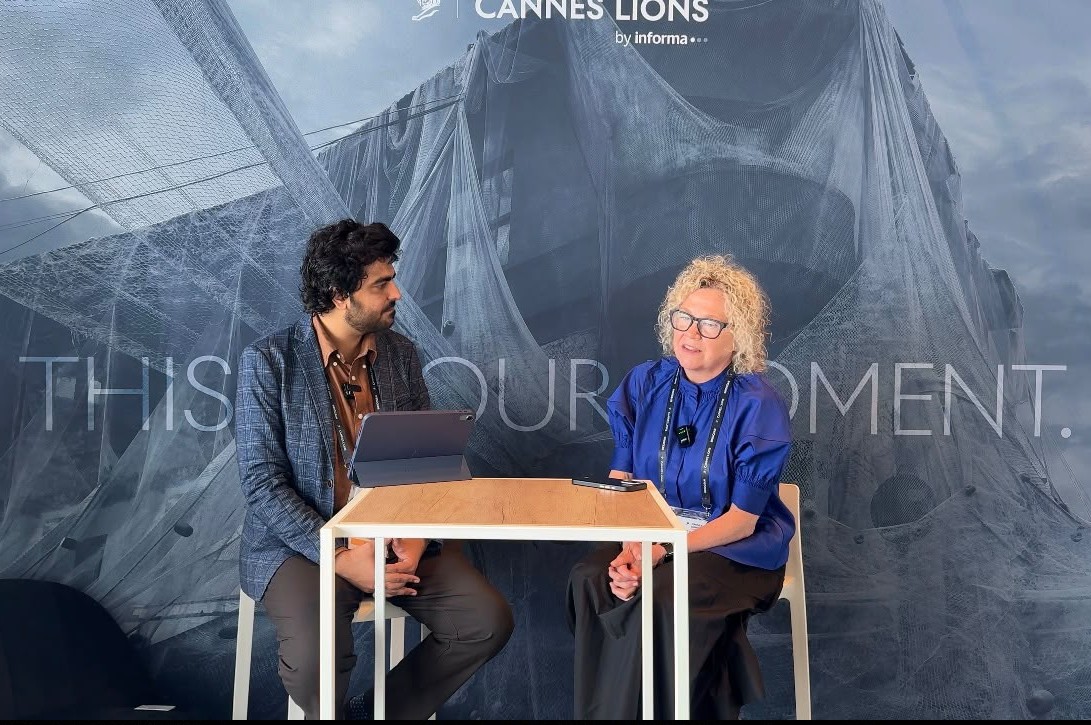

At Cannes Lions 2026, where artificial intelligence has dominated conversations across panels, corridors and brand spaces, Tracey Cooke, CMO, SVP, Head of Marketing and Commercialization, Nestlé Canada, offered a grounded reminder for marketers: technology may be changing the industry, but the fundamentals of brand building remain deeply human.
Speaking to Brij Pahwa on the sidelines of Cannes Lions 2026, Cooke described the festival as “Las Vegas for advertising”, with “a lot going on every hour of the day, right through the night.” This year, she also served as a juror for the Creative Data category, an experience she said gave her the opportunity to spend two days discussing “incredible work.”
For Cooke, the strongest work in the Creative Data category was not simply work that used data as an add-on. The winning campaigns, she said, stood apart because data was central to the idea itself.
“Data has to be the driving force behind the idea and tech,” she said, adding that the jury had several discussions around separating a simple insight from “an aggregation of incredible data sets that actually unlock something we couldn’t do before.”
As AI continues to dominate Cannes conversations, Cooke said the industry needs to bring the discussion back to human judgment. While she acknowledged that AI is “more than a tool”, she said that in the context of creativity, advertising and marketing, marketers must still rely on critical thinking, discernment, courage and emotional intelligence.
“Ideas can come from AI, for sure,” she said, “but it’s that discernment and judgment that will help us make sure that we do the right things for our business and our brands and what consumers will actually ultimately engage with.”
Cooke said the industry may now be entering an age where critical thinking, humanities, human discourse, feelings and emotions become more important than ever. “Those don’t come from machines yet,” she said.
One of her strongest concerns is the risk of AI pushing the industry toward what she called a “sea of sameness.” In marketing, Cooke said, distinctiveness is not optional. It is the competitive advantage.
“Your competitive advantage is actually being different and having a point of view,” she said. “So if we’re all sort of moving to the mean, then what’s going to separate the brands outside the mean?”
Cooke said she can already see this risk emerging on some digital platforms, where AI-generated imagery is beginning to flatten the emotional and aesthetic experience for users. Without naming the platform, she said it had once been a place of “beauty and intention and design”, but now had a growing volume of AI-generated images where users could “immediately feel” the difference.
For legacy brands such as KitKat, Cooke said the ability to stay relevant through decades of disruption comes from respecting the core idea of the brand while adapting it to culture. She pointed to KitKat’s long-running platform, “Have a break, have a KitKat”, as an example of a brand idea that has stood the test of time.
“Never underestimate the power of a break,” she said. “If you can find a gem like that, your job as a marketer, as a brand builder, as an advertiser, is to pay homage to that and make sure that you keep that relevant.”
She added that while society, demographics and cultural habits change, brands must continue to find the right moments to enter culture in ways that feel relevant. For Cooke, this requires a deep understanding of the brand’s core tenets, its consumers and its distinctive brand assets.
“Consumers don’t want to work too hard to think,” she said. “If you have those shortcuts, in addition to having a really strong platform, I think then you start to build the elements of brand that can stand the test of time.”
Cooke also reflected on how global brands must balance scale with cultural nuance. Speaking about Nescafé, she said Nestlé Canada had worked on the idea of Nescafé as “how the world says coffee”, a proposition built on the brand’s global ubiquity. She also cited Maggi as a brand that shows up differently across markets, including India, because consumers use the product in culturally specific ways.
For marketers, she said, the question is not only how a brand travels globally, but how its portfolio and usage adapt locally. “As a marketer, you have to figure out, do I need a sauce or do I need a meal?” she said.
Cooke said Canada’s diversity gives marketers there a particular advantage when working on global brands. She described Canada as “truly a mosaic”, with people from over 200 places of origin and 275 languages spoken. That diversity, she said, becomes “a superpower” for a company like Nestlé, because it helps bring broader cultural understanding into the marketplace.
In a rapid-fire segment, Cooke said the one marketing buzzword she would ban for a while is AI, not because it should be ignored, but because the industry needs to return to fundamentals. She said marketing and advertising often get distracted by “shiny toys”, when the focus should remain on the job to be done.
Asked what AI will never replace, Cooke answered: “Humanity and emotional engagement.”
She pointed to a Nescafé campaign built around jars, inspired by the way consumers reuse Nescafé jars to store everyday items, from pasta to screws. The campaign, she said, resonated because it reflected what people were already doing in their lives.
“Brand can actually demonstrate a depth of understanding,” she said. “AI, I don’t think can do that. And that’s the job of a marketer.”
On brands she admires outside Nestlé, Cooke named KFC in Canada, saying it is doing “incredible work.” Asked what Cannes gets right, she said it celebrates “the power of creativity.” Asked what Cannes gets wrong, she replied: “The politics.”
And while she said she is “probably a gut girl”, Cooke clarified that instinct still needs to be informed by data. “You can’t just go on your gut,” she said.
Her advice to her 25-year-old self was to stay open and curious. Cooke described her own career as “squiggly”, noting that she studied science and genetics before entering marketing.
“Careers don’t necessarily have to be linear,” she said. “Give yourself grace to be open to new experiences.”
Related Articles