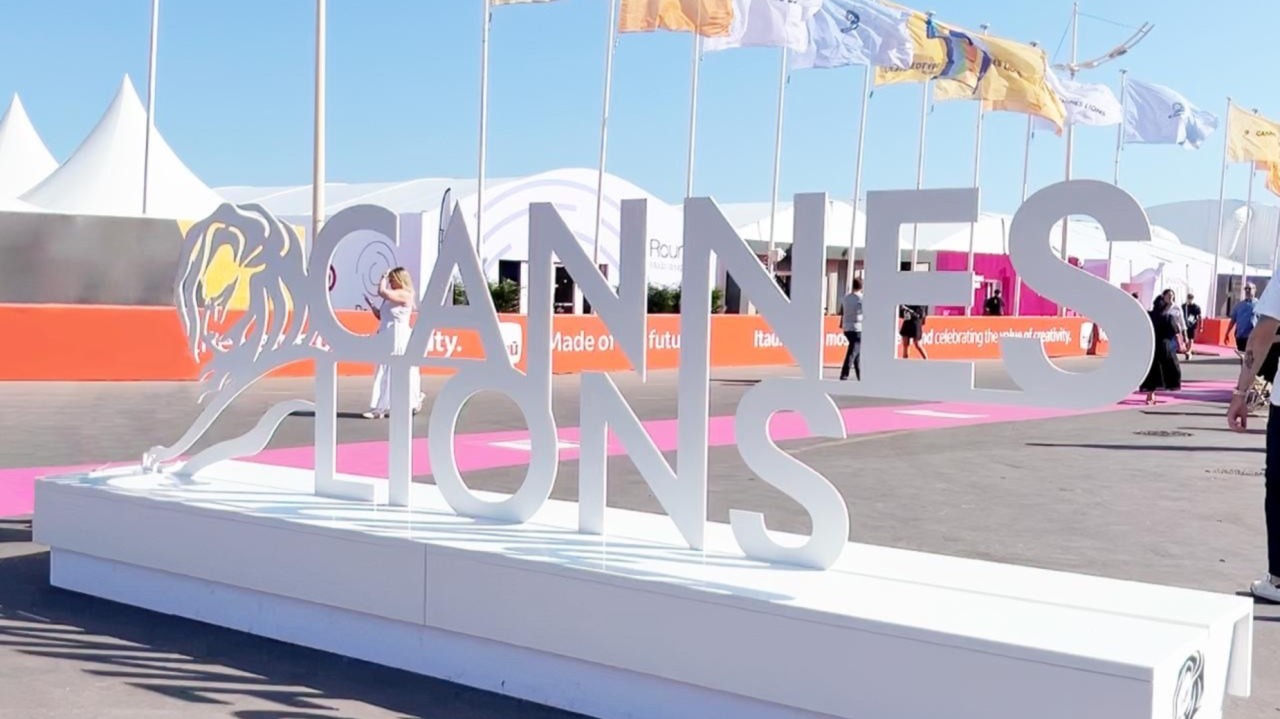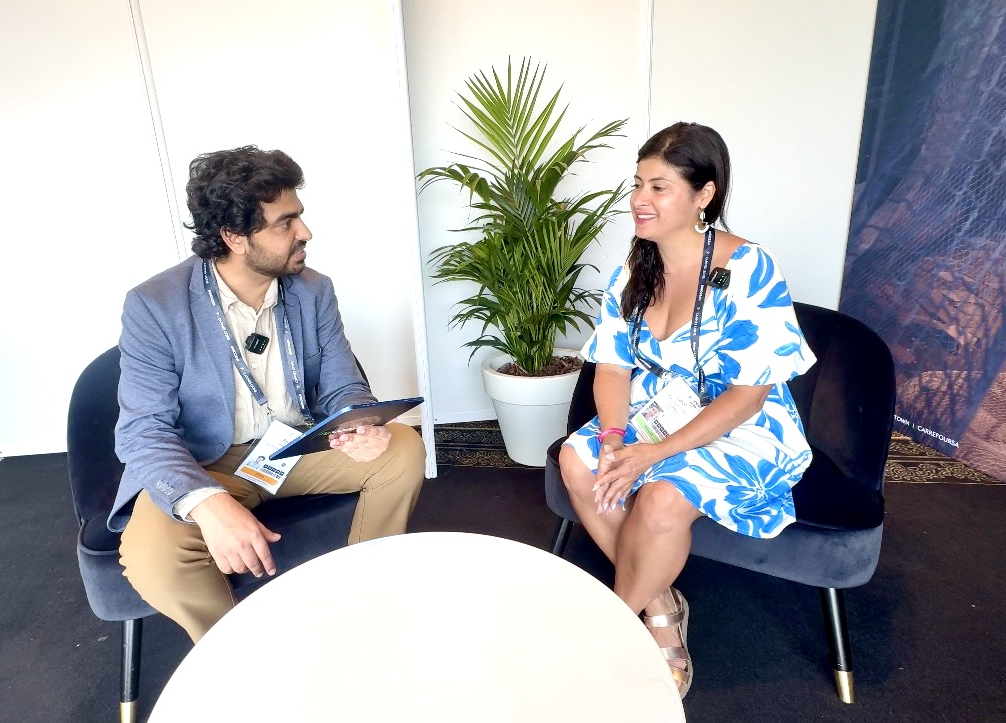

At Cannes Lions 2026, Carol Castillo-Frucher, SVP, Marketing and Sales at PrismaIQ, spoke to Brij Pahwa, Editorial Lead, MartechAI.com & e4m about intentional media, cultural data, AI-led audience intelligence and why human judgment remains critical in marketing technology.
At Cannes Lions 2026, conversations around data, AI and culture have taken centre stage. For Carol Castillo-Frucher, SVP, Marketing and Sales at PrismaIQ, the real challenge for marketers is not just collecting more data, but knowing how to interpret it with cultural context and human understanding.
In a conversation with MartechAI.com, Castillo-Frucher said marketers often chase the most efficient path to conversion, but that approach can miss the cultural point. She also argued that AI tools are only as useful as the questions humans ask them, warning that without human direction, AI can make “crazy assumptions” and lead to “AI junk.”
How has your time been at Cannes Lions this year?
So far, it has been really hot, but also exciting to feel the energy of the streets and all the activations. It is super impressive. It is also my first time, so I am soaking it all in.
You are also speaking at one of the sessions. Can you tell us more about that?
I am on a panel talking about intentional media and how you can really grow business by being intentional about it.
The story behind that is that when I was at the agency, we had a partnership where I was looking for a small, authentic content producer and found Shelley, who actually was not in the media business at the time. Through this particular campaign, she has now evolved into a media empire, has about five to six clients and creates custom content, experiential work and things like that.
That all started from me looking for her and working together to develop a campaign, and that really took off. So the talk is about that.
Brands are investing heavily in first-party data as cookies disappear. But consumers are increasingly making decisions based on identity, values and communities. Everybody talks about first-party data, but very few talk about cultural data. Do marketers today have a culture problem more than a data problem?
I would say they have a problem really being in touch with culture.
They are aware of it, but they chase the most efficient way to drive their goals. Sometimes, very often, that misses the culture point. It really just goes to the conversion, and that is all they care about.
So I would say there is a gap between what they would like to see themselves doing and the actual execution.
AI can tell us what consumers are doing in real time, but can it really tell us what consumers care about?
I think that is where the human factor is very important, because the machine does what the human tells it to do.
The machine is really smart, but if you do not tell it exactly what you need, it is not going to give you what you need. That is where the human element is extremely important.
Someone like myself, with years of experience working in diverse media as well as cultural campaigns, understands the types of questions and prompts needed to get the audience, information and data required. That is critically important.
You cannot just put someone on a computer and have them type in a question. You really have to understand the output you are looking for and the type of question to ask the tool. Then the tool can perform for you.
But you cannot expect the tool to interpret it. You have to put it in the direction for it to take that data and give it back to you. If you are not able to put it in that direction, it is kind of all over the place. We know how AI can make crazy assumptions.
If we do not call out those assumptions or try to avoid them, then you get into that pitfall. That is where AI junk happens.
In markets like India, where data is highly segmented across regions, languages and city tiers, how can marketers use data effectively in the age of AI, especially when many LLMs are trained on westernised sources of data?
That question is like asking, how do you create a strategy when the map of the country is not all available?
I would say that is actually true in the U.S. as well, because internet penetration is pretty deep, but it is really not 100 percent. There are pockets of the country that do not have internet access because they are in rural areas or do not have access to that signal.
That is something that a marketer has to be intentional about. You have to figure out what channels those people do receive. In these populations, they do receive media, but it is not connected to data. That is a hop you need to make.
You have to say, “I am not going to get data, but if I want to reach these people, I can. What is the media available to them, and how can I connect with that media source to get my message in front of them?”
It has to be a combination of both. It cannot only be data. You have to understand that those gaps are there and how to fill them in with traditional ways of getting to people.
At Cannes Lions this year, a lot of conversations are around data and culture. How do you think these conversations will evolve?
I think the human element is even more important. It is not just about creating the technology.
At PrismaIQ, the technology was intentionally created to work with specific cultures and 80 languages. It is not just the language, but the nuance within the language, the slang, the meaning and things like that.
I think we are a step closer in terms of gauging sentiments and cultural cues, so we can guide clients based on the tech. But again, it is me looking at the data and understanding when something does not make sense. I need to ask it again, and I need to keep iterating until we see something valid and able to move into action.
Rapid Fire
One thing AI will never replace?
The human mind. Creativity.
What are you looking forward to in Cannes, apart from the festival?
I went to Saint-Tropez yesterday, so I was very lucky to do that. I am kind of a history nerd, so I would like to do a city tour. I love history and knowing what happened here and how the city developed, so I might take a walking tour.
Had you not been a marketer, what would you have been?
A newscaster like you.
Related Articles