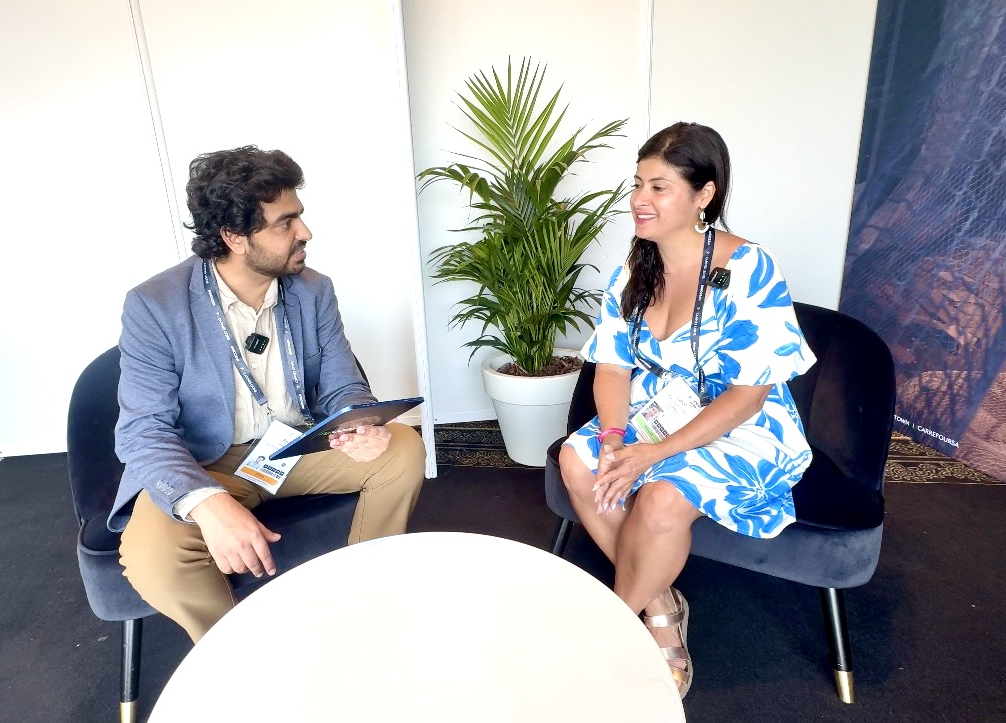
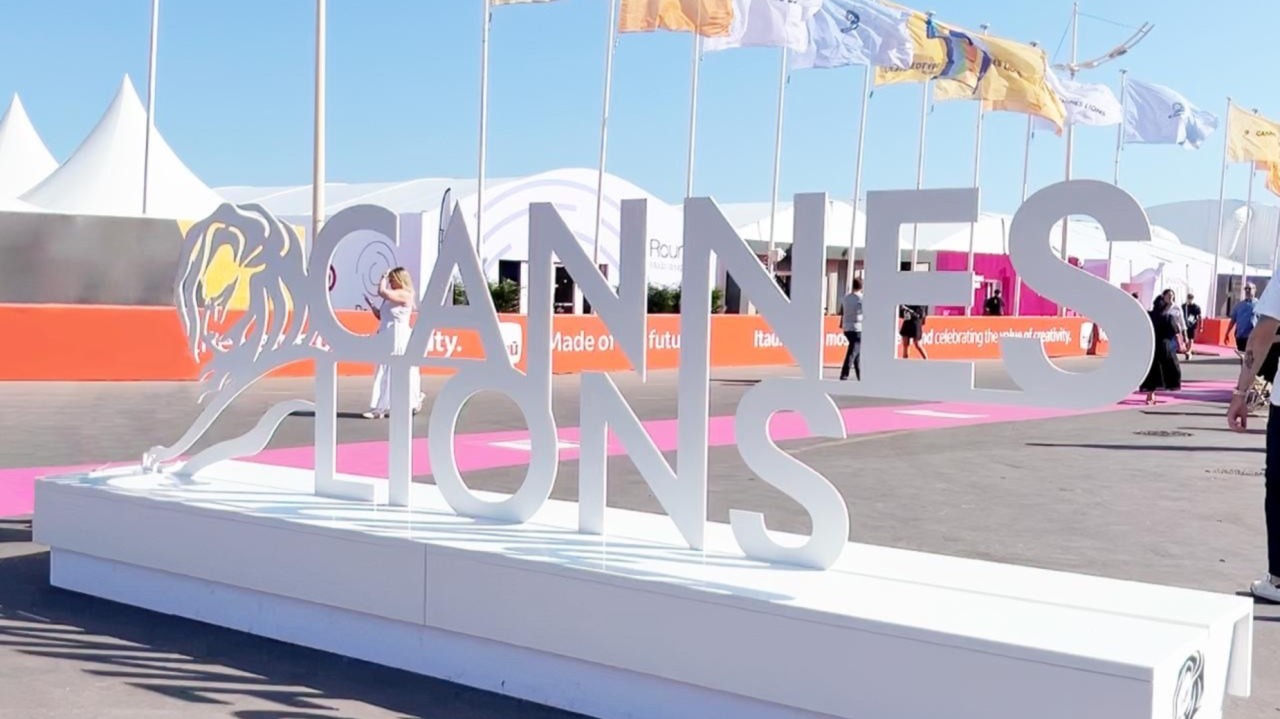
At Cannes Lions 2026, where conversations around artificial intelligence, creators and the future of brand engagement are dominating the marketing world, Kate Bird believes the most important shift may not be about technology alone. It is about how people want to connect.
Speaking to Brij Pahwa, Editorial Lead, e4m and MartechAI.com, Bird, Kate Bird, Senior Director EMEA and APAC Global Marketing at Snapchat, said consumer behaviour is moving away from passive scrolling and towards more direct, trusted and participatory forms of communication.
For Snap, she said, this shift is not new. It goes back to the original idea behind Snapchat.
“Snapchat is a platform where people come to express themselves, friends come and family come and talk to each other,” Bird said.
At Cannes, Bird said the themes of the industry continue to evolve each year. AI remains a major talking point, but creators have also become a central part of the conversation this year. Having attended Cannes for several years, she said the festival reflects the changing priorities of the marketing ecosystem.
“I think there are different themes that move through Cannes. We have been talking a lot about AI. This year, there is a lot about creators. The themes move as the years go by,” she said.
For Snapchat, AI is not being viewed only as an automation layer. Bird said the platform uses AI in two key ways: to enable creativity for users and to improve advertising products for brands.
She pointed to Snapchat’s lenses, generative AI tools and ad tech as examples of how AI is helping users and advertisers become more creative on the platform.
“It is AI-enabled, but it is human in the way that we approach it,” Bird said. She added that AI also plays a role in optimising Snap’s advertising products, but the company’s approach remains “very user-driven”.
That user behaviour, especially among younger audiences, is changing rapidly. Bird said Gen Z is a huge audience segment for Snapchat, but the larger shift is not simply about age. It is about how people are using social platforms differently.
According to her, users are increasingly tired of the “doomscrolling” experience associated with social media. Instead, they are looking for more direct forms of communication, private spaces and trusted relationships.
“What Snapchat offers is a different experience where people are coming to talk to their friends and family,” she said.
Bird said Snap has seen Gen Z move towards more one-to-one communication and less public social media behaviour. She added that social media usage is not necessarily declining, but the way people use social platforms is changing.
“Social media usage is not going down, but people are using it differently,” Bird said. “We are seeing that big shift happening now, and this is what Snapchat was built for from the very beginning.”
She believes millennials will also move in a similar direction over the next 18 to 24 months, as more users seek direct, private and trusted digital interactions.
This makes Snapchat’s original product philosophy increasingly relevant in the current marketing environment. Bird described Snapchat as “the fastest, easiest way to connect with your friends,” adding that the platform has always focused on making digital communication “creative and fun”.
For marketers, the implication is significant. Bird said the old obsession with reach and scale is no longer enough. Brands now need to build relationships with audiences in a more participatory way.
“There was a time where reach was everything. We were talking about scale and reach,” she said. “I think we are moving to a place, or we have already moved to a place, where that is just not the best way.”
According to Bird, brands need to focus on community, participation and two-way engagement. She said Snapchat has been strong in this area because users are not simply watching content. They are sharing moments and experiencing them together.
“People are not just watching things. They are living moments together and sharing those moments,” she said.
In the age of AI-generated content, Bird said creativity, authenticity, trust and distribution all matter, but connection may be the most important idea for brands to focus on.
She noted that authenticity and trust are now used frequently in marketing conversations, including at Cannes, but brands should not ignore the deeper need to build real relationships.
“I think connection is really important,” she said. “If brands are not thinking about that, they are missing a trick when it comes to building communities.”
Snapchat is also building new formats around this idea of participation. Bird said Snap Inc recently launched Specs, calling it a “huge week” for the company. She also highlighted new ad formats, including Sponsored Snaps, which allow brands to appear in the Chat tab.
The Chat tab, she said, is where Snapchatters spend much of their time talking to friends and family, making it a natural space for brands to engage with users.
Bird also spoke about Promoted Places, which allow brands to show up on Snap Map. She said this is another example of how Snap is thinking about participation rather than passive advertising.
“Snapchatters are coming to the map, finding their friends, and then deciding where to meet with them,” she said.
For marketers trying to understand what comes next, Bird said the biggest lesson is to stay close to consumer behaviour. People are using social platforms for different reasons now. They want to have fun, talk to people they trust and build relationships with each other, brands and creators in new ways.
“People are just tired of the doomscrolling side of social media,” she said. “They want to have fun. They want to talk to people they trust. They want to build relationships with each other and brands and creators in a different way.”
When asked where she would advise CEOs to invest today, across creators, AI infrastructure, data or brand building, Bird said AI is important for efficiency, but marketers must not forget creativity and emotional connection.
“AI is important for enabling efficiency,” she said. “But I think not forgetting creativity. I am a big believer that brand building is so important.”
She added that marketing cannot become only about automation. Brands still need a human and creative element if they want to stand out.
“You still have to have an emotional connection with your audience. It cannot just be about automation,” Bird said. “There has to be a human and creative element to it.”
For Bird, this is even more important in a world where consumers are constantly surrounded by content and information.
“In a world where we are just bombarded with information all the time, to have cut-through and have a brand connection is super important,” she said.
In a rapid-fire segment, Bird said the one thing AI will never replace is “human creativity”. She also said that one of the biggest mistakes marketers make with Gen Z is “believing the myths” around the generation.
She pushed back against the idea that Gen Z does not work hard or does not know what it is doing.
“They are an extremely smart generation, and they are going to change the world,” Bird said.
On the one skill every marketer should build, her answer was clear: AI knowledge.
As the marketing industry continues to debate the future of platforms, creators and AI, Bird believes social media itself is set for a major transformation.
“Social media will be in a very different landscape,” she said. “We are seeing the way people use it change.”
Related Articles