


Flipkart and Bengaluru Traffic Police's Gridlock Hackathon drew 33,600 registrations and over 1,100 AI prototypes aimed at tackling the city's traffic challenges.

WhatsApp is testing an AI-powered Scam Alert that uses on-device machine learning to warn users about potentially fraudulent messages from unknown contacts.

IIT Bombay's online ePGD in Computer Science and Engineering covers AI, generative AI, computer vision, cybersecurity and advanced computing systems.
Consint.AI has raised Rs 22 crore in Series A funding to expand its AI-powered fraud detection, claims processing and risk management technology globally.

Google chief scientist Jeff Dean has left after 27 years to co-found Discovery Loop, an AI startup focused on automating machine learning and scientific research.

Sookti AI has appointed Gagan Mohan Singh as Chief Information Officer to lead technology strategy and strengthen its enterprise AI capabilities.

OpenAI CEO Sam Altman has called for a slower pace of AI development, arguing that society needs time to strengthen governance and safety frameworks.

Meta is expanding AI investments to strengthen its advertising platform with smarter campaign optimisation, automation and AI-powered marketing tools.

IIIT Hyderabad's iHub-Data has opened admissions for a six-month AI and Machine Learning programme focused on practical skills and industry-ready training.

Microagi has partnered with Google Cloud to accelerate embodied AI development, using Google's AI infrastructure and NVIDIA Blackwell systems to scale enterprise robotics.

Myntra is expanding AI across seller onboarding, product discovery and customer support to improve operational efficiency and personalise the shopping experience.

Hyderabad startup SuperClaims is using AI to automate health insurance claims, helping insurers reduce processing time, improve accuracy and lower operational costs.

Mira Murati's Thinking Machines has launched Inkling, an open weight multimodal AI model designed for enterprise customisation and developer flexibility.

Google has launched its free AI Foundations curriculum in India to help students and professionals build practical AI skills and promote responsible AI learning.

Arduino has launched an Edge AI Invention Lab at IIT Delhi to strengthen practical AI education, embedded AI research and hands on innovation using edge computing.

Japanese scientists have developed an AI designed self-healing hydrogel with exceptional underwater adhesion, opening new possibilities for medicine, robotics and advanced materials.

Amazon and the Telangana government have partnered to introduce AI education and teacher training across government schools through the Amazon Future Engineer programme.
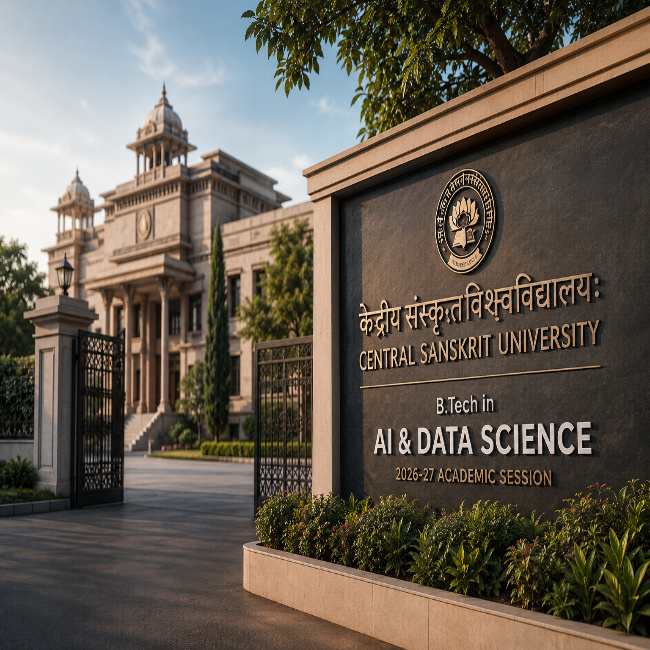
Central Sanskrit University will launch a BTech in AI and Data Science from the 2026-27 academic session at its Nashik campus.

Siemens has appointed Vikram Anbazhagan as Vice President of Product AI, reinforcing its focus on AI-driven innovation and enterprise transformation.

India recorded 3.5 lakh AI-related job openings in 90 days, highlighting strong demand for AI talent across industries and functions.

Thousands of Indian workers are helping train AI systems through data annotation and content review, highlighting the human labor behind the AI boom.

Xiaomi has introduced MiMo, a new AI reasoning model that the company says delivers faster performance than leading AI systems from OpenAI and Anthropic.

Kabuni has launched an AI-powered cricket coaching platform designed to connect aspiring players with elite training insights and personalised development tools.

Persistent, Databricks and MSOE have partnered to train students in production-grade AI systems and bridge the industry's AI skills gap.

Google DeepMind CEO Demis Hassabis says the AI industry still needs engineering talent despite ongoing layoffs across the broader technology sector.

NeoCambrian AI has launched an India-focused robotics data factory aimed at supporting physical AI model development and training.

Chinese AI company DeepSeek has announced a permanent 75% price cut for its V4-Pro AI model amid rising global competition.
Alibaba has launched a new AI chip aimed at strengthening its AI infrastructure and competing with Nvidia in the fast-growing AI market.

Former OpenAI co-founder Andrej Karpathy has joined Anthropic’s pre-training team as competition for top AI talent intensifies globally.
Nvidia is reportedly exploring an investment in Indian AI startup Simplismart as AI infrastructure demand continues rising globally.

An Oxford study finds that AI models with higher “temperature” settings tend to produce more errors, highlighting a trade off between creativity and accuracy.

Google researchers introduce PaperOrchestra, a multi agent AI system designed to automate research paper writing and streamline academic workflows.

Meta introduces an AI model capable of predicting brain activity, marking progress in neuroscience and machine learning research.

Google is exploring AI memory compression techniques to improve efficiency, reduce costs and enhance scalability of AI systems.

Agile Robots partners Google DeepMind to advance AI driven robotics and automation capabilities across industries.

Google has expanded Stitch into an AI platform that converts text prompts into interactive user interfaces, streamlining design and development workflows.
OpenAI has introduced GPT 5.4 mini and nano models designed to reduce AI deployment costs and enable scalable, efficient applications across industries.
Mistral has launched Forge with Nvidia, an enterprise AI platform that enables businesses to build, customise and deploy AI models securely within their own environments.

Emergence, a startup founded by former IBM scientists, has opened an AI automation lab in India to advance enterprise solutions and expand its research and development capabilities.

AWS has partnered with Cerebras to deliver faster AI inference on Amazon Bedrock, enabling enterprises to run generative AI applications with improved speed and efficiency.

Meta has introduced four custom MTIA chips designed to power AI training and inference workloads across its global platforms.

Nasscom has announced a major AI skilling initiative aimed at training millions of learners to strengthen India’s artificial intelligence workforce.

OpenAI has acquired AI security startup Promptfoo to strengthen testing and safety measures for AI agents and generative AI systems.

A former Google AI researcher has launched a robotics startup in Japan focused on building intelligent machines that combine artificial intelligence with advanced robotics systems.

Sarvam AI has launched a startup programme to support early stage AI companies by offering technical infrastructure, mentorship, and resources for product development.

Can AI truly reason or is it advanced pattern matching? Experts debate reasoning models, hallucinations, and what today’s AI can actually understand.
AI startup Flapping Airplanes is experimenting with radically different approaches to artificial intelligence as it searches for new breakthroughs beyond mainstream models.

Apple has acquired Israeli artificial intelligence startup Q AI, strengthening its talent and technology portfolio as competition in AI intensifies among major technology companies.

Nvidia invests $150 million in AI inference startup Baseten, highlighting the growing focus on scalable infrastructure for deploying AI models in real-world enterprise applications.

AI research firm DeepSeek has proposed a new mathematical framework to improve the stability and scalability of large language models.
