NeoCambrian AI has launched an India-focused robotics data factory aimed at supporting the development and training of physical AI models, as global demand for robotics and embodied artificial intelligence systems continues expanding across industries.
The company said the initiative is designed to create large-scale robotics training datasets that can help improve AI systems operating in physical environments. The launch reflects increasing industry focus on physical AI, where artificial intelligence systems interact with real-world environments through robots, autonomous machines, and automation infrastructure.
According to reports, the robotics data factory will support the collection, annotation, simulation, and processing of data used for training AI-powered robotic systems. The company plans to focus on datasets related to movement, object handling, navigation, task execution, and real-world operational scenarios.
Industry analysts say physical AI is emerging as one of the next major phases of artificial intelligence development as companies increasingly move beyond text-based generative AI applications toward robotics, autonomous systems, and embodied intelligence technologies.
NeoCambrian AI reportedly selected India because of its growing technology ecosystem, engineering talent pool, and expanding AI research capabilities. The company is expected to work across robotics data generation, model training, and simulation systems aimed at improving machine interaction with dynamic environments.
Technology experts say robotics training requires massive amounts of high-quality real-world and simulated data. AI systems operating in physical spaces must process environmental variability, spatial awareness, motion planning, and real-time decision-making more accurately than conventional conversational AI systems.
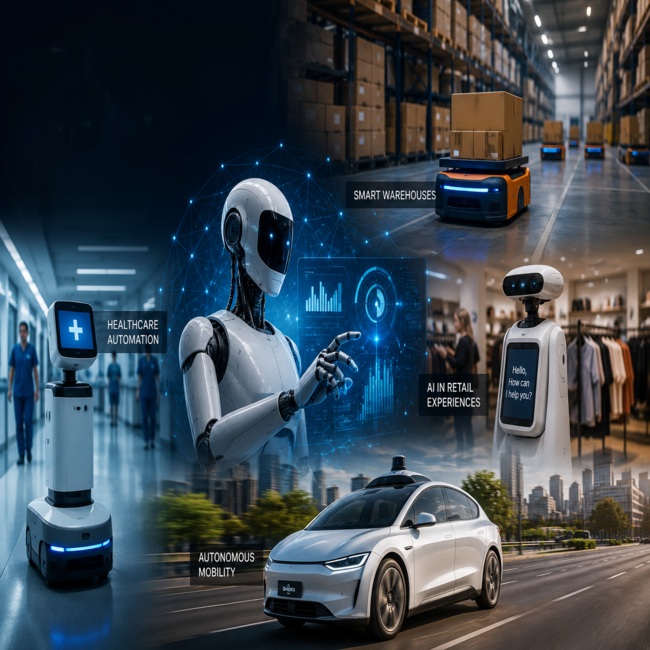
The launch comes amid rising global investment in robotics and automation technologies across sectors including manufacturing, logistics, healthcare, retail, mobility, warehousing, and industrial operations. Companies worldwide are increasingly exploring AI-powered robots capable of performing repetitive, hazardous, or precision-based tasks.
Industry observers note that physical AI models differ significantly from language-based AI systems because they must interact directly with unpredictable environments and physical constraints. Robotics training therefore depends heavily on extensive sensor data, simulation environments, and behavioural modelling systems.
NeoCambrian AI’s initiative may also support broader AI infrastructure development within India’s deep technology ecosystem. Analysts say India is increasingly becoming a strategic location for AI engineering, data operations, and model development as global companies expand research and technical operations in the country.
The robotics data factory is expected to contribute to AI model refinement through continuous data feedback loops and simulated operational environments. Such systems can help train robots for industrial workflows, navigation tasks, manipulation systems, and autonomous operational functions.
Physical AI has become a major area of focus among global technology companies and research institutions. Several firms are investing heavily in humanoid robotics, autonomous mobility systems, warehouse automation, and AI-powered industrial machines.
Industry experts believe physical AI could significantly reshape manufacturing and logistics operations over the next decade by improving automation efficiency and reducing manual dependency in repetitive operational environments.
At the same time, robotics and physical AI systems continue facing technical challenges around adaptability, safety, cost efficiency, and environmental variability. Developing reliable physical AI systems often requires substantial computational infrastructure and large-scale data ecosystems.
India’s growing emphasis on AI, semiconductor infrastructure, robotics research, and advanced manufacturing has attracted increasing attention from deep-tech startups and international technology companies. Policymakers have also been exploring frameworks to strengthen India’s AI and automation capabilities.
Analysts say robotics data infrastructure may become a critical competitive advantage as physical AI systems evolve globally. High-quality datasets and simulation environments are increasingly viewed as essential components of robotics model performance and operational reliability.
NeoCambrian AI’s launch reflects broader shifts within the artificial intelligence sector as companies expand beyond software-focused AI applications toward systems capable of interacting with physical environments. Industry observers expect robotics and physical AI ecosystems to witness accelerated growth as enterprises continue investing in automation, autonomous systems, industrial robotics, and embodied intelligence technologies across global markets and operational environments in the years ahead.
Related Articles