
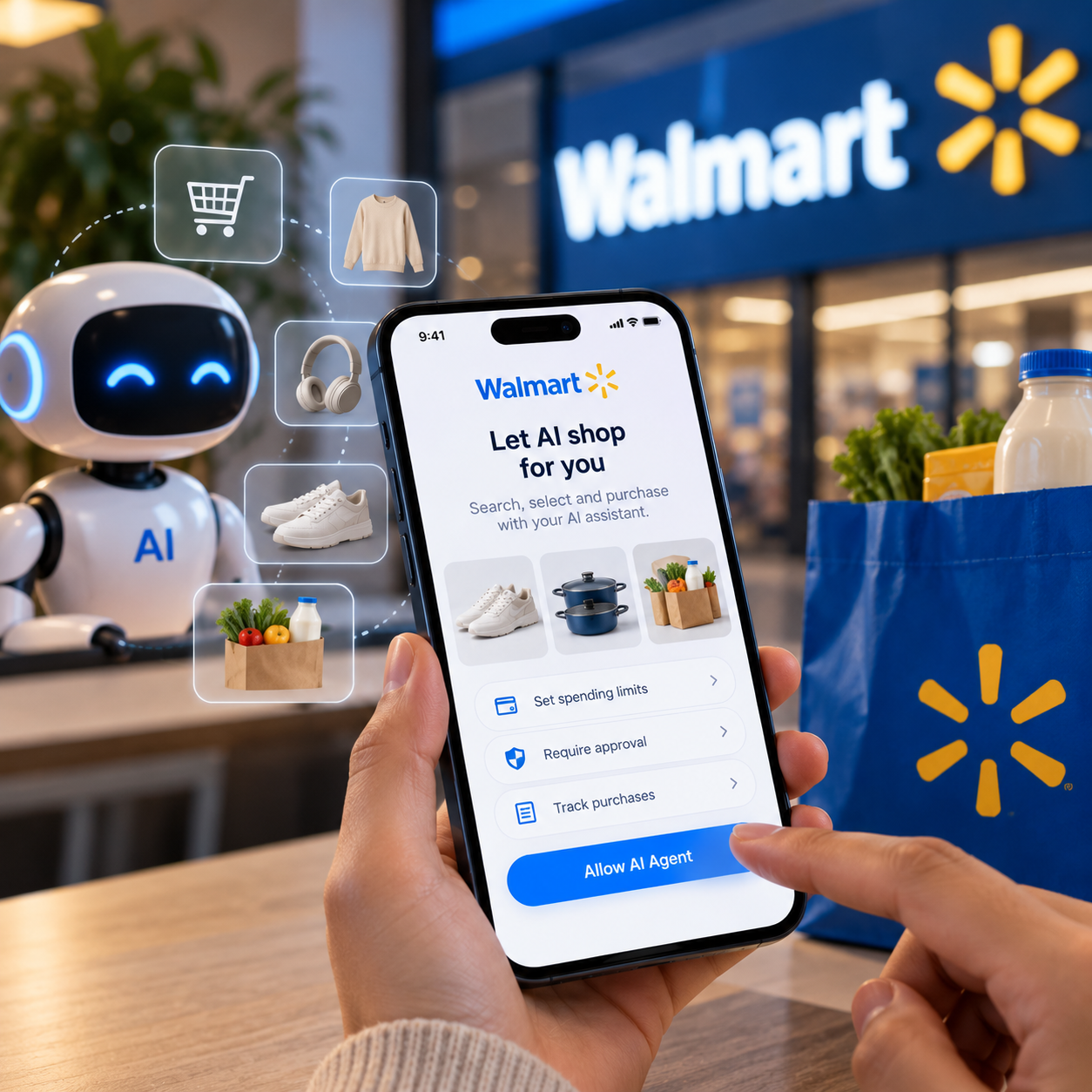

Walmart has introduced new tools that will allow artificial intelligence agents to search for products and complete purchases on behalf of customers, as the US retailer expands its presence in AI-powered commerce.
Announced on October 21, the initiative includes Agent Profiles, a feature scheduled to launch in November, and Walmart Agent Gateway, a platform designed to connect third-party AI assistants directly with Walmart and Sam's Club shopping systems.
Agent Profiles will allow customers to authorise individual AI agents to make purchases through their Walmart accounts. Users will be able to set spending limits, require approval before transactions and monitor purchases made by AI agents separately from their own orders.
Customers will also have the option to withdraw an agent's access at any time, giving them control over which automated assistants can interact with their accounts.
The retailer said AI agents would not be permitted to access customers' payment card information. Agents that violate Walmart's rules could also be blocked from using the shopping platform.
The tools will be available to all Walmart account holders without requiring a Walmart+ subscription.
Alongside these controls, Walmart Agent Gateway will enable AI assistants, including OpenAI's ChatGPT, Google's Gemini and Meta's Muse, to connect with the retailer's systems to discover products and complete transactions.
The integration is intended to support shopping experiences in which customers can delegate certain purchasing activities to AI assistants rather than manually navigating product listings and checkout processes.
The announcement comes as technology companies and retailers explore agentic commerce, where AI systems move beyond providing product recommendations to performing shopping-related tasks.
For retailers, these capabilities introduce new considerations around customer authorisation, transaction monitoring and the management of third-party applications accessing commerce platforms.
Walmart's approach also differs from that of Amazon, which has taken steps to restrict third-party AI shopping agents from accessing its marketplace.
The distinction reflects different approaches to integrating external AI assistants into established e-commerce environments as technology providers develop tools capable of acting on customers' instructions.
Mizuho analyst David Bellinger said the introduction of purchasing controls could help build consumer confidence in AI-assisted transactions, which remain an emerging form of online shopping.
The ability to review purchases, establish spending restrictions and revoke permissions is particularly relevant when automated systems are authorised to make financial decisions on a customer's behalf.
For brands and sellers operating through Walmart's marketplace, the development could introduce another channel through which products are discovered and purchased.
However, the retailer has not disclosed adoption targets or projected transaction volumes for the new tools.
The launch marks another step in Walmart's efforts to integrate AI into digital commerce while retaining customer oversight of automated purchases.
Disclaimer: This article may include information derived from interviews, press releases, public statements, research, company communications and other publicly available or third-party sources. Such material may be summarised, paraphrased or contextualised for journalistic and editorial purposes. All rights in third-party content remain with their respective owners.