
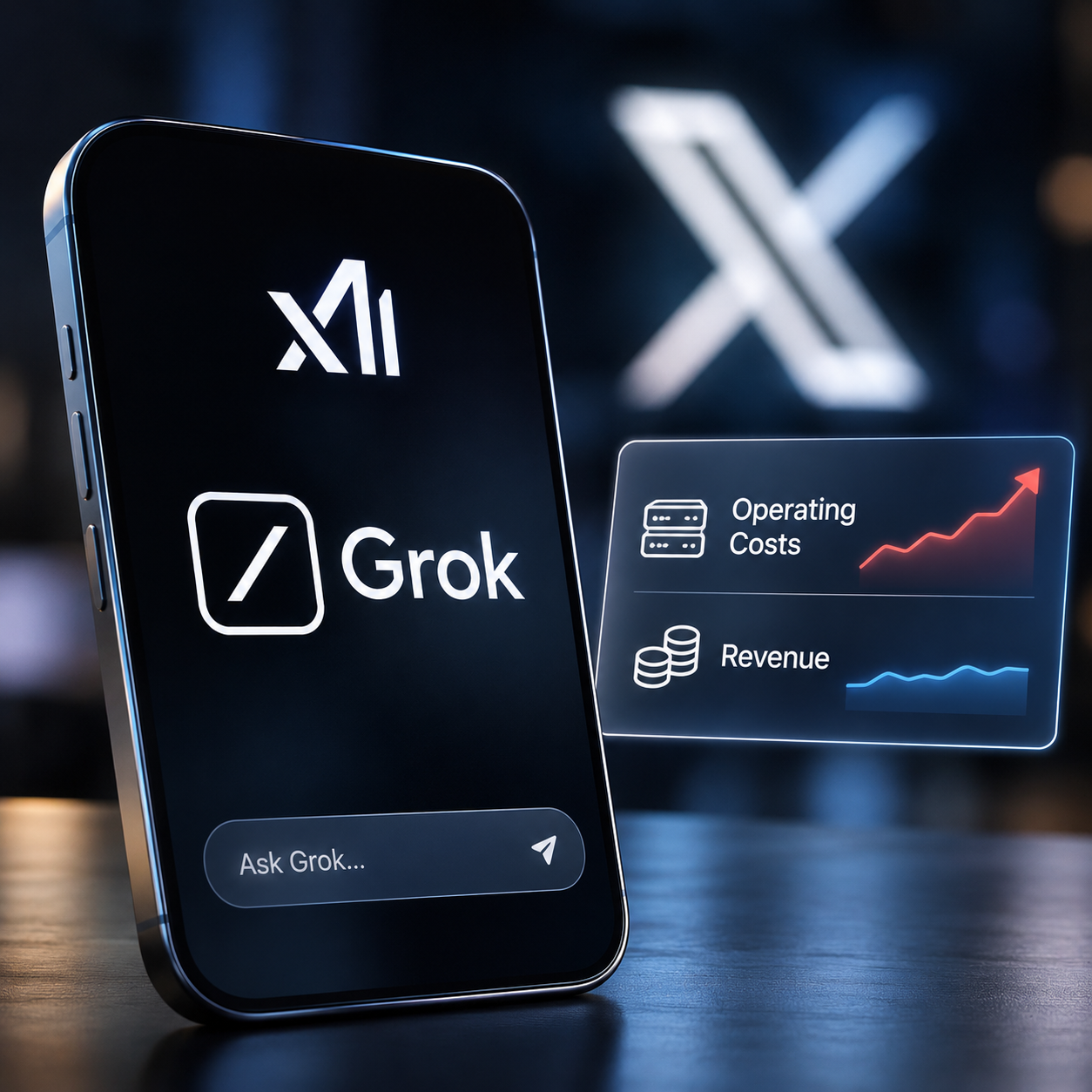

Elon Musk has acknowledged that the cost of operating xAI's autonomous AI agent, Grok Bot, exceeded the revenue generated from the service, prompting the company to restrict usage allowances for paying subscribers.
The disclosure followed a discussion on X, where a subscriber requested an early reset of the agent's weekly usage quota after reaching the permitted limit. Responding to the complaint, Musk attributed the restrictions to the financial cost of operating the service rather than increased user demand.
"The cost of serving Grok Bot was unsustainably high relative to revenue," Musk wrote.
The statement brings attention to the financial challenges associated with running autonomous AI agents, which require substantially more computing resources than conventional chatbots.
Unlike systems that generate responses to individual prompts, Grok Bot can conduct research, navigate websites and execute multiple steps within a workflow. These operations can involve repeated model interactions and extended processing time, increasing the computing resources required for each task.
xAI introduced Grok Bot in August 2026, making the service available through existing paid subscriptions, including its SuperGrok plan priced at $30 per month and supported developer offerings.
The company did not initially introduce separate pricing specifically for the autonomous agent. As a result, subscribers could access computationally intensive capabilities within broader subscription packages.
According to figures reported by TeslaNorth, Grok Bot reached approximately 800,000 weekly active paying users within two months of its introduction. However, xAI has not publicly disclosed detailed revenue, infrastructure expenditure or operating margins for the service.
Musk's comments come as AI developers assess the financial implications of offering increasingly capable agents at fixed subscription prices.
Autonomous systems may perform several operations before completing a request, potentially generating higher inference costs than conventional conversational interactions. Their operating expenses depend on factors including model size, processing duration, hardware efficiency and the complexity of individual tasks.
Other AI providers, including OpenAI, have introduced usage restrictions and subscription tiers for computationally demanding models and advanced reasoning capabilities.
The wider industry is also facing pressure to balance investment in AI infrastructure with revenue generated from commercial products.
Companies developing AI models continue to invest in data centres, graphics processing units and supporting infrastructure to meet demand for more advanced applications.
These investments have increased attention on whether subscription fees and enterprise contracts can adequately cover the costs of providing AI services.
For xAI, the decision to limit Grok Bot usage reflects an effort to manage operating expenditure while continuing to offer autonomous capabilities to subscribers.
Musk has not announced a revised pricing structure or specified when the existing usage limits might change.
The development highlights the financial considerations facing AI companies as they expand from conversational assistants into autonomous systems capable of completing longer and more complex tasks.
Disclaimer: This article may include information derived from interviews, press releases, public statements, research, company communications and other publicly available or third-party sources. Such material may be summarised, paraphrased or contextualised for journalistic and editorial purposes. All rights in third-party content remain with their respective owners.