
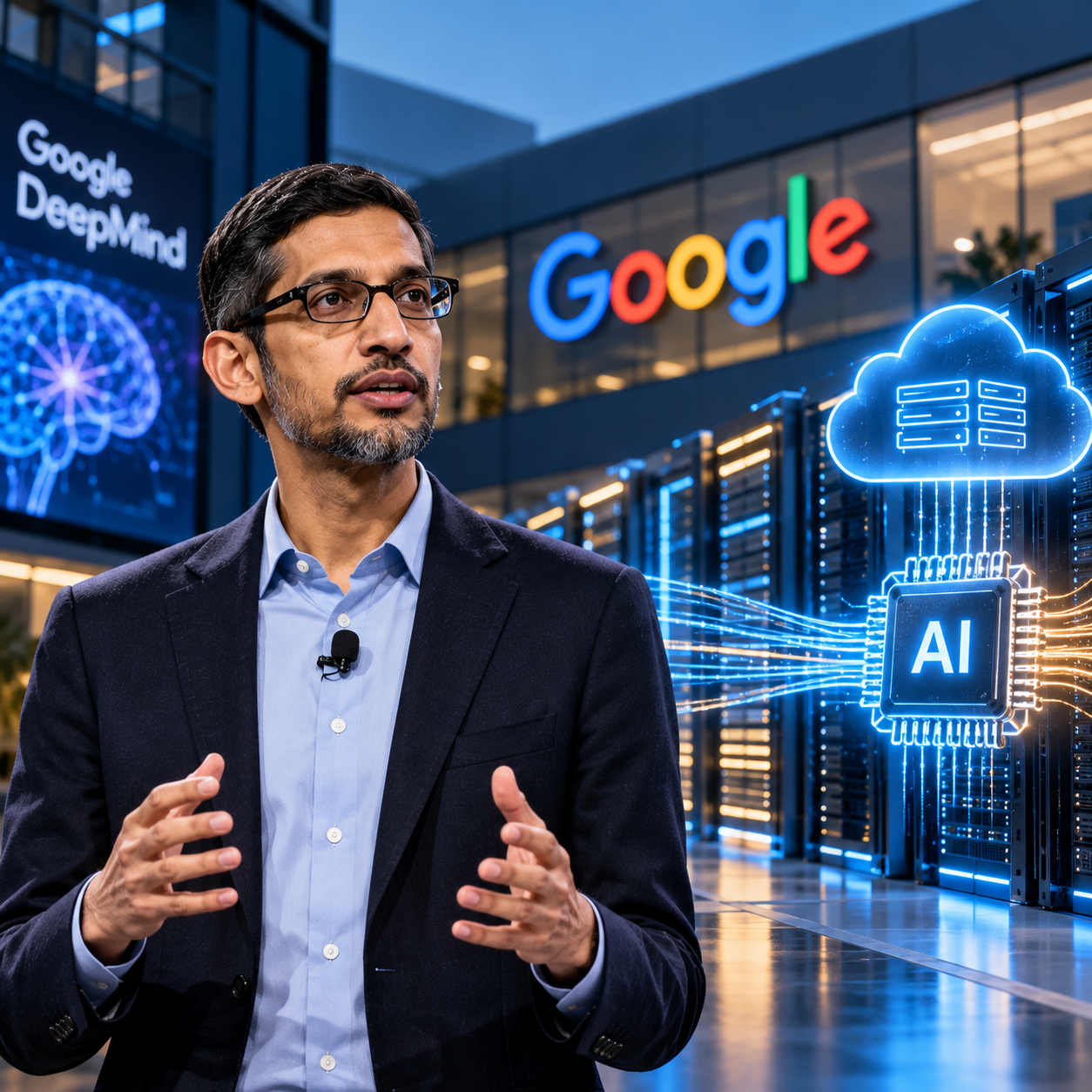

Google is prioritising the development of advanced artificial intelligence models over expanding its cloud computing capacity, with CEO Sundar Pichai acknowledging that the decision could affect short-term revenue opportunities as demand for AI infrastructure continues to increase.
The company is directing computing resources towards research at Google DeepMind, even as shortages of chips and data centre capacity constrain its ability to accommodate additional Google Cloud customers.
Pichai indicated that the company was willing to forgo some near-term cloud revenue to support the development of frontier AI models, which require substantial computing power for training and deployment.
The decision reflects the competing demands on Google's infrastructure as it expands commercial cloud services while developing increasingly capable AI systems.
According to Pichai, securing sufficient computing capacity remains a challenge because of limitations in chip availability and the time required to establish new data centre infrastructure.
He warned that accommodating additional cloud customers could remain particularly difficult until 2027, although this does not mean Google Cloud has stopped accepting new customers.
Google's AI research division, DeepMind, remains a priority in the company's allocation of computing resources.
Pichai described investment in advanced AI research as "non-negotiable", indicating that the company intends to maintain its focus on developing more capable models despite existing infrastructure constraints.
The strategy involves using available computing resources for AI research while simultaneously expanding the infrastructure required to support future model development and commercial services.
Pichai also noted that decisions concerning computing capacity are made years in advance, making it difficult to respond immediately to unexpected increases in demand.
Alphabet is expected to invest approximately $195 billion to $205 billion in AI and cloud infrastructure as it works to expand its computing capabilities.
The investment is intended to support data centre development, computing hardware and other infrastructure required for AI training, inference and cloud-based applications.
The capacity constraints come despite strong demand for Google's cloud services.
Google Cloud reported second-quarter revenue of $24.8 billion, representing an 82% increase from the corresponding period a year earlier, according to the reported figures.
Its contracted backlog also reached $514 billion, reflecting commitments from customers for future services.
However, fulfilling those commitments requires continued investment in computing infrastructure, particularly as enterprises increase their use of AI applications and cloud-based workloads.
The situation highlights the infrastructure challenges facing technology companies that develop proprietary AI models while simultaneously providing computing capacity to external customers.
For Google, the immediate priority remains advancing its AI research capabilities while expanding cloud infrastructure to address demand over the coming years.
The company is seeking to balance these requirements as competition intensifies across AI model development, enterprise cloud services and computing infrastructure.
Disclaimer: This article may include information derived from interviews, press releases, public statements, research, company communications and other publicly available or third-party sources. Such material may be summarised, paraphrased or contextualised for journalistic and editorial purposes. All rights in third-party content remain with their respective owners.