Google has unveiled a new pair of Gemini-powered AI glasses in partnership with Samsung at its annual I/O 2026 developer conference, marking the company’s latest attempt to bring artificial intelligence into wearable consumer devices.
The smart glasses, introduced as part of Google’s broader Android XR ecosystem, are designed to provide hands-free AI assistance through voice, audio, and visual interactions. The launch signals Google’s expanding ambitions in wearable AI technology as competition intensifies across the consumer electronics and artificial intelligence sectors.
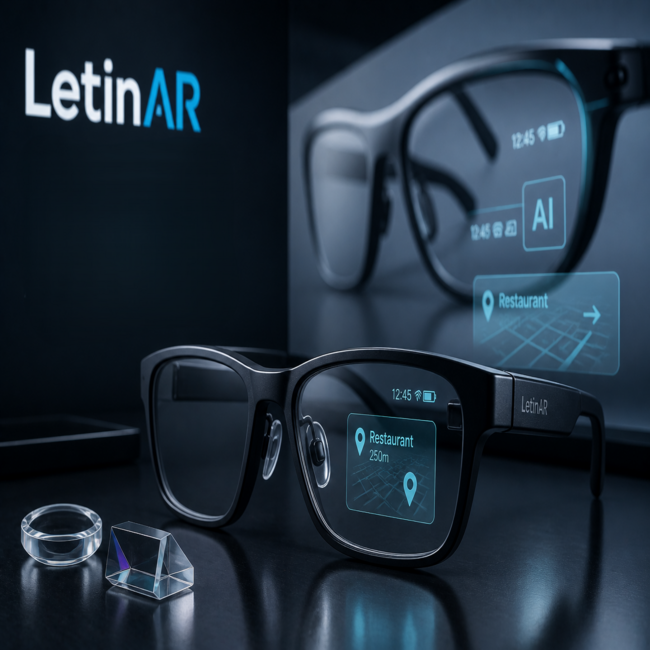
During the keynote presentation, Google demonstrated how the glasses integrate with Gemini, the company’s flagship AI model, to deliver contextual responses and real-time assistance. The device includes built-in cameras, microphones, speakers, and transparent display technology capable of overlaying digital information into the user’s field of vision.
Executives from Google and Samsung said the glasses are intended to function as an everyday AI companion rather than a niche experimental product. Demonstrations showcased features including live language translation, navigation support, message summaries, appointment reminders, and object recognition.
The glasses also allow users to interact with Gemini conversationally while walking, commuting, or multitasking. Google said the AI system can process visual surroundings in real time and respond with contextual information based on what users are looking at or asking about.
One demonstration showed the device translating conversations between speakers of different languages almost instantly through on-screen captions and audio prompts. Another showcased the glasses identifying landmarks and generating contextual information using Gemini’s multimodal AI capabilities.
Google confirmed that Samsung is serving as a key hardware partner for the initiative, building on the companies’ broader collaboration around Android-powered devices and extended reality technologies. The companies did not announce pricing or an official commercial release date during the event.
The launch comes amid renewed industry interest in smart glasses and wearable AI devices, an area where multiple technology companies are increasing investments. Meta has expanded its Ray-Ban smart glasses partnership, Apple is reportedly exploring wearable AI products, and startups backed by major investors are also entering the segment.
Industry analysts view wearable AI as a potentially significant next phase for consumer technology, particularly as companies seek alternatives to smartphone-centric ecosystems. AI-powered wearables are increasingly being positioned as tools capable of delivering more natural, always-available digital interactions.
Google’s earlier attempts in the category, including Google Glass, struggled to achieve mainstream adoption more than a decade ago. However, advances in generative AI, smaller hardware components, and improved battery efficiency have renewed interest in the category across the technology industry.
The company said Android XR is being developed as an ecosystem that combines augmented reality, mixed reality, and AI experiences across multiple device categories. Gemini is expected to serve as the central intelligence layer powering many of these experiences.
The announcement also reflects Google’s broader strategy of embedding Gemini across its product ecosystem, including Android smartphones, search, workspace tools, and cloud services. Executives said wearable devices could become an important access point for AI interactions in the future.
Samsung’s involvement is expected to strengthen Google’s hardware reach, particularly in global consumer markets where Samsung already maintains strong distribution and manufacturing capabilities. Analysts say partnerships between AI companies and established device makers are likely to become increasingly common as competition around AI-powered hardware accelerates.
The unveiling generated strong attention during I/O 2026 as technology companies continue racing to define the next major consumer AI platform. While commercial adoption remains uncertain, the launch signals growing confidence within the industry that wearable AI devices could become a larger part of everyday digital experiences in the years ahead.