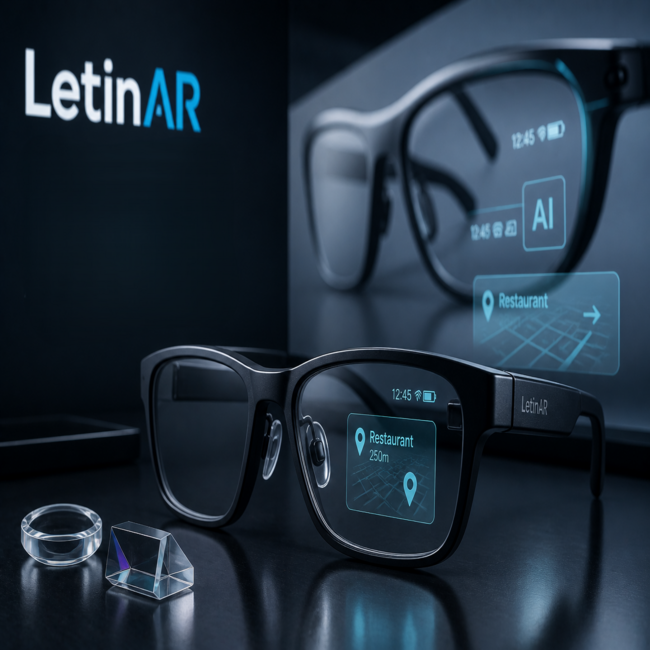

South Korean startup LetinAR is developing optics technology designed for AI-powered smart glasses as competition intensifies across the wearable artificial intelligence and augmented reality device market.
According to reports, the company is focused on building optical systems that can support lightweight AI glasses capable of delivering immersive digital experiences without the bulk associated with traditional augmented reality headsets. The development reflects growing industry efforts to make AI wearables more commercially viable and consumer-friendly.
Industry observers say smart glasses are increasingly being viewed as a potential next phase in consumer AI hardware as technology companies search for alternatives to smartphone-centric digital experiences.
The broader wearable technology sector has witnessed renewed momentum over the past two years as advances in generative AI, semiconductor performance and display systems accelerate development of intelligent wearable devices. Major technology companies are investing heavily in AI-integrated hardware ecosystems.
Reports suggest LetinAR specialises in reflective optics technology intended to improve image clarity and viewing comfort while reducing device weight and visual distortion. Optics remain one of the most critical technical challenges in developing practical AI-powered eyewear.
Industry analysts believe display and optics innovation could determine how quickly AI glasses move from experimental products into mainstream consumer adoption. Companies globally are competing to create wearable systems capable of combining functionality, comfort and long battery performance.
The latest developments also highlight increasing interest in integrating AI assistants directly into wearable devices. Technology companies are exploring ways to deliver real-time translation, navigation, information retrieval and contextual assistance through smart eyewear.
Reports indicate AI-powered wearables are being positioned as productivity and communication tools capable of supporting both enterprise and consumer applications. Businesses are experimenting with hands-free computing experiences enhanced by artificial intelligence systems.
Industry executives say optics technology plays a central role in determining user comfort and long-term usability for smart glasses. Lightweight designs and natural visual integration are considered essential for broader market acceptance.
Analysts believe companies developing enabling technologies such as optics, chips and sensors may become increasingly important within the expanding AI hardware ecosystem. Suppliers and infrastructure developers are attracting growing investor attention alongside consumer-facing brands.
At the same time, experts continue highlighting challenges around privacy concerns, battery life, heat management and social acceptance of AI-powered wearable devices. Questions surrounding data collection and always-on AI systems remain central to discussions around smart glasses adoption.
Reports suggest technology companies are accelerating wearable AI investments as generative AI systems become more capable of supporting real-time voice interaction and contextual computing experiences. AI assistants are increasingly being integrated into hardware ecosystems.
Industry observers note that augmented reality and AI wearable markets have evolved more slowly than initially expected due to technical limitations, pricing challenges and consumer adoption barriers. However, improvements in AI capabilities are reviving interest in the sector.
The global race to build commercially successful AI glasses has intensified as companies attempt to define the next major computing platform beyond smartphones and laptops. Wearable AI is increasingly viewed as a strategic long-term technology opportunity.
Industry executives say enterprise applications including logistics, healthcare, field operations and remote collaboration may drive early adoption of AI-enabled smart glasses before wider consumer uptake occurs. Businesses are exploring use cases that improve operational efficiency and hands-free productivity.
Reports indicate startups specialising in enabling technologies such as optics and display systems are becoming key participants in the broader wearable computing ecosystem. Infrastructure innovation is expected to influence future hardware design standards.
Analysts believe AI-powered smart glasses could eventually reshape how users interact with digital information by enabling more seamless and context-aware computing experiences. Advances in optics, processing efficiency and AI integration are likely to determine adoption speed.
LetinAR’s work underscores how competition within the AI wearables market is expanding beyond software and consumer brands into deeper hardware infrastructure development. Industry experts say optics innovation may become one of the defining factors shaping the future of AI-powered smart glasses and next-generation wearable computing ecosystems worldwide.
Related Articles