
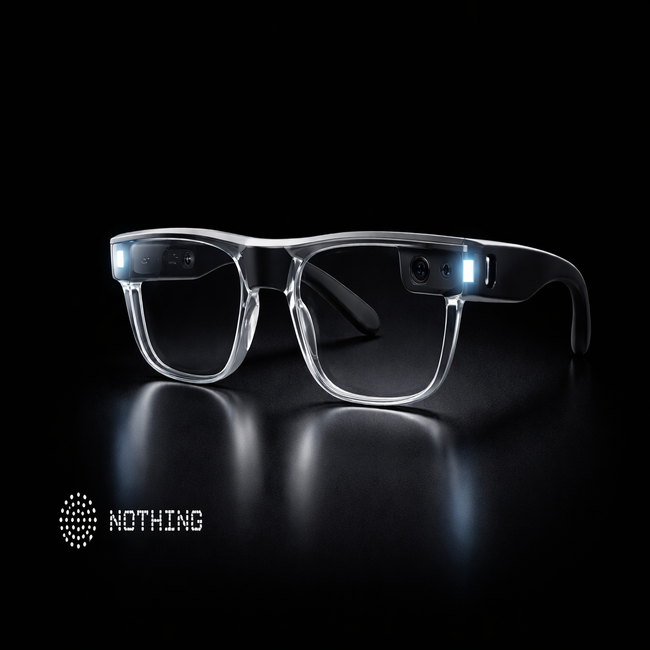

London-based consumer technology brand Nothing is reportedly planning to enter the wearable AI segment with the launch of smart glasses next year. The development signals the company’s potential expansion beyond smartphones and audio devices into emerging categories driven by artificial intelligence.
According to reports, the proposed smart glasses are expected to integrate AI capabilities to enhance user interaction and functionality. While specific details about features and specifications remain limited, the move aligns with broader industry trends where companies are exploring wearable devices powered by AI.
The wearable technology segment has seen increasing interest as advancements in AI and hardware enable more compact and efficient devices. Smart glasses, in particular, are being positioned as a new interface for computing, offering hands-free access to information and services. Companies across the technology ecosystem are investing in this space to explore new forms of user engagement.
Nothing, known for its design-focused approach, has built its brand around minimalist aesthetics and transparent hardware elements. Entering the smart glasses category could allow the company to extend its design philosophy into a new product segment. This could also differentiate its offering in a market that is becoming increasingly competitive.
Industry observers note that AI integration is becoming a key factor in the development of next-generation wearables. Features such as voice assistance, real-time translation and contextual information delivery are expected to play a significant role in shaping user experiences. AI can enable these devices to process data and respond to user inputs more effectively.
The reported move comes at a time when the wearable AI market is gaining momentum. Major technology companies are exploring similar products, focusing on combining hardware with AI-driven software capabilities. This convergence is expected to drive innovation and expand the use cases for wearable devices.
For Nothing, entering this segment could represent a strategic step in diversifying its product portfolio. The company has previously focused on smartphones and audio products, building a presence in the consumer electronics market. Expanding into wearables may help it tap into new growth opportunities.
From a market perspective, the success of AI-powered smart glasses will depend on factors such as usability, design and pricing. Consumer adoption of wearable devices often hinges on how seamlessly they integrate into daily life. Ensuring comfort and practicality will be critical for widespread acceptance.
The integration of AI also raises considerations around privacy and data security. Wearable devices that collect and process user data need to ensure that information is handled responsibly. Companies entering this space are expected to address these concerns through robust security measures.
Analysts suggest that the evolution of wearable technology is closely linked to advancements in AI and connectivity. As these technologies improve, devices such as smart glasses could become more capable and accessible. This may lead to broader adoption across different user segments.
The potential launch of AI smart glasses by Nothing reflects the growing importance of innovation in consumer technology. Companies are increasingly exploring new form factors to differentiate their offerings and meet changing user expectations.
At the same time, the wearable AI segment remains in a developmental phase, with ongoing experimentation around features and use cases. The success of new products will depend on their ability to deliver clear value to users.
The reported plans highlight how companies are positioning themselves for the next phase of technology evolution, where AI is integrated into everyday devices. Wearables are expected to play a key role in this transition.
Nothing’s potential entry into the smart glasses market underscores the expanding scope of AI-driven consumer electronics. As the category evolves, the focus is likely to remain on enhancing user experience while maintaining simplicity and accessibility.