
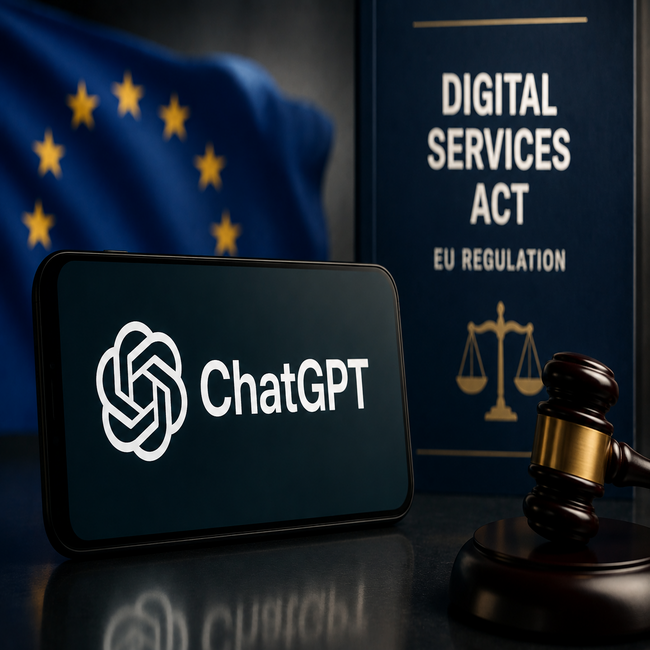

ChatGPT has become the first major AI chatbot to be brought under the European Union’s enhanced Digital Services Act obligations, putting OpenAI’s service under a higher level of regulatory scrutiny in the bloc.
The European Commission on August 31 designated ChatGPT as a Very Large Online Search Engine, or VLOSE, under the Digital Services Act. The designation applies to services that reach at least 45 million average monthly users in the European Union, a threshold that ChatGPT has reported meeting.
The move brings ChatGPT into a regulatory category already covering some of the world’s largest digital services. Reddit and gaming platform Roblox were also designated as Very Large Online Platforms as part of the same announcement.
Following the designation, ChatGPT will have four months to comply with additional obligations under the DSA. These include assessing and mitigating systemic risks linked to its service and algorithmic systems.
The European Commission said the risks covered by the framework include the dissemination of illegal content, potential negative effects on minors, users’ physical and mental well-being, fundamental rights, electoral processes and public security.
The designation is particularly significant for the generative AI sector because the Commission has classified ChatGPT as an online search engine for the purposes of the DSA. It potentially establishes a regulatory pathway for other widely used generative AI services if they cross the EU’s user threshold.
The development also adds another layer of European regulation for OpenAI. The company already faces requirements under the EU AI Act, which establishes rules for general-purpose AI models and transparency requirements for AI systems. Several provisions of the AI Act became enforceable from August 2, 2026.
Under those transparency rules, users must be informed when they are interacting with certain AI systems rather than humans, while specified categories of AI-generated or manipulated content are subject to disclosure and marking requirements.
The DSA designation broadens the regulatory focus beyond the underlying AI technology to risks arising from the service and its operation at scale.
EU technology chief Henna Virkkunen said the newly designated services would be subject to a higher standard of scrutiny and accountability because of their impact on European users and society.
The decision comes as European regulators increase oversight of large technology platforms and AI companies. For OpenAI, ChatGPT’s inclusion under the DSA means the chatbot will now have to navigate obligations under two of Europe’s major digital regulatory frameworks as generative AI becomes more widely used.
Disclaimer: This article may include information derived from interviews, press releases, public statements, research, company communications and other publicly available or third-party sources. Such material may be summarised, paraphrased or contextualised for journalistic and editorial purposes. All rights in third-party content remain with their respective owners.
Related Articles


