
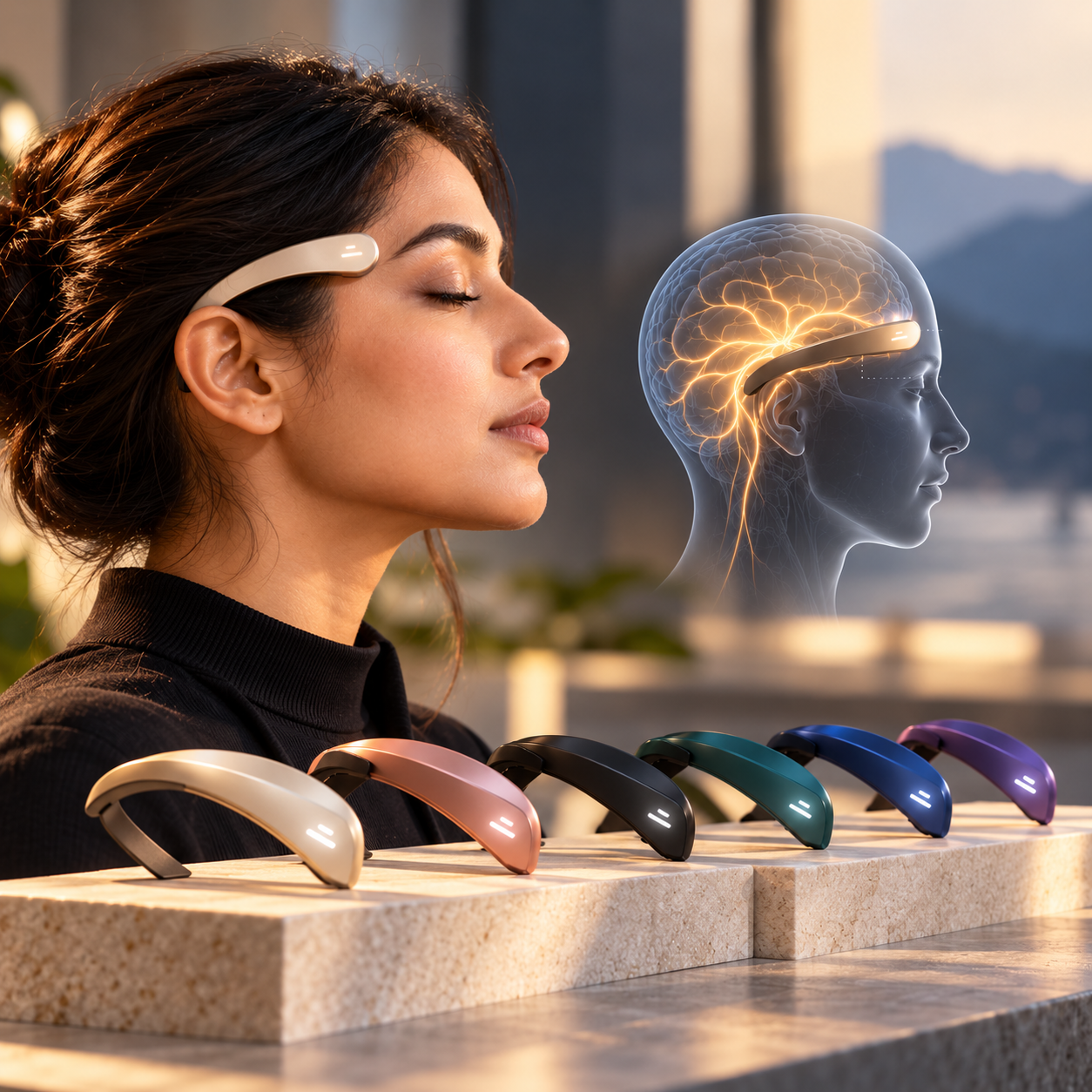

The head-worn device uses optical sensors to monitor physiological changes associated with blood flow to the brain, with initial shipments expected before the end of 2026.
Entrepreneur Deepinder Goyal is preparing to launch Temple, a head-worn wearable designed to monitor physiological signals associated with blood flow to the brain, with an expected price of approximately ₹72,000 and pre-orders likely to open soon.
The device is being developed under Continue Research, an initiative backed by Goyal, and operates independently of Zomato's food delivery business. Although the anticipated price has been reported, Goyal has not officially confirmed the final retail cost.
Temple is positioned near the side of the forehead, between the ear and temple region. Unlike conventional smartwatches that primarily monitor heart rate, physical activity and sleep, the device focuses on measurements associated with cerebral blood flow.
The wearable uses photoplethysmography (PPG), an optical sensing technology also found in devices such as the Apple Watch. PPG detects changes in blood volume using light, although Temple applies the technology to a different part of the body.
Goyal has clarified that Temple does not use electroencephalography (EEG), which measures electrical activity in the brain. Instead, its underlying technology, called BrainFlow, is intended to continuously monitor blood-flow-related changes and examine their relationship with factors including exercise, sleep and stress.
According to Goyal, a second validation study involving 60 participants compared BrainFlow measurements with time-domain near-infrared spectroscopy (TD-NIRS), a method used to assess changes in blood volume within brain tissue.
The study reported correlations ranging from 0.84 to 0.91 between BrainFlow measurements and changes detected using TD-NIRS, with the highest correlation recorded during a head-down tilt test.
The findings have been released as a preprint and submitted for peer review. Independent validation remains necessary to establish the technology's reliability and potential medical applications.
Addressing questions about age suitability, Goyal said the sensing technology does not pose risks to a developing brain. However, he indicated that the device is unlikely to be necessary for users below 18 unless they are pursuing specialised athletic performance goals.
The initial limited-edition release is expected to offer six colour options, including True Gold, Rose Gold, Black Mirror, Real Jade, Deep Blue and Purple Funk.
Goyal has indicated that early-access waitlist members will receive priority when pre-orders begin, with shipments potentially starting before the end of 2026.
The research team is also exploring a future thoughts-to-text capability, although Goyal suggested that such functionality remains several years away and could appear in a later version.
Potential applications in athletics, aviation and defence are also being explored. However, these remain proposed use cases rather than commercially available features.
Disclaimer: This article may include information derived from interviews, press releases, public statements, research, company communications and other publicly available or third-party sources. Such material may be summarised, paraphrased or contextualised for journalistic and editorial purposes. All rights in third-party content remain with their respective owners.