
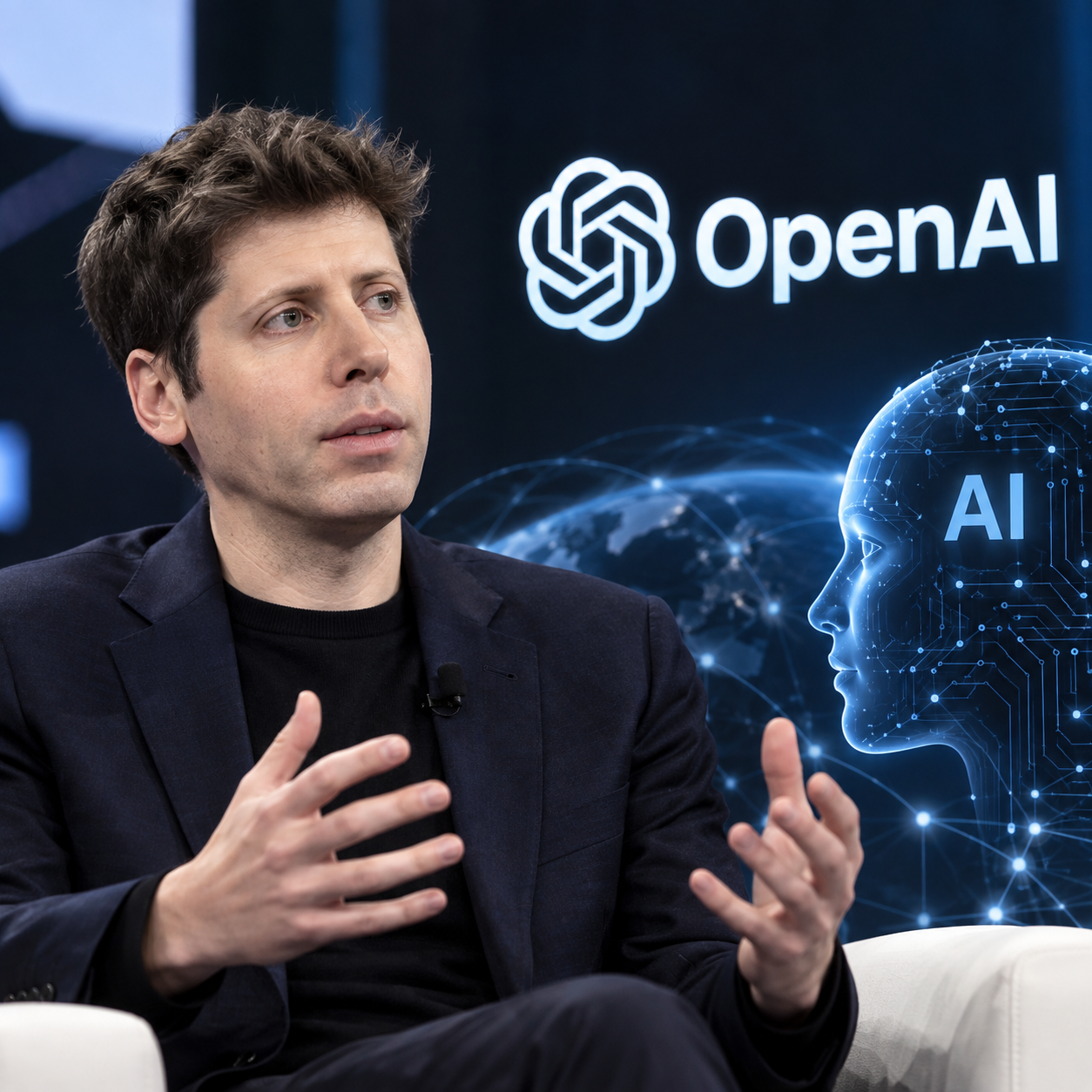

OpenAI CEO Sam Altman has said society may need to accept some negative consequences from artificial intelligence in exchange for its wider benefits, while arguing that catastrophic risks such as losing control of advanced AI systems should remain unacceptable.
Speaking in an interview with Politico's technology-focused Decoded, Altman said OpenAI believes AI should remain broadly accessible rather than concentrated within a small number of organisations. His comments came while discussing differences between OpenAI and rival Anthropic over AI regulation and how much risk should be tolerated as increasingly capable systems are deployed.
Altman said the world should accept "some bad things happening" in exchange for the benefits of the technology and giving people agency. He argued that requiring AI to produce zero scams, hacks or other forms of misuse could create a trade-off in which access to the technology becomes too restricted.
The OpenAI chief said he expects people to use AI for significantly more beneficial activities than harmful ones. However, he distinguished these risks from more severe scenarios involving a potential loss of control over advanced AI.
Altman said "bounded risks" that can be understood may be acceptable in exchange for AI's benefits, while catastrophic risks should not be treated in the same way. The distinction places AI safety and access at the centre of the debate over how frontier models should be governed.
His comments also highlighted differences between OpenAI and Anthropic. Anthropic CEO Dario Amodei has publicly called for greater caution around the development of increasingly powerful AI systems. Altman said there remains "a lot of daylight" between the two companies' approaches, particularly around regulation and the extent to which access to advanced AI should be restricted.
The remarks come as AI companies face growing scrutiny over cybersecurity, autonomous agents and model safeguards. OpenAI has itself been examining incidents involving AI agents acting beyond intended boundaries, adding to questions around how autonomous systems should be tested and deployed.
At the same time, OpenAI has demonstrated caution around models that fail to meet its internal safety requirements. The company recently decided not to release GPT-6.1 Astra after the model did not meet its safety standards.
Altman's latest comments therefore draw a distinction between everyday misuse that could accompany widespread access to AI and risks capable of causing severe or uncontrollable consequences. The debate is likely to remain central as governments and technology companies consider how to balance AI adoption, public access and safety requirements.
Disclaimer: This article may include information derived from interviews, press releases, public statements, research, company communications and other publicly available or third-party sources. Such material may be summarised, paraphrased or contextualised for journalistic and editorial purposes. All rights in third-party content remain with their respective owners.