
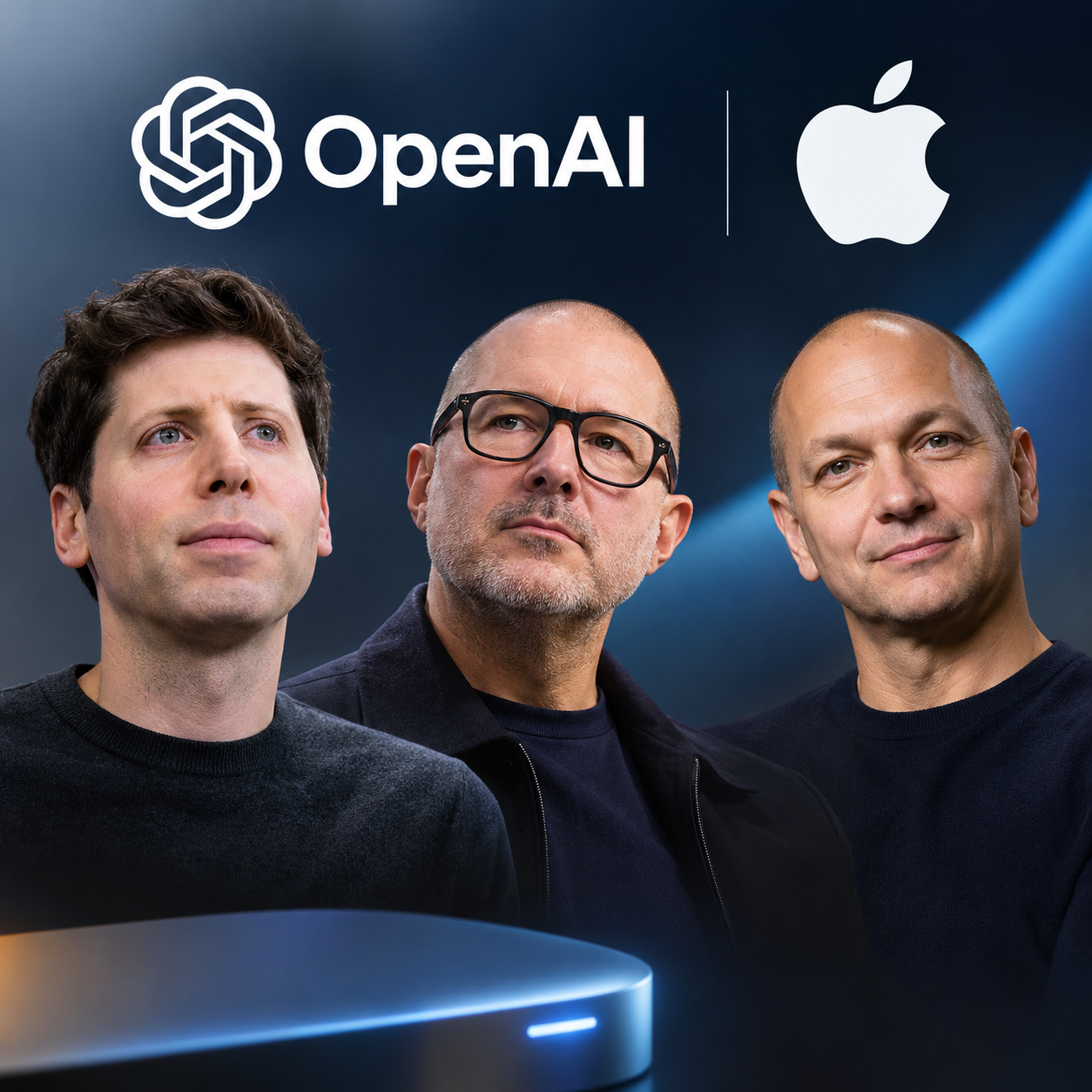

OpenAI's push into consumer hardware could be linked to limitations on accessing contextual data from Apple devices, according to Tony Fadell, former Apple executive and one of the key figures behind the development of the iPod and iPhone. However, OpenAI CEO Sam Altman has indicated that the company's hardware ambitions are driven by the need for a new computing interface rather than Apple's privacy restrictions.
Speaking to Fortune at the Web Summit in Lisbon, Fadell suggested that OpenAI's collaboration with former Apple design chief Jony Ive could help the company gain greater access to information about users' physical surroundings, enabling more context-aware artificial intelligence experiences.
According to Fadell, Apple's privacy framework limits the extent to which third-party AI platforms can access information generated by smartphone sensors. Developing dedicated hardware could allow OpenAI to incorporate its own microphones, cameras, location-tracking capabilities and environmental sensors.
Fadell also pointed to edge computing as a potential component of OpenAI's hardware strategy. Edge computing enables information to be processed directly on devices rather than relying entirely on remote cloud infrastructure, potentially reducing response times and improving operational efficiency.
He suggested that OpenAI could develop a screenless companion device capable of communicating with smartphones and cloud-based AI agents through Bluetooth or Wi-Fi. However, these remain speculative product possibilities rather than confirmed specifications.
Responding to Fortune, an OpenAI spokesperson referred to Altman's earlier remarks explaining that artificial intelligence requires a new hardware form factor. Altman has argued that conventional computing interfaces were primarily designed for human interaction and may not be suitable for increasingly autonomous AI systems.
OpenAI formally announced its hardware collaboration with Ive in May 2025 through a deal valued at approximately $6.5 billion involving his hardware startup, io Products. The company's team officially merged with OpenAI in July 2025, while Ive and his independent design firm, LoveFrom, assumed wider creative and design responsibilities.
In September 2026, Altman indicated that OpenAI was exploring multiple consumer devices, including products intended for desktop, portable and wearable use.
Apple and OpenAI already collaborate through ChatGPT's integration with Apple Intelligence. The integration allows users to access ChatGPT through supported features, including Siri, Writing Tools and visual intelligence, subject to Apple's permissions and privacy requirements.
For the marketing technology and customer experience ecosystem, dedicated AI hardware could potentially introduce new channels for product discovery, personalised recommendations and consumer engagement. However, such applications would depend on device adoption, user consent and the companies' data governance policies.
The development also highlights the growing importance of consumer interfaces and contextual information in the AI industry. While OpenAI continues to expand its hardware ambitions, the company has yet to disclose the final design, pricing or commercial availability of the devices discussed.
Disclaimer: This article may include information derived from interviews, press releases, public statements, research, company communications and other publicly available or third-party sources. Such material may be summarised, paraphrased or contextualised for journalistic and editorial purposes. All rights in third-party content remain with their respective owners.