
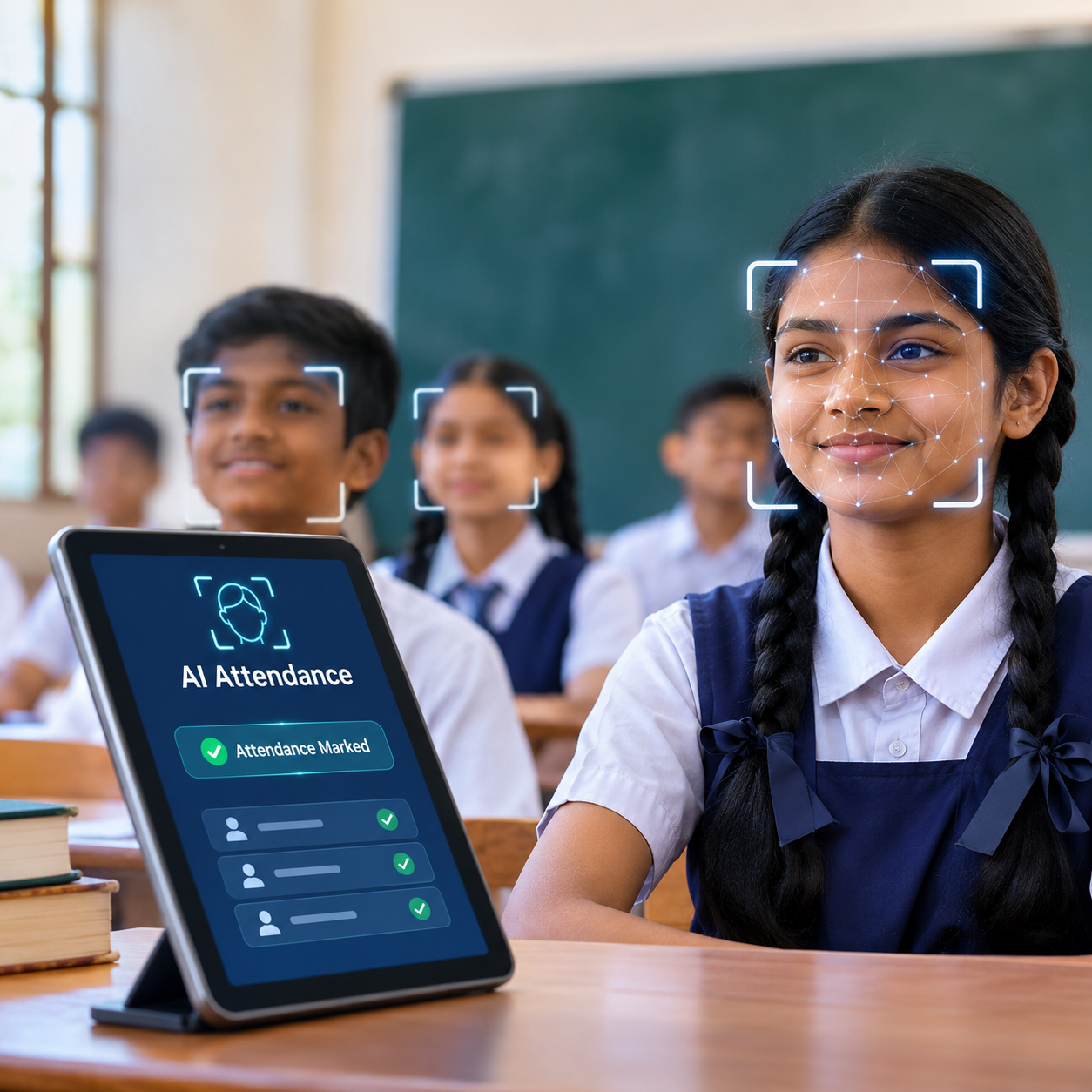

The state is preparing to test an AI-powered mobile application that will identify students through classroom photographs and automatically generate daily attendance records.
The West Bengal government is planning to introduce an artificial intelligence (AI)-powered facial recognition attendance system in government and government-aided schools, beginning with a pilot programme across 100 selected institutions. The initiative aims to automate student attendance recording and reduce the administrative workload of teachers.
According to reports, the West Bengal School Education Department is preparing to implement the system through a mobile application that will identify students using facial recognition technology. The pilot is expected to begin after the Puja vacation, with a wider rollout potentially starting in January 2027, depending on the results of the initial trial.
Under the proposed system, teachers will use a dedicated mobile application to photograph students inside classrooms. The application will analyse the images using AI-based facial recognition technology and compare them with student records stored in a digital database.
Before implementation, schools will be required to create a database containing students' photographs and relevant identification details. The system will use this information to recognise students appearing in classroom photographs and automatically generate attendance records.
Once the verification process is completed, the application will produce a list of students present in the classroom. It will also identify students who are absent and record their attendance status in an online logbook.
The proposed technology is intended to replace or reduce the need for conventional attendance procedures, where teachers call out students' names or roll numbers and manually update registers.
In classrooms with large numbers of students, these procedures can take up teaching time. The AI-powered system is expected to simplify the process by identifying multiple students through a single photograph.
The digital attendance records could also allow schools and education officials to monitor attendance patterns, identify frequent absences and access student attendance information electronically.
The initiative forms part of efforts to introduce digital technologies into school administration and improve the management of routine educational activities.
However, the proposed system will require schools to maintain accurate student records and ensure that photographs captured through the application can be matched with the correct individuals.
The use of facial recognition technology also introduces considerations around the collection, storage and protection of children's biometric information. The reports have not specified the data protection safeguards, consent procedures or retention policies that would govern the proposed system.
The state government has not disclosed the estimated cost of implementation, the technology provider or the number of students expected to participate in the initial trial.
The pilot programme will determine whether the technology can be implemented across a larger number of schools. A broader rollout remains conditional on the outcomes of the initial testing phase.
Disclaimer: This article may include information derived from interviews, press releases, public statements, research, company communications and other publicly available or third-party sources. Such material may be summarised, paraphrased or contextualised for journalistic and editorial purposes. All rights in third-party content remain with their respective owners.