
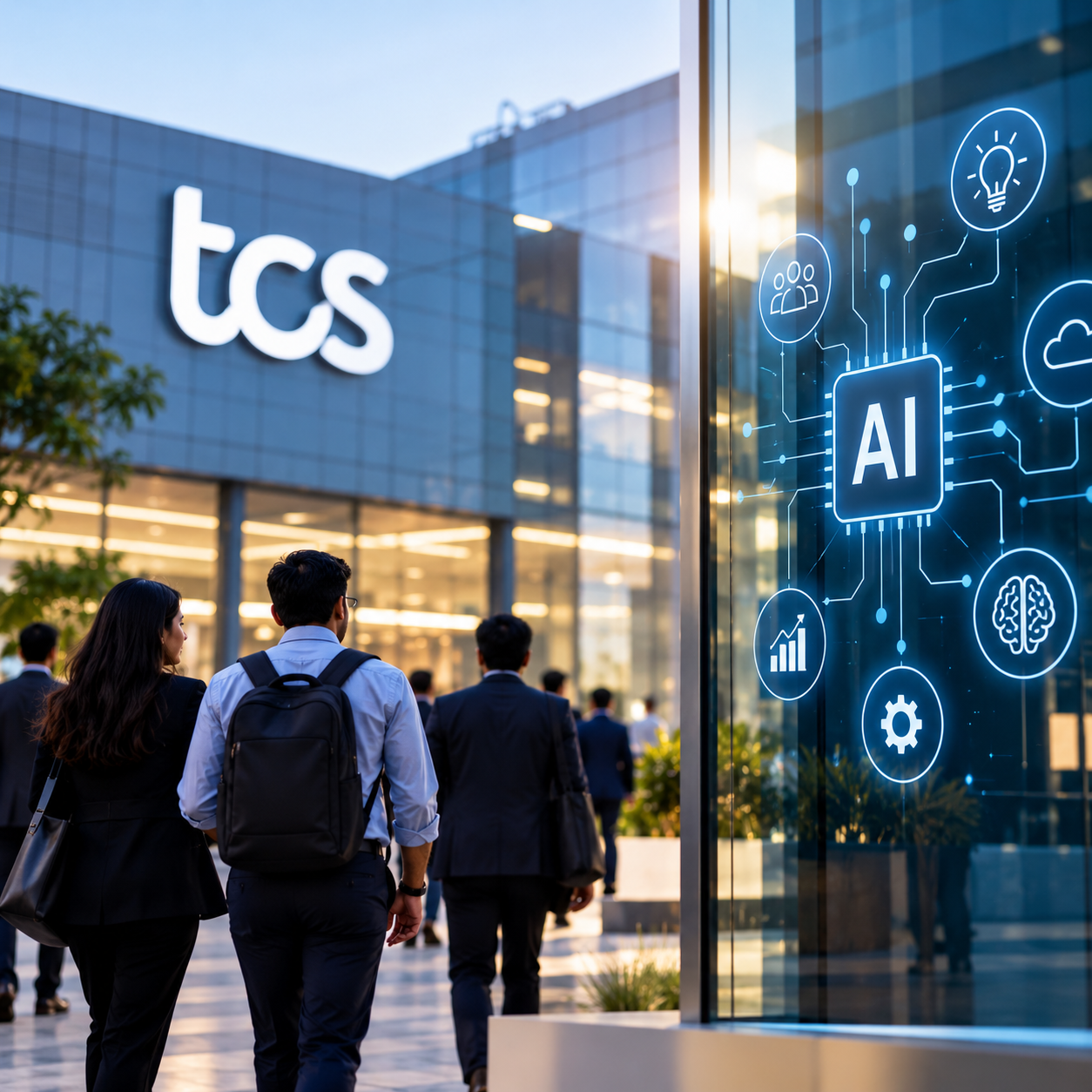

The IT services company is prioritising technology capabilities and adaptability as AI-related business accounts for 10% of its revenue in the September quarter.
Tata Consultancy Services (TCS) is increasing its focus on artificial intelligence and digital capabilities in recruitment, with approximately 80% of its recent hires possessing skills in emerging technologies, according to senior company executives.
The development comes as India's largest IT services company expands its AI business and adjusts workforce requirements to meet changing enterprise technology demands.
TCS Chief Operating Officer Arathi Subramanian told PTI that of the 4,500 employees added during the July-September quarter, approximately 25% to 30% possessed specialised AI skills, while nearly 80% had broader digital and emerging technology capabilities.
Subramanian indicated that the company expects to maintain a similar hiring composition, adding that professionals with the required skills are available in the employment market.
The shift reflects growing demand for employees who can work with AI systems and apply emerging technologies to enterprise operations, rather than relying solely on familiarity with individual generative AI tools.
TCS Chief Executive Officer and Managing Director K Krithivasan also addressed questions about whether younger employees have an advantage over experienced professionals as AI adoption increases.
He said the ability to learn and adapt remains an important consideration, highlighting the value of industry knowledge and technical experience among mid-career professionals.
According to Krithivasan, experienced engineers who develop new AI capabilities can combine their understanding of business domains with emerging technology skills, potentially giving them an advantage over less experienced employees.
The company's recruitment approach coincides with the expansion of its AI-related business, which accounted for 10% of overall revenue during the September quarter.
Krithivasan said increasing volumes of AI engagements could contribute positively to profit margins as projects expand.
Subramanian explained that enterprise customers often begin by deploying AI within a specific business function before extending its use to other areas after assessing the initial results.
TCS reported a total contract value of $9.6 billion for the September quarter but did not separately disclose the proportion attributable to AI-related agreements.
Krithivasan said the company follows a conservative approach when categorising contracts as AI deals, although AI capabilities are increasingly incorporated into its broader service offerings.
The recruitment changes also coincide with discussions about the distinction between using generative AI tools and developing specialised capabilities required for enterprise deployment.
Nikhar Arora, Director and Builder of Bots.ai by HR Anexi, told NDTV that widespread employee adoption of AI tools does not necessarily indicate organisational readiness.
He emphasised the importance of defined business objectives, measurable outcomes and consistent standards when integrating AI into workplace processes.
The developments indicate that TCS is placing greater emphasis on specialised technical capabilities, continuous learning and domain expertise as AI becomes a larger component of enterprise technology services.
Disclaimer: This article may include information derived from interviews, press releases, public statements, research, company communications and other publicly available or third-party sources. Such material may be summarised, paraphrased or contextualised for journalistic and editorial purposes. All rights in third-party content remain with their respective owners.