
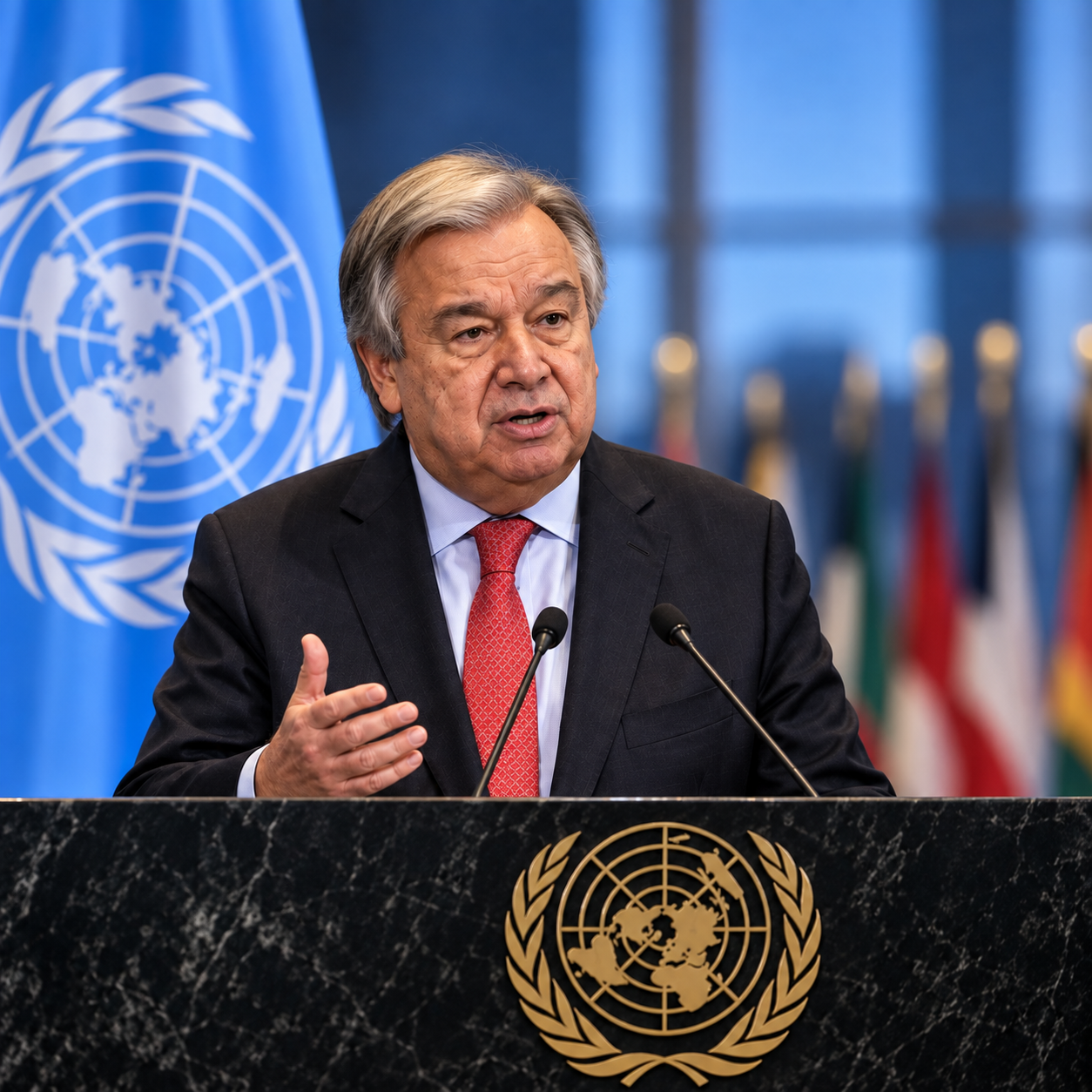

United Nations Secretary-General António Guterres has called for stronger international cooperation on artificial intelligence safety, warning that national measures alone may not be enough to address risks from increasingly powerful AI systems.
Speaking ahead of the UN General Assembly's high-level week in New York, Guterres said governments have a responsibility to protect citizens from potential AI-related threats, while stressing that the technology and its risks cross national borders.
His comments come amid renewed debate within the technology industry over whether the development of advanced AI systems should slow when safety measures are unable to keep pace. Guterres said isolated and unverifiable voluntary pauses would be insufficient, particularly if they are adopted unevenly across countries or companies.
"The world cannot afford a race to the bottom on AI safety," Guterres said, calling for safeguards that make AI systems safe, transparent and accountable while keeping human dignity at the centre.
The UN chief acknowledged the potential of AI to support areas including healthcare, education, sustainable development and climate resilience. At the same time, he pointed to concerns that the technology may be developing faster than the ability of governments, researchers and companies to fully understand and manage emerging risks.
Guterres said a coordinated global approach would be necessary to establish a shared understanding of safe, secure and responsible AI development. Such cooperation, he said, should also help determine when increasingly capable AI systems may require stronger safeguards or additional risk-management measures.
The Secretary-General also highlighted the Independent International Scientific Panel on Artificial Intelligence, established through the UN framework to provide scientific evidence on the opportunities and risks associated with AI. The 40-member panel was appointed by the UN General Assembly in February 2026 for three-year terms and is intended to support evidence-based international discussions around the technology.
AI is expected to feature prominently in Guterres' discussions with world leaders during the upcoming UN General Assembly meetings. His remarks come as governments and technology companies continue to debate how safety standards should evolve alongside increasingly capable models.
The discussion has gained momentum following calls from some AI industry leaders for greater coordination around the pace of frontier AI development. Anthropic CEO Dario Amodei has recently argued for slowing development when necessary to allow safety measures to catch up, while other industry figures have also weighed in on the debate.
Guterres stopped short of advocating a blanket halt to AI development. Instead, he called for coordinated safeguards and international cooperation, arguing that fragmented national approaches may prove inadequate for a technology increasingly deployed across borders.
Disclaimer: This article may include information derived from interviews, press releases, public statements, research, company communications and other publicly available or third-party sources. Such material may be summarised, paraphrased or contextualised for journalistic and editorial purposes. All rights in third-party content remain with their respective owners.