
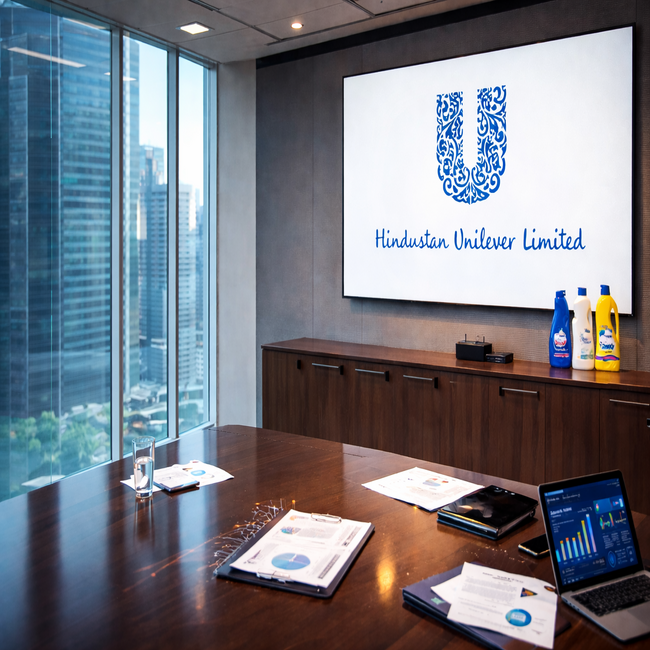

Hindustan Unilever Limited has appointed three Chief Marketing Officers as part of a broader restructuring exercise aligned with its unified India strategy. The move reflects a significant shift in the company’s marketing architecture as it seeks to streamline operations, enhance agility, and drive sharper brand growth in an evolving consumer landscape.
The restructuring comes as HUL integrates its foods and refreshment businesses under a consolidated India framework. The unified approach is designed to simplify reporting structures, accelerate decision making, and align category strategies more closely with market realities. In this context, the appointment of three CMOs signals a recalibration of leadership roles across core verticals.
The newly designated CMOs will oversee marketing mandates across key portfolios, with responsibilities spanning brand building, innovation, media strategy, and consumer engagement. By distributing leadership across focused verticals, HUL aims to maintain category depth while strengthening cross-functional collaboration.
HUL has historically operated with category-based leadership structures, reflecting the scale and diversity of its portfolio. Its brands span home care, beauty and wellbeing, personal care, and foods and refreshment. As consumer preferences shift rapidly and digital adoption deepens, the company appears to be adjusting its marketing governance to remain competitive.
Industry observers note that large FMCG players are increasingly reorganising leadership structures to drive efficiency and faster go-to-market execution. With media fragmentation and rising digital penetration, marketing functions must operate with greater precision and data integration.
The unified India strategy is also expected to strengthen alignment between marketing, sales, and supply chain functions. A consolidated framework may allow HUL to leverage synergies across categories, particularly in media planning and consumer insights.
In recent years, marketing roles within FMCG companies have evolved beyond traditional advertising oversight. CMOs are now tasked with driving digital transformation, performance marketing, and analytics-led decision making. The creation of multiple CMO roles suggests that HUL recognises the growing complexity of managing diverse consumer touchpoints.
The company continues to invest in digital capabilities, including data-driven targeting and e-commerce partnerships. As organised retail and online platforms expand across India, marketing leaders must balance mass reach with personalised engagement.
Analysts suggest that appointing three CMOs may also reflect HUL’s scale and ambition in India, one of its largest and most strategic markets. The Indian FMCG sector remains highly competitive, with multinational corporations and domestic players vying for share across urban and rural segments.
The restructuring follows broader changes within parent company Unilever, which has been streamlining its global business groups. Such structural realignments often cascade into regional markets as companies aim to enhance accountability and sharpen category focus.
HUL’s marketing function has traditionally been regarded as a talent incubator within the industry. Leadership changes are closely watched by competitors and agencies alike, given the company’s influence on advertising spends and creative direction.
The unified structure may enable stronger consistency in brand messaging across portfolios while retaining category-specific expertise. With consumer journeys spanning physical retail, quick commerce, and digital platforms, integrated marketing leadership becomes increasingly critical.
Market experts point out that Indian consumers are demonstrating evolving preferences toward premiumisation, health-conscious products, and sustainable offerings. Marketing leaders will need to translate these trends into coherent brand narratives supported by measurable performance metrics.
The appointment of three CMOs also signals HUL’s commitment to investing in marketing as a growth lever rather than viewing it solely as a cost centre. In a market characterised by inflationary pressures and value sensitivity, brand equity remains central to maintaining pricing power.
Media strategies are likewise undergoing transformation. Performance marketing, influencer partnerships, and regional content are reshaping traditional advertising models. Multiple CMO roles may allow sharper oversight of these emerging channels.
While HUL has not publicly detailed operational specifics of the restructure, the direction suggests an emphasis on agility and accountability. Clearer category ownership combined with unified oversight may help streamline innovation cycles.
The FMCG sector is navigating a period of recalibration as rural demand patterns shift and urban consumption trends fragment. Marketing organisations must respond with adaptive strategies grounded in real-time data insights.
HUL’s leadership reshuffle is likely to be evaluated in terms of brand performance, innovation cadence, and market share gains over the coming quarters. As competition intensifies across categories, execution speed and clarity of messaging will be critical.
The unified India strategy and appointment of three CMOs mark a strategic moment for HUL’s marketing framework. By recalibrating leadership structures, the company is positioning itself to respond more effectively to shifting consumer dynamics while preserving category depth.
As India remains a core growth engine for global FMCG companies, structural refinements such as these reflect the importance of market-specific strategies. HUL’s move underscores the evolving nature of marketing leadership in an environment shaped by digital acceleration and consumer complexity.