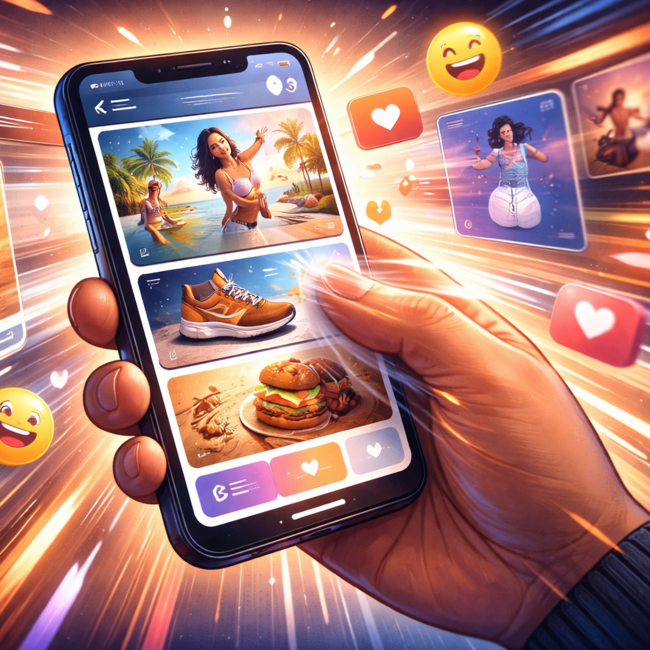
The marketing industry has never been better at grabbing attention. Short-form video, meme culture, creator-led content, and algorithm-driven feeds have made it easier than ever for brands to go viral. Yet a quieter problem is surfacing beneath the celebration of views, likes, and shares. Many brands are discovering that while their content travels far, their identity does not travel with it.
Campaigns rack up millions of impressions but fail to leave behind brand recall. Audiences remember the joke, the influencer, or the format, but not the advertiser. In an economy increasingly driven by metrics, this disconnect between virality and memory is forcing marketers to rethink what success really looks like.
In India, where digital consumption is growing at record pace, the issue is becoming especially visible. Consumers scroll fast, skip faster, and engage lightly. Viral content blends into the feed, often stripped of its commercial origin. Brands win reach but lose recognition.
A recent digital content study found that despite watching over two hours of online video daily, Indian consumers can recall barely one to two brand names from that exposure. Out of hundreds of brands advertising to them, only a handful manage to break through memory thresholds. The rest dissolve into entertainment without ownership.
This gap between attention and attribution is not accidental. It is a consequence of how modern digital marketing works.
When Virality Outpaces Identity
Much of today’s viral content is designed to feel native to platforms rather than branded. Memes, influencer skits, trending audio, and relatable humor dominate because they blend seamlessly into social feeds. The more a piece of content feels like an ad, the less likely it is to be watched or shared.
To avoid resistance, brands often underplay their presence. Logos appear late or briefly. Product mentions are subtle. Messaging is wrapped inside entertainment. The trade-off is visibility without memory.
This phenomenon has played out repeatedly in India. Several influencer-led campaigns in the past year crossed tens of millions of views, yet post-campaign surveys showed weak brand attribution. Viewers remembered the influencer’s punchline or performance but struggled to recall which brand sponsored the content.
Marketing leaders acknowledge this tension. Amarnath Dutta, Chief Marketing Officer at Cycle Pure Agarbathi, has pointed out that audiences are no longer short on content, they are short on relevance. According to him, recall comes from cultural clarity and emotional anchoring, not from volume or novelty alone. When content lacks a clear brand voice, it becomes disposable, no matter how viral it is.
Globally, this is not a new lesson. Iconic viral campaigns of the past decade continue to be cited as cautionary tales. Content can embed itself into popular culture while the brand behind it fades into the background. The memory belongs to the idea, not the advertiser.
In today’s creator economy, this risk is amplified.
Influencers, Formats, and the Attribution Problem
Influencer marketing has become one of the most powerful distribution engines in India. Influencers bring credibility, relatability, and built-in audiences. But they also bring a dominant personal brand that can eclipse the advertiser.
When creators lead the narrative, audiences often associate the content more strongly with the individual than with the sponsor. The creator’s tone, humor, and personality become the focal point. The brand becomes a supporting character.
Rimjim Deka, founder of fashion startup Littlebox India, has spoken openly about how creator-driven sales transformed her business. At the same time, she has acknowledged the need for clarity in brand attribution. According to her, creators convert because audiences trust them, but brands must still ensure that their own identity is visible enough to be remembered beyond the transaction.
Data supports this concern. Studies on influencer effectiveness show that while influencer content can drive high engagement and purchase intent, unaided brand recall remains significantly lower unless the brand is clearly integrated into the story. In many cases, viewers remember watching the video but cannot name the brand without prompting.
This has led marketers to question whether viral reach alone should be considered a win.
Digital platforms reward attention, not recall. Algorithms prioritise watch time, completion rates, and engagement. None of these metrics directly measure whether a brand has lodged itself in a consumer’s mind.
Ankit Goyle, Head of Marketing for Snap India, has consistently argued that the industry has relied too heavily on vanity metrics. According to him, attention without impact creates an illusion of effectiveness. He has emphasised the importance of measuring quality of attention, not just quantity, pointing out that brands focusing on meaningful engagement see better long-term brand outcomes.
Recent platform-level studies reinforce this idea. A large proportion of digital ads are skipped or only partially viewed. Even when ads are watched, consumers often multitask, scroll, or disengage mentally. The exposure exists, but the imprint does not.
In such an environment, virality can become deceptive. A campaign may dominate feeds for a week, yet leave no trace in brand consideration scores. When the noise subsides, nothing remains.
S Narasimhan, Executive Vice President and Chief Digital Officer at RK Swamy, has warned against mistaking ubiquity for effectiveness. According to him, brands spreading themselves thin across formats without a unifying message risk becoming invisible despite being everywhere. In his view, simplicity and consistency are becoming competitive advantages in a cluttered digital landscape.
Anonymous virality refers to content that travels widely without carrying clear brand ownership. Memes, templates, and trends often fall into this category. They are designed to be remixable and shareable, which makes them powerful but also erases authorship.
Brands frequently jump onto trending formats hoping to ride momentum. But when everyone uses the same format, differentiation disappears. The content becomes part of the trend, not part of the brand.
Indian marketers have seen this play out across reels and short videos. Brands use the same audio, same punchlines, same visual grammar. Audiences enjoy the trend but struggle to distinguish one advertiser from another.
The irony is that in trying to appear relatable, brands often erase their own uniqueness.
Prativa Mohapatra, Vice President and Managing Director at Adobe India, has spoken about the growing importance of authenticity and originality in a world flooded with content. According to her, trust and memorability are built when brands express a clear point of view, not when they chase every new format.
As a result of these challenges, more marketers are shifting how they define success. Brand lift studies, recall surveys, and consideration metrics are gaining renewed importance. Rather than celebrating viral spikes in isolation, teams are asking harder questions.
Did the campaign increase brand searches?
Did unaided recall improve?
Did consideration scores move?
Did the audience understand what the brand stands for?
Some brands are now designing campaigns in phases. The first phase focuses on attention and entertainment. The second reinforces brand identity through clearer messaging, owned media, or follow-up storytelling. The goal is to convert fleeting visibility into lasting memory.
Others are embedding stronger brand cues from the outset. Distinctive visual assets, recurring characters, consistent tone, and unmistakable language patterns help ensure that even highly entertaining content remains identifiable.
Research consistently shows that brands using consistent cues over time see significantly higher recall and recognition. Memory builds through repetition and coherence, not novelty alone.
The problem of viral invisibility is becoming more urgent because marketing budgets are under pressure. Brands cannot afford to spend heavily on campaigns that deliver applause without equity.
At the same time, consumer trust is harder to earn. Audiences are sceptical of overt advertising but also increasingly aware of manipulation. Brands that fail to establish a clear identity risk being dismissed as noise.
The challenge is not to abandon virality but to anchor it.
Marketing leaders increasingly agree that attention is a means, not an end. The real objective is to occupy mental space, not just feed space.
As Dutta has noted, consumers remember brands that make sense in their lives, not those that simply entertain them for a moment.
The future of effective marketing lies in balancing reach with resonance. Viral content must serve a larger brand narrative rather than exist as a standalone stunt.
This requires discipline. Not every trend needs to be followed. Not every joke needs to be made. Brands must ask whether a piece of content sounds like them, looks like them, and reinforces what they stand for.
In a crowded digital environment, being forgettable is a greater risk than being quiet.
The brands that will win are those that understand that visibility without memory is not success. It is a warning sign.
In the race for virality, the real victory belongs to brands that remain recognisable long after the scroll moves on.
Disclaimer: All data points and statistics are attributed to published research studies and verified market research. All quotes are either sourced directly or attributed to public statements.
Related Articles