
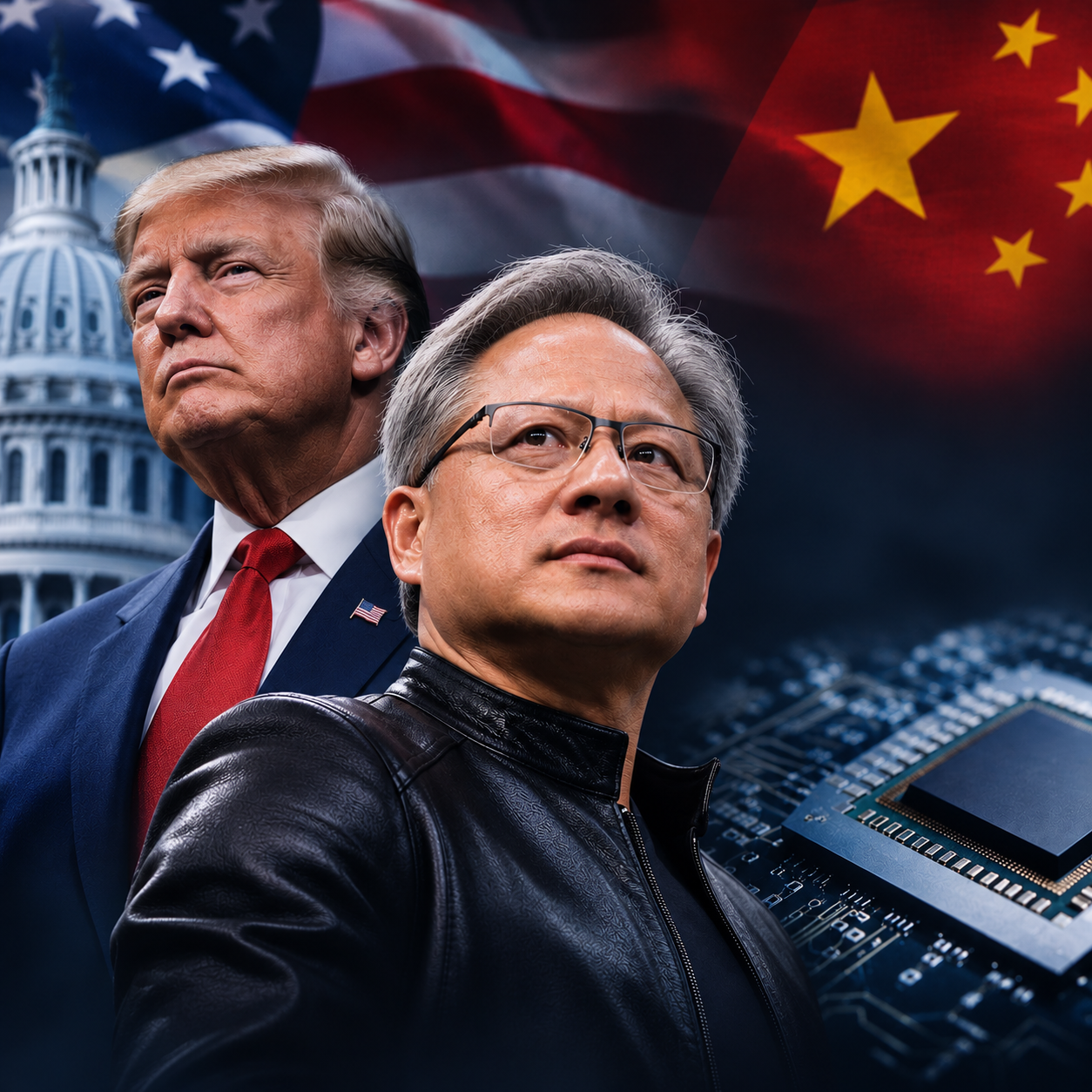

Donald Trump and the Republicans lost control of both houses of Congress. The next morning, Trump invited reporters to admire the White House ballroom he was building. When you lose two chambers, I suppose the instinct is to build a third. For a morning, at least, the White House had a subject of its own choosing.
By Sunday, it had a much better one. Nvidia’s Jensen Huang had admitted to an affair, and his board had opened an inquiry into whether he was targeted by foreign intelligence. The internet supplied the Austin Powers suit. Republicans could spend part of the next news cycle talking about a billionaire and a suspected spy instead of the seats they’d lost. Some coincidences look less coincidental once you see who finds them useful.
Was this deliberate narrative shifting? Time will tell. For now, look at what happened to the running order. Nielsen put the US election-night prime-time audience at 31.2 million across 13 networks. The next evening, PBS News Hour devoted about 45 minutes to the results and their fallout. Five days later, the same programme opened with three Nvidia segments running 14 minutes and 26 seconds. Its two dedicated election follow-ups took about 14 and a half minutes, beginning at minute 31.
CBS also ran three reports on Huang from Sunday to Tuesday, totalling 10 minutes and 33 seconds. If you’re the politician who lost the election, going from the top of the PBS bulletin to minute 31 is a fairly good night.
I’d need a little more before giving the White House an executive producer credit. The first report ran on 29 October, before Americans voted, and Democratic Senator Elizabeth Warren was already asking questions. Three Republican committee chairs requested a briefing the day after the election. Give a committee chair a gavel with an expiry date, and he’ll find something to hit.
Trump was reportedly briefed roughly a year before the allegations became public. What did he do with that information? That’s an odd question to invite when you’re looking for a quiet week. Trump later said the FBI was looking into the matter and that he believed Huang was unaware of the alleged intelligence ties. It takes some talent to mention the FBI and give a character reference in the same breath.
Governments everywhere know the trick. Boris Johnson’s government gave Britain a fight about the BBC licence fee in the middle of Partygate. Emmanuel Macron offered France 100 days of action when the French were quite fed up with being told to work longer. You can change the subject with a story that matters in its own right. The grocery bill is still on the kitchen table. It’s just lost the prime-time slot.
The story has a more lasting use for lawmakers who want tighter chip exports. Trump expects to meet Xi Jinping in Shenzhen. Try arguing on television that selling China American chips keeps it dependent on US technology while the words “suspected spy” scroll under your name. Beijing calls the espionage allegation a smear, putting Washington’s motives at the centre of its version of the story.
Nvidia’s shares fell 4.3 per cent on Monday, wiping about USD 190 billion off its market value. By Tuesday’s close, the two-day loss was about USD 430 billion. Wall Street usually hangs on every word from Huang. For once it might have preferred he stick to the slides.
Huang left the other person unnamed in his public statement. By then, the internet had awarded itself a doctorate in counterintelligence. The board says it has no reason to believe company secrets were compromised. A separate report alleges that Huang’s ties to a former executive at an Nvidia customer helped move more than USD 7 billion worth of chips to Chinese firms. A company can keep every file under lock and key and still have a problem with where its hardware goes. Who approved the orders, and who got the chips? For that, give me the shipping records.
The internet has already priced a hypothetical divorce at $80 billion. Round Huang’s fortune to USD 160 billion, assume a divorce and assume half goes to his wife. A calculator is a remarkably cheap way to produce the world’s most expensive divorce.
A spreadsheet of export licences gets two blue ticks on WhatsApp if it’s lucky. A billionaire in a spy spoof is in the family group before breakfast. My bet is on opportunism. The midterms made the story convenient for some Republicans. Huang’s admission and the board inquiry gave editors fresh reasons to lead with it. To say the White House timed the disclosures, I’d want to know who passed what information to whom, and when.
Would a presidential pardon for Jensen Huang eventually save the day for Nvidia? Any such pardon would concern a hypothetical federal offence. The shareholders’ lawsuit is civil, and Nvidia’s directors have an inquiry to finish. Try putting “presidential pardon” into the earnings guidance.
As for the Austin Powers sequel, I have a line for the trailer.
The problem is that even affairs don’t last long when they are “Made In China”.