
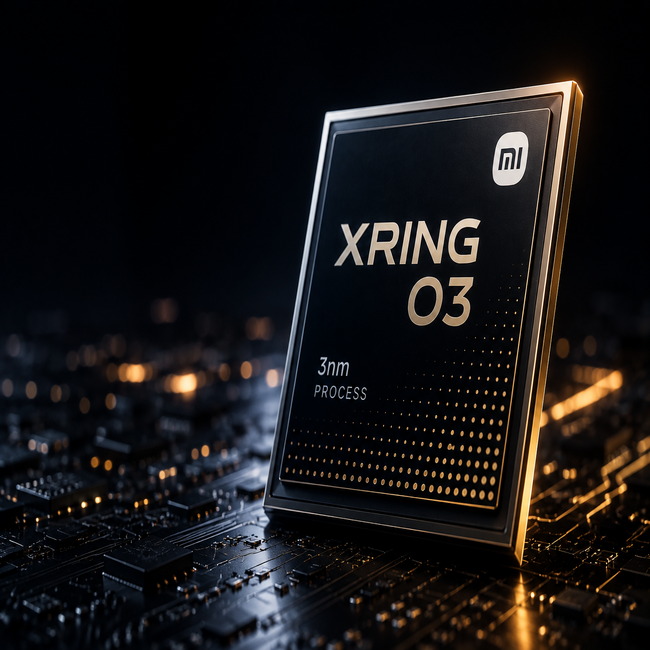

Xiaomi has launched its latest in-house mobile processor, the Xring O3, as the Chinese technology company deepens its push into semiconductor development and seeks greater control over the chips powering its flagship devices.
The Xring O3 system-on-a-chip is designed to deliver improved artificial intelligence capabilities alongside more power-efficient image processing, according to the company. The processor represents the latest stage of Xiaomi's efforts to develop its own silicon rather than depend entirely on established suppliers such as Qualcomm and MediaTek.
The chip is manufactured using a 3-nanometre process, Xiaomi founder Lei Jun said. Reuters reported, citing people familiar with the matter, that Taiwan Semiconductor Manufacturing Company, or TSMC, will manufacture the processor using its 3nm production technology.
Smartphone system-on-chips integrate several core functions, including computing, graphics, artificial intelligence processing and imaging, into a single component. Developing these processors internally can give device manufacturers greater control over how hardware and software are optimised across their products.
The Xring O3 follows Xiaomi's first proprietary smartphone processor, the Xring O1, which was introduced in May 2025. Xiaomi said during its recent earnings call that cumulative shipments of devices powered by the Xring O1, including smartphones, tablets and watches, have crossed one million units.
The new processor is expected to power Xiaomi's upcoming flagship foldable smartphone. According to Reuters, the company is targeting shipments of between 200,000 and 300,000 units for the device. Xiaomi is also expected to introduce the Xring O3 in additional premium products as it expands the use of internally designed silicon.
Xiaomi's chip strategy places it alongside smartphone manufacturers including Apple, Samsung and Huawei, which have invested in developing proprietary processors. Qualcomm and MediaTek, however, remain major suppliers to Xiaomi, and the company is not subject to restrictions preventing it from sourcing technology from international chipmakers.
The move also comes as AI capabilities increasingly become a point of differentiation in premium smartphones. Running more AI workloads directly on devices can support features related to imaging, personalisation and intelligent assistants while reducing dependence on cloud-based processing.
Xiaomi's broader semiconductor programme extends beyond smartphones. The company is also developing chips for artificial intelligence and intelligent driving as it expands across consumer electronics and electric vehicles.
While its proprietary processors could reduce reliance on third-party suppliers over time, analysts cited by Bloomberg Intelligence expect Xiaomi to continue depending significantly on Qualcomm and MediaTek because of the relatively limited volume of its in-house chips.
Disclaimer: This article may include information derived from interviews, press releases, public statements, research, company communications and other publicly available or third-party sources. Such material may be summarised, paraphrased or contextualised for journalistic and editorial purposes. All rights in third-party content remain with their respective owners.