
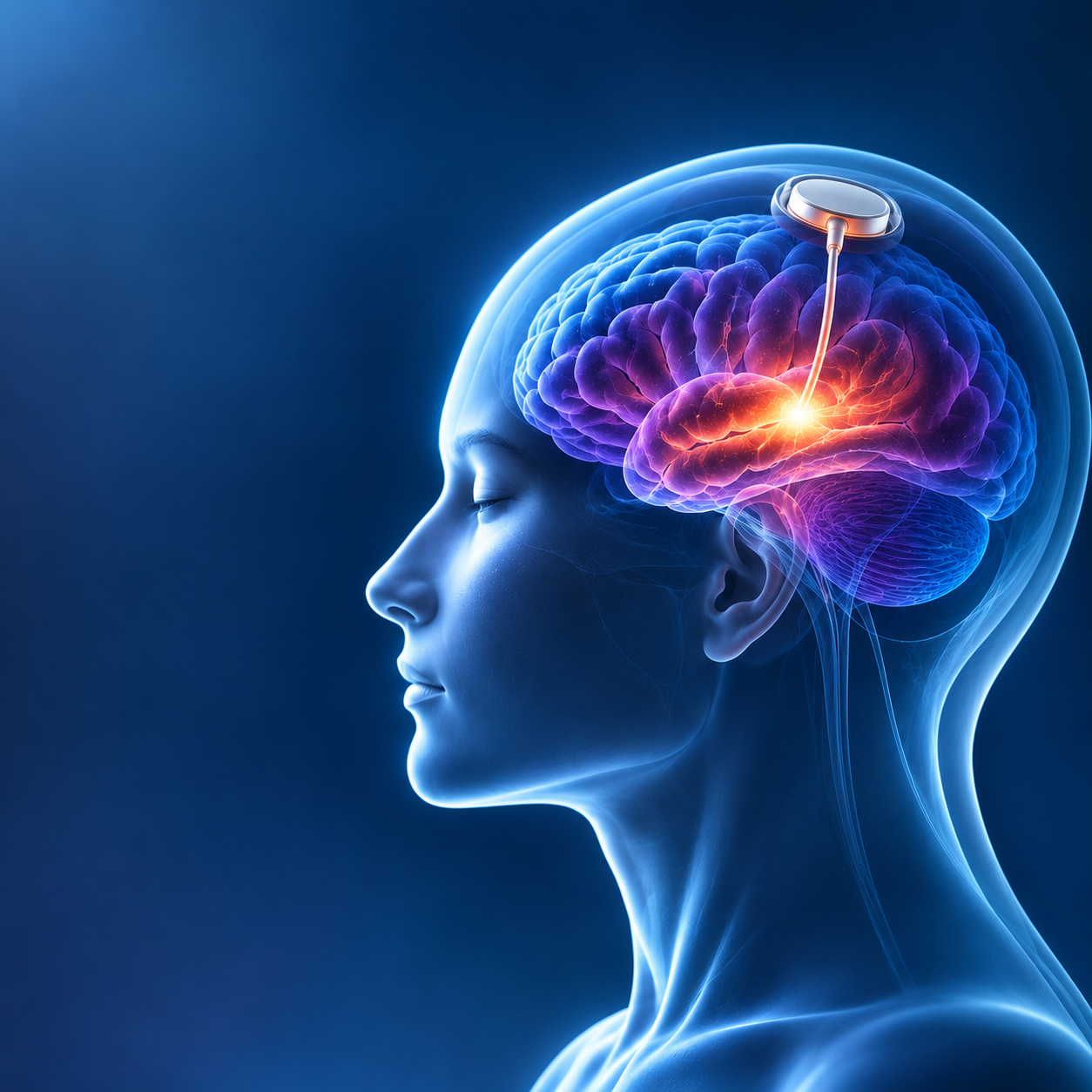

Researchers in South Korea have developed an artificial intelligence-based technology designed to improve the analysis of brain signals, potentially supporting more precise deep brain stimulation therapy for patients with Parkinson's disease.
The technology, called NONOS, uses deep learning to distinguish rhythmic brain activity from background electrical signals. The research was led by Professor Ji-Woong Choi at the Daegu Gyeongbuk Institute of Science and Technology (DGIST), in collaboration with researchers from Kumoh National Institute of Technology, Korea University and the Korea Brain Research Institute.
The findings, published in the scientific journal NeuroImage, address a challenge in analysing the electrical activity generated by the brain.
Brain signals contain rhythmic patterns, known as oscillatory components, alongside non-oscillatory background activity. Separating these components is important for understanding neurological conditions and monitoring responses to treatment.
In patients with Parkinson's disease, increased activity in beta-frequency brain rhythms is associated with symptoms such as slowed movement. These signals can also help researchers assess the effects of deep brain stimulation, a treatment that delivers electrical impulses to targeted brain regions.
However, conventional signal-processing methods can struggle to distinguish changes in beta rhythms from fluctuations in background activity.
According to the researchers, existing techniques may also overlook rapid changes when analysing signals over fixed time intervals.
NONOS addresses this limitation by using a deep-learning model to identify and extract background components from recorded brain signals. Researchers can then isolate rhythmic activity by subtracting the identified background signals from the original recordings.
The team reported improvements in analysing movement-related brain activity among patients with Parkinson's disease.
Using signals processed through NONOS, the researchers achieved a prediction performance score of 0.98 when identifying which foot a patient would step forward with, compared with scores ranging from 0.54 to 0.79 using conventional methods.
In experiments involving mice modelling Parkinson's disease, NONOS also detected rapid reductions in beta-wave activity following deep brain stimulation that other methods struggled to identify.
Professor Choi said the research demonstrated that rhythmic and background components could be separated without sacrificing the ability to detect rapid signal changes.
He added that further development would be required to reduce the model's computational demands before it could operate in real time on implantable brain devices.
Such integration could eventually support adaptive deep brain stimulation systems that adjust electrical stimulation according to changes in a patient's neurological activity.
Professor Han-Joon Kim of Kumoh National Institute of Technology said the technology could also support the analysis of other biological signals that change rapidly over time.
The study received support from South Korean research funding programmes, including initiatives backed by the National Research Foundation of Korea.
The findings remain at the research stage. The researchers have not reported clinical deployment of NONOS in implantable devices or demonstrated improved patient treatment outcomes through its use.
Disclaimer: This article may include information derived from interviews, press releases, public statements, research, company communications and other publicly available or third-party sources. Such material may be summarised, paraphrased or contextualised for journalistic and editorial purposes. All rights in third-party content remain with their respective owners.