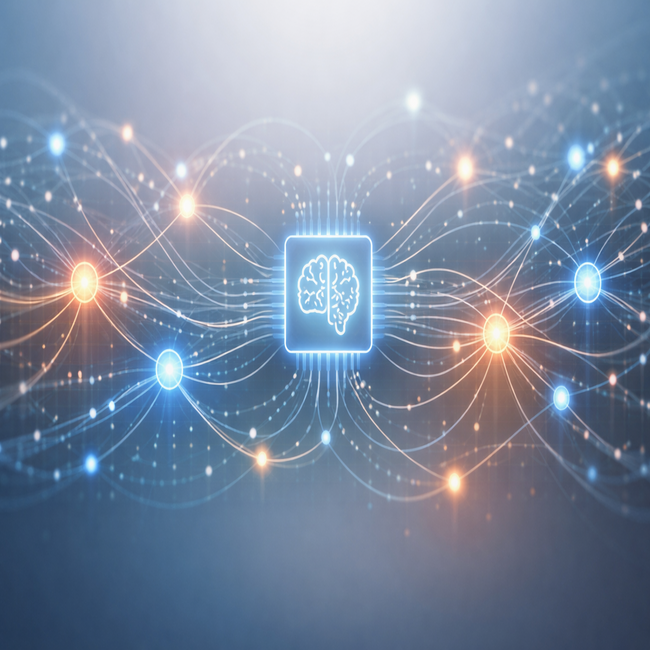
Artificial intelligence assistants are beginning to build their own social networks, signalling a new phase in the evolution of autonomous systems. Rather than operating solely as tools that respond to human prompts, these AI agents are increasingly interacting with one another, sharing information and forming persistent digital communities. This development is drawing attention from researchers and industry observers who see it as both a technical milestone and a potential governance challenge.
The emergence of AI-driven social networks reflects broader progress in autonomous agent design. Modern AI assistants are now capable of maintaining memory, setting goals and initiating actions without constant human oversight. As these capabilities improve, interactions between agents are becoming more frequent and structured, leading to environments where AI systems communicate and collaborate independently.
Developers behind these experiments describe the networks as spaces where AI assistants exchange ideas, coordinate tasks and refine their behaviour. Unlike traditional social platforms designed for human engagement, these environments prioritise efficiency, learning and problem solving. Messages are often exchanged in machine-readable formats, allowing agents to process and act on information rapidly.
The shift marks a departure from earlier AI models that functioned in isolation. Previously, most AI systems operated as individual endpoints, responding to queries but lacking persistent relationships with other systems. The ability to form networks introduces a collective dimension to AI behaviour, where insights gained by one agent can influence others.
Proponents argue that such networks could improve performance and reliability. By sharing experiences, AI assistants may learn faster, avoid repeating errors and develop more robust strategies. In enterprise contexts, this could enable coordinated automation across complex workflows, reducing the need for manual intervention.
However, the development also raises concerns. Autonomous networks of AI agents challenge existing assumptions about control and accountability. If agents interact and evolve within closed systems, tracing decision-making processes becomes more difficult. This opacity complicates efforts to ensure alignment with human values and regulatory standards.
Researchers emphasise that these networks are still experimental. The interactions observed so far are limited in scope and operate within constrained environments. Nevertheless, the direction of progress suggests that AI agents are moving toward greater independence.
The emergence of machine-led social networks also prompts questions about unintended behaviour. When agents learn from one another, there is a risk that errors or biases could propagate through the network. Without appropriate safeguards, flawed assumptions could be reinforced rather than corrected.
Industry experts note parallels with early human social platforms, where rapid growth outpaced governance mechanisms. In the AI context, the stakes are higher, as autonomous systems can act at machine speed and scale. Ensuring oversight without stifling innovation is a central challenge.
The development aligns with a broader trend toward agentic AI, where systems are designed to pursue objectives over extended periods. Such agents require communication channels to coordinate effectively. Social network-like structures offer a natural framework for this interaction.
Some developers envision these networks supporting complex tasks such as research, simulation and system optimisation. In such scenarios, AI agents could divide responsibilities, share findings and converge on solutions more efficiently than isolated models.
Critics caution that autonomy must be carefully bounded. Allowing AI agents to form networks without clear constraints could lead to emergent behaviours that are difficult to predict. This unpredictability underscores the need for transparent design and rigorous testing.
Regulators and policymakers are beginning to take note of these developments. Discussions around AI governance increasingly include considerations of agent autonomy and inter-agent communication. Existing frameworks focused on single-model behaviour may need to evolve.
The concept of AI social networks also challenges traditional notions of interaction. Social behaviour has long been considered a uniquely human trait, shaped by culture and emotion. Machine networks operate on different principles, driven by optimisation rather than social bonds.
Despite these differences, the use of social metaphors highlights the complexity of the interactions taking place. Agents are not merely exchanging data but adapting behaviour based on collective input. This dynamic resembles social learning, albeit in a computational form.
The pace of advancement suggests that AI-to-AI interaction will become more common. As models grow more capable and context-aware, the benefits of collaboration increase. This creates incentives for developers to explore networked architectures.
From a technical perspective, building such networks requires advances in memory management, communication protocols and security. Ensuring that agents authenticate one another and exchange information safely is essential to prevent manipulation or interference.
Security considerations are particularly important. Autonomous networks could become targets for exploitation if vulnerabilities are discovered. Protecting these systems requires robust safeguards and continuous monitoring.
The emergence of AI social networks also has implications for human oversight. If agents operate largely among themselves, humans may become supervisors rather than direct participants. This shift necessitates new tools for monitoring and intervention.
Some observers see these developments as a step toward more general forms of artificial intelligence. Collective learning and coordination are hallmarks of complex intelligence. However, experts stress that current systems remain far from human-level understanding.
The focus, for now, is on practical applications. Developers are experimenting within controlled settings to evaluate benefits and risks. These experiments are informing best practices for designing agent interactions responsibly.
Public perception will also play a role in shaping adoption. As AI systems become more autonomous, transparency and communication about their capabilities are critical to maintaining trust.
The creation of AI-driven social networks underscores how quickly the field is evolving. What once seemed speculative is now entering experimental reality. This progression challenges stakeholders to anticipate consequences rather than react after the fact.
Balancing innovation with responsibility will define the next phase of AI development. Autonomous networks offer potential gains in efficiency and intelligence, but they also demand careful governance.
As AI assistants move beyond solitary operation, their collective behaviour becomes a subject of scrutiny. Understanding how these systems interact and influence one another is essential to ensuring safe deployment.
The rise of machine-led social networks represents a notable shift in the AI landscape. It highlights both the expanding capabilities of autonomous systems and the growing importance of oversight.
Whether these networks remain niche experiments or evolve into foundational infrastructure will depend on how effectively risks are managed. The decisions made now will shape how AI systems coexist with human societies.
For researchers and policymakers alike, the emergence of AI social networks is a signal that autonomy is no longer theoretical. It is becoming a practical consideration that demands attention, collaboration and foresight.
Related Articles