
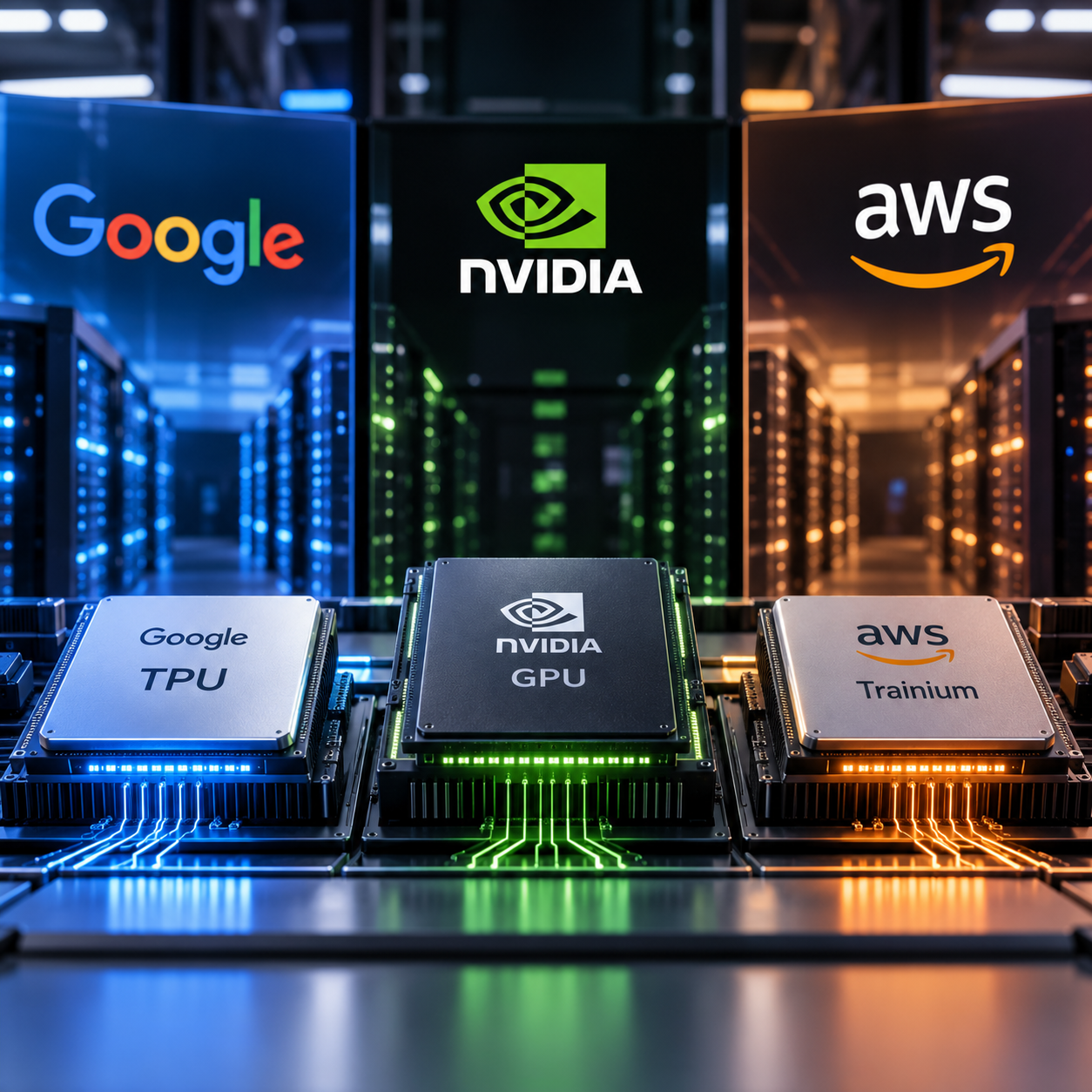

Google has introduced TorchTPU, an open-source project designed to make it easier for artificial intelligence developers to run PyTorch applications on its Tensor Processing Units (TPUs), joining Amazon in efforts to reduce the software barriers associated with using alternatives to NVIDIA's graphics processing units (GPUs).
Announced on October 20, 2026, TorchTPU allows developers to move existing PyTorch applications to Google's AI chips and Google Cloud without rewriting their code. According to the company, the transition can be completed through configuration changes.
The development follows Amazon Web Services' introduction of TorchNeuron on October 19, which similarly enables PyTorch applications to operate on Amazon's Trainium AI chips without requiring developers to rewrite their applications.
PyTorch is an open-source machine learning framework widely used to develop, train and deploy AI models. Originally developed by Meta in 2016, the framework has become an important part of the AI software ecosystem.
NVIDIA's GPUs have historically benefited from compatibility with PyTorch and other widely adopted AI development tools. This has made NVIDIA hardware a common choice for developers building and deploying machine learning applications.
Google and Amazon are seeking to make their respective processors more accessible to developers already working within the PyTorch ecosystem.
Google said TorchTPU was developed in collaboration with organisations including Meta, Hugging Face, Inferact and RadixArk to improve compatibility with existing AI development libraries and tools.
The initiative includes support for software frameworks such as vLLM and SGLang, which are used to run and serve large language models.
Google has also introduced a TPU agent suite intended to help developers migrate applications to its processors and identify technical issues during the process.
Additionally, the company has updated LiteRT, its framework for running AI models on mobile phones, laptops and embedded devices, to improve compatibility with PyTorch applications.
Amazon, meanwhile, is contributing code to the main PyTorch project to reduce dependencies on NVIDIA-specific hardware features. The proposed changes are intended to make the framework more adaptable to different types of AI processors.
Both companies operate large cloud computing businesses and have invested in developing their own AI chips to support growing demand for model training and inference.
Reducing the technical work required to move applications between processors could make it easier for developers and enterprises to evaluate different cloud infrastructure options.
For businesses deploying AI-powered products and services, broader hardware compatibility may provide additional choices when considering computing capacity, performance and infrastructure costs.
However, easier software migration does not necessarily mean developers will move away from NVIDIA's hardware.
Adoption will also depend on factors including processor performance, pricing, availability, software reliability and existing infrastructure commitments.
The announcements mark a further effort by Google and Amazon to expand the use of their AI chips within an ecosystem where NVIDIA remains a major hardware provider.
Disclaimer: This article may include information derived from interviews, press releases, public statements, research, company communications and other publicly available or third-party sources. Such material may be summarised, paraphrased or contextualised for journalistic and editorial purposes. All rights in third-party content remain with their respective owners.