
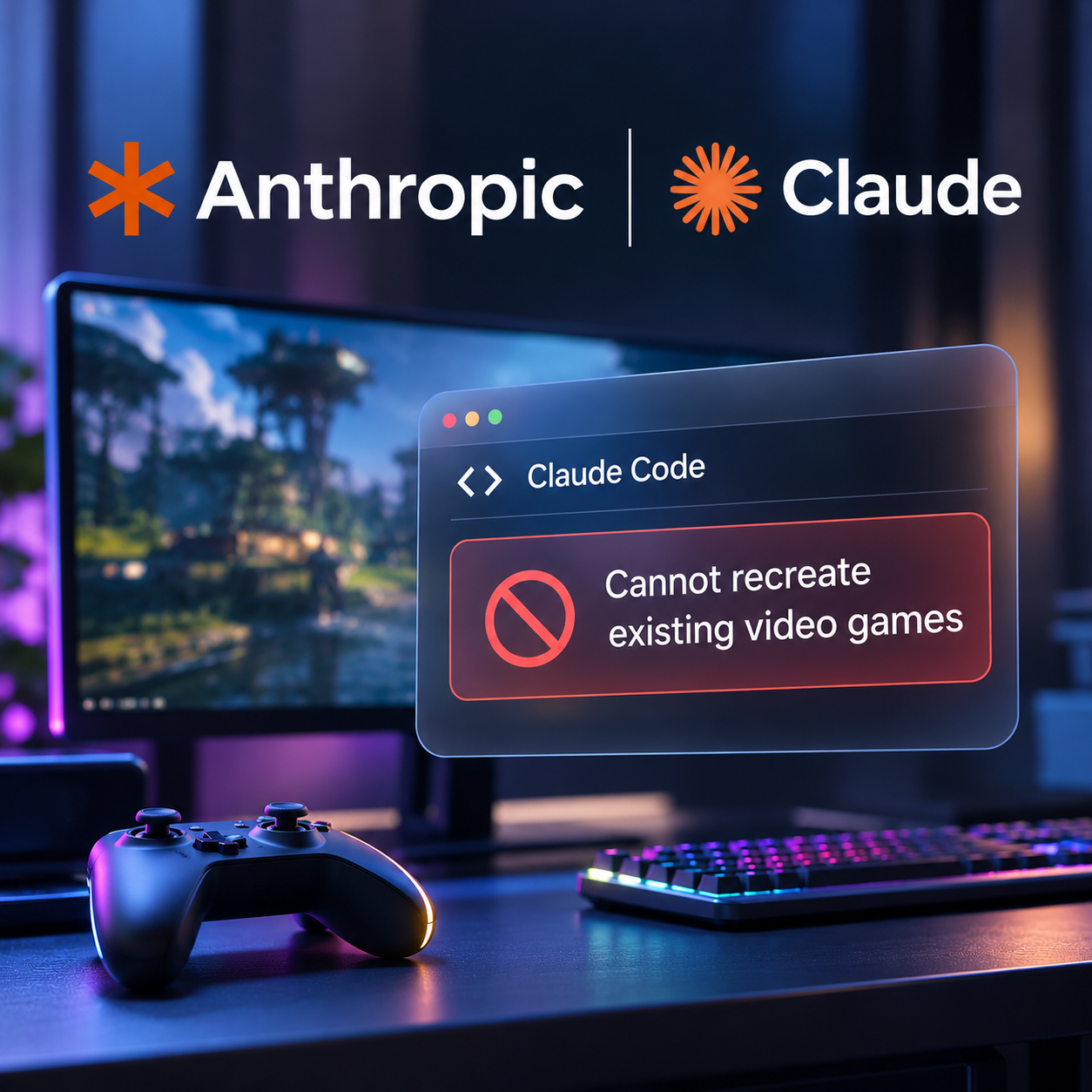

Artificial intelligence company Anthropic has introduced restrictions to its Claude Code assistant to prevent users from recreating existing video games, as concerns grow over the use of generative AI to reproduce copyrighted software and gaming content.
The changes affect Claude Code when used with the company's Opus 5.5 model. The updated instructions discourage the system from developing copies of specific games, even when users rename the projects or present them as original creations.
Anthropic has clarified that developers can continue using Claude to build original games, develop titles within established gaming genres and work with their own designs and assets.
Addy Osmani, a member of Anthropic's technical staff, confirmed the change in a post on X on October 30. He said the company had added two sentences to Claude Code's instructions to discourage the recreation of existing games because intellectual property infringement violates Anthropic's usage policy.
Osmani added that the company would continue refining the restrictions to maintain a balance between protecting intellectual property and supporting legitimate game development.
The changes were initially identified by a user on X, who shared what appeared to be updated instructions governing game recreation. Subsequent reports indicated that some developers were encountering refusals when requesting assistance with reverse-engineering activities.
Reverse engineering involves examining existing software to understand its underlying design, functionality or technical structure. The process can be used for legitimate purposes, including security research, compatibility testing, software maintenance and troubleshooting.
According to reports from Tom's Hardware, developers using Claude Code with Opus 5.5 have encountered restrictions on certain reverse-engineering requests, including tasks they described as non-malicious.
However, Anthropic's confirmed policy clarification specifically addresses the recreation of existing video games. The company has not publicly established that all reverse-engineering activities are prohibited.
The development comes as AI-assisted programming tools become increasingly capable of generating software, modifying existing code and recreating elements of digital products.
Game developers and publishers have raised concerns about the possibility of AI tools being used to reproduce gameplay mechanics, visual elements and other protected material from existing titles.
Some independent developers have reportedly reconsidered public demonstrations and early-access releases because of concerns that unfinished games could be replicated before their commercial launch.
At the same time, developers have questioned whether broad restrictions could interfere with legitimate technical work, particularly when users are examining software they own or have permission to analyse.
Anthropic has indicated that it will review cases where Claude incorrectly refuses assistance with original projects.
The company has not announced a separate release schedule for the restrictions or provided detailed figures on the number of affected users.
The update places greater emphasis on intellectual property considerations as AI coding assistants become more widely used across software and game development.
Disclaimer: This article may include information derived from interviews, press releases, public statements, research, company communications and other publicly available or third-party sources. Such material may be summarised, paraphrased or contextualised for journalistic and editorial purposes. All rights in third-party content remain with their respective owners.