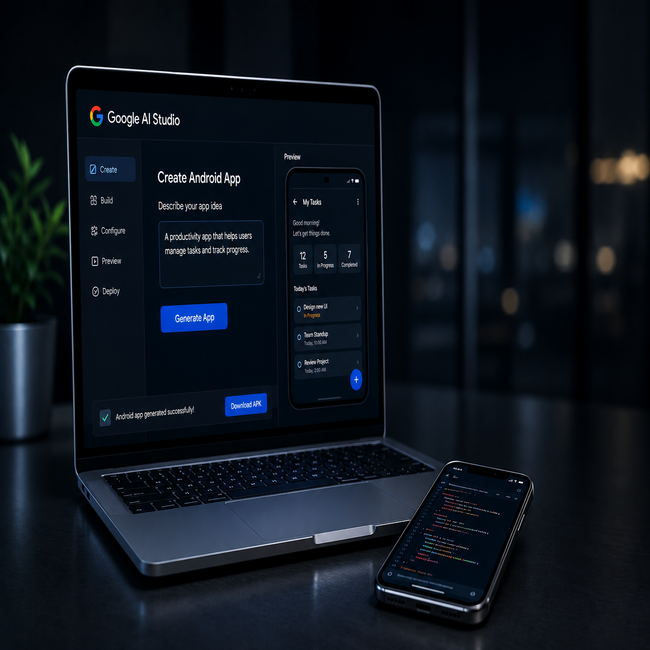
The smartphone industry has spent more than a decade competing on familiar metrics. Better cameras, sharper displays, faster charging and thinner designs became the standard playbook for annual launches. But over the last year, the conversation has shifted noticeably. The biggest technology companies are no longer positioning smartphones simply as hardware upgrades. They are presenting them as AI-first devices built around assistants, automation and on-device intelligence.
That shift is happening quickly. IDC estimates that generative AI smartphone shipments will grow 364% year-on-year in 2024, reaching more than 230 million units globally. The research firm also expects shipments to cross 900 million units by 2028. Counterpoint Research found that 59% of surveyed consumers planned to upgrade to a GenAI smartphone within a year, while a separate Morgan Stanley survey showed that 42% of iPhone users considered Apple Intelligence “very” or “extremely” important for their next purchase. The message from the market is becoming clearer. AI is moving from a software layer inside apps to a defining feature of the smartphone itself.
The larger transition is not only about adding chatbots to devices. Smartphone makers are redesigning the architecture of phones around AI processing. Qualcomm, MediaTek, Apple, Samsung and Google are now building chips with dedicated neural processing units that can run AI tasks directly on-device. IDC defines a GenAI smartphone as a device capable of handling at least 30 TOPS, or trillions of operations per second, through its NPU.
That technical shift matters because it changes where AI happens. Earlier AI assistants depended heavily on cloud computing, which meant slower responses, higher data usage and greater privacy concerns. The newer generation of AI-first smartphones can process many tasks locally. That includes live language translation, image editing, summarising meetings, rewriting messages and contextual search.
Cristiano Amon, CEO of Qualcomm, recently described the transition as “a generation of change” in how people interact with devices. According to Amon, AI-powered interfaces will eventually allow devices to “see what you see and hear what you hear,” creating a more contextual relationship between users and smartphones.
The companies racing into this market are framing AI differently, but they are all moving in the same direction. Samsung’s Galaxy AI strategy focuses heavily on productivity and communication. Apple’s approach with Apple Intelligence emphasises privacy and on-device processing. Google’s Pixel ecosystem is positioning AI as a deeply integrated search and assistance layer. Chinese brands like Oppo, Xiaomi and Honor are pushing AI features into mid-range phones to expand adoption beyond flagship buyers.
Samsung’s Galaxy S24 series became one of the first major examples of this AI-first positioning. The company introduced features such as Live Translate for phone calls, AI-generated summaries for recorded conversations and Circle to Search, which allows users to search anything visible on the screen through a gesture. The device also added generative photo editing tools that can reposition objects and automatically fill image backgrounds.
TM Roh, President and Head of Samsung’s Mobile Experience Business, said the company built Galaxy AI around “deep understanding of how people use their phones.” That reflects a broader strategy visible across the industry. Smartphone brands are no longer selling only specifications. They are trying to sell convenience, automation and context-aware assistance.
Apple’s AI strategy follows a different tone but a similar ambition. Apple Intelligence, announced for iPhones, iPads and Macs, introduces AI-powered writing tools, summarisation, image generation and a more contextual Siri experience. Users can ask Siri questions related to content currently on their screens, generate summaries inside Mail and Notes, or rewrite text in different tones.
Tim Cook described Apple Intelligence as a system that combines generative AI with “a user’s personal context” while maintaining privacy and security. Apple’s emphasis on private on-device AI reflects growing consumer concerns around data usage. It also highlights one of the defining themes of AI-first smartphones. The competition is no longer only about which company has the smartest assistant. It is also about which ecosystem users trust with personal data.
Google has been even more aggressive about integrating AI into everyday phone interactions. The Pixel 9 lineup expanded Gemini integration across the operating system, allowing users to access conversational AI across apps, screenshots and searches. During Google’s hardware launch, Rick Osterloh, Senior Vice President of Devices and Services, acknowledged the growing fatigue around AI promises. “There have been so many promises, so many coming-soons, and not enough real-world helpfulness,” he said.
That comment points to a challenge the smartphone industry is already facing. AI has become the biggest marketing theme in consumer electronics, but consumers are still evaluating whether these features genuinely improve daily life or simply create novelty.
The current AI smartphone cycle resembles earlier transitions in mobile technology. Smartphones once competed on app ecosystems. Later, cameras became the defining differentiator. Today, AI assistants and contextual computing are becoming the next battleground. The difference is that AI touches nearly every smartphone function simultaneously.
Photography is one of the clearest examples. AI-powered editing tools now allow users to erase unwanted objects, expand image backgrounds and improve lighting automatically. Google’s Magic Editor and Samsung’s Generative Edit are turning smartphones into lightweight creative studios. At the same time, AI is influencing search, translation, scheduling, note-taking and customer support.
MediaTek’s latest Dimensity 9500 chipset illustrates how deeply AI is moving into smartphone infrastructure. Built on a 3-nanometre process, the chip is designed to improve AI-generated summaries, image processing and contextual assistance directly on-device. Qualcomm’s Snapdragon 8 Gen 3 platform similarly focuses on running large language models locally, with the ability to generate roughly 20 tokens per second on-device.
This focus on local processing is becoming central to smartphone strategy because of privacy and speed. Running AI on-device reduces dependency on cloud servers and lowers latency. It also allows AI features to function even when internet connectivity is weak.
For smartphone companies, AI is also becoming an economic necessity. Global smartphone growth has slowed in recent years, and consumers are holding devices for longer periods before upgrading. AI gives manufacturers a new reason to encourage replacement cycles.
Research firm Canalys estimates that AI-capable devices could represent over half of premium smartphone shipments within the next few years. Oppo has publicly stated that it aims to sell more than 100 million AI-enabled smartphones by 2025 after crossing 50 million in 2024. The company also said it intends to bring generative AI features across its broader product lineup rather than limiting them to premium models.
That expansion into mainstream devices could determine whether AI smartphones become a mass-market shift or remain concentrated in high-end segments. Early adoption patterns suggest interest is strongest among premium buyers, but smartphone makers are trying to push AI further down the pricing ladder.
The rise of AI-first smartphones is also beginning to reshape how apps function. Historically, users navigated through dozens of separate applications for tasks like messaging, travel booking, editing, search and shopping. AI assistants could gradually reduce some of that fragmentation by acting as intermediaries between users and services.
That possibility has major implications for developers and digital platforms. If users increasingly rely on AI assistants to retrieve information, recommend products or perform tasks, app discovery and engagement models may change significantly. Voice and conversational interfaces could become more important than traditional app menus.
Qualcomm’s Amon recently suggested that AI could become “the next user interface.” The idea is not necessarily that apps disappear, but that AI agents increasingly sit between the user and the software ecosystem.
This is one reason companies are investing heavily in contextual AI. Future AI-first smartphones are expected to understand user routines, preferences and habits more deeply. A device may proactively suggest replies, organise travel plans, summarise meetings or recommend tasks without requiring explicit commands.
But the transition is also creating concerns around transparency and reliability. Some AI smartphone features have already faced criticism for inaccuracies, hallucinations or delayed rollout timelines. Apple, for example, faced scrutiny after some promised Siri upgrades took longer than expected to materialise.
Trust remains another challenge. Consumers may enjoy AI-powered editing or summarisation, but they are still cautious about handing over too much control. Surveys across consumer technology markets repeatedly show that users are comfortable with AI assistance but less comfortable with full automation.
This creates a balancing act for smartphone companies. AI needs to feel useful without becoming intrusive. It needs to automate tasks without creating confusion about what is real and what is AI-generated. Companies are responding with watermarking systems, transparency labels and privacy-focused messaging.
Samsung, for example, applies visible markers when generative AI edits are used on images. Apple continues to position privacy as a core differentiator in its AI strategy. Google is focusing on integrating AI into workflows gradually rather than replacing them outright.
The rise of AI-first smartphones is also influencing competition beyond traditional phone makers. OpenAI’s reported interest in developing AI-centric hardware with partners such as Qualcomm and MediaTek signals that AI companies themselves may eventually move deeper into consumer devices.
Analyst Ming-Chi Kuo recently suggested that an AI-first smartphone tied to OpenAI could enter mass production around 2028. While details remain speculative, the broader implication is important. The smartphone industry may increasingly revolve around AI ecosystems rather than hardware alone.
For marketers and advertisers, AI-first smartphones could also change consumer behaviour. Search patterns are already shifting toward conversational queries. AI-generated summaries may influence how users discover products, restaurants or travel options. Context-aware assistants could alter the customer journey before users even open an app or website.
That means smartphone AI is not just a hardware story. It is becoming part of a wider shift in digital behaviour. The device is evolving from a tool users operate manually into a system that anticipates intent and automates parts of interaction.
There are still limitations. Battery performance, AI accuracy, misinformation risks and regulatory scrutiny will shape how aggressively these features expand. Many AI tools remain early-stage and inconsistent across languages and regions. Consumer adoption may also vary depending on trust and affordability.
But the direction of travel is increasingly clear. Smartphones are moving toward interfaces where AI becomes embedded across communication, photography, search, productivity and entertainment. The next major smartphone battle is unlikely to be about megapixels or screen size alone. It will be about which company builds the most useful AI experience around everyday life.
The shift may happen gradually rather than overnight. Users may first adopt AI for editing photos, summarising notes or translating conversations before relying on deeper contextual assistance. But the cumulative effect could fundamentally change how smartphones are used over the next decade.
For now, AI-first smartphones are still in the transition phase between experimentation and maturity. The industry is selling a future where phones behave less like static devices and more like adaptive assistants. Whether consumers fully embrace that future will depend on how reliable, transparent and genuinely useful these experiences become.
What is already visible, however, is that the smartphone market has entered a different phase. The competition is no longer just about hardware design. It is about intelligence, context and how seamlessly AI fits into daily routines. The next smartphone upgrade cycle may not simply bring a faster device. It may bring a very different relationship between users and the technology in their pockets.
Disclaimer: All data points and statistics are attributed to published research studies and verified market research. All quotes are either sourced directly or attributed to public statements.
Related Articles