

ai News
Sakana AI, 360 Unveil AI Alternatives Amid Anthropic Restrictions
" Asian AI startups are launching new frontier models as US export restrictions on Anthropic create fresh opportunities for regional AI providers. "
- by Martech Desk
- Jun 29, 2026
Artificial intelligence startups across Asia are accelerating the launch of advanced AI models as US export restrictions on Anthropic's most powerful systems continue to reshape the global AI landscape, creating new opportunities for regional developers to address demand from enterprises and governments.
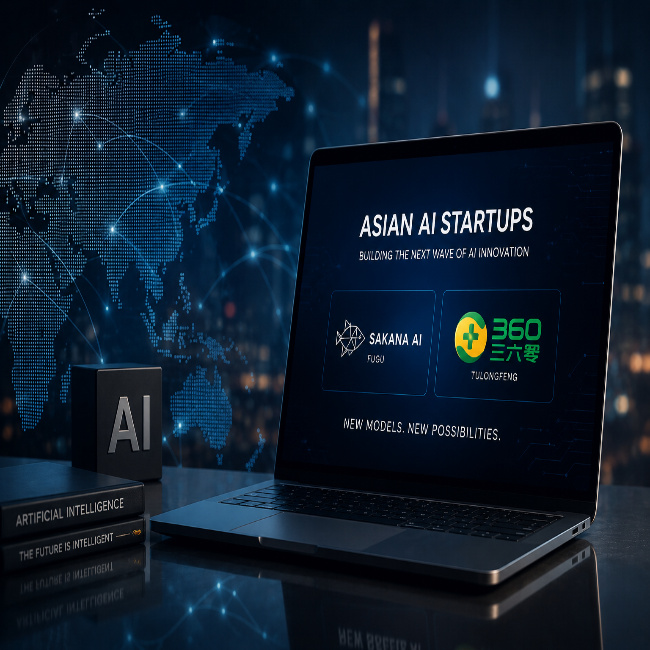
The latest entrants include Tokyo-based Sakana AI and Chinese cybersecurity company 360 Security Technology, both of which have introduced AI models positioned as alternatives to Anthropic's restricted Mythos and Fable models. The launches come after the US government imposed export controls on Anthropic's highest-end AI systems earlier this month, limiting their availability outside the United States over national security concerns.
Sakana AI unveiled Fugu, a frontier AI model designed not only to perform advanced reasoning tasks but also to orchestrate multiple AI models through a unified interface. The company said the product is intended to help enterprises reduce dependence on any single AI provider, particularly as geopolitical developments increasingly affect access to frontier models.
Meanwhile, 360 Security Technology introduced Tulongfeng, an AI-powered cybersecurity model that the company claims can compete with Anthropic's Mythos in vulnerability discovery and cyber defence applications. The Chinese company positioned the launch as part of a broader effort to strengthen domestic AI capabilities while reducing reliance on foreign technologies.
The developments reflect a broader shift toward what industry participants increasingly describe as sovereign AI. Governments and enterprises are investing in locally developed models that can continue operating even if international access is disrupted by export controls or regulatory changes. Rather than relying exclusively on US AI providers, organisations are beginning to diversify their AI infrastructure with regional alternatives tailored to local languages, regulations and enterprise requirements.
The restrictions on Anthropic's advanced models have also highlighted how AI policy decisions can rapidly influence product development across global markets. While US companies continue to lead in frontier AI research, Asian developers are moving quickly to address gaps created by regulatory constraints, particularly in specialised areas such as cybersecurity and multi-model orchestration.
Industry observers note that the emergence of new regional AI models does not necessarily signal a complete shift away from American AI platforms. Instead, many organisations are adopting multi-model strategies that combine domestic and international systems to improve resilience while maintaining access to specialised capabilities. Sakana AI has similarly described Fugu as a complement to existing AI ecosystems rather than a replacement for US models.
The latest launches also underscore growing competition in the enterprise AI market, where vendors are racing to differentiate through industry-specific capabilities rather than general-purpose chatbots. Cybersecurity, autonomous AI agents and orchestration platforms have emerged as key areas of investment as businesses seek AI systems capable of supporting complex operational workflows.
For enterprises across Asia, the availability of additional AI providers could reduce dependence on a limited number of global vendors while encouraging greater competition in pricing, deployment flexibility and localisation. At the same time, continuing geopolitical uncertainty means organisations are placing greater emphasis on business continuity when selecting AI partners.
As governments tighten oversight of advanced AI technologies, regional innovation is expected to accelerate further. The launches by Sakana AI and 360 illustrate how export restrictions are reshaping competitive dynamics, encouraging local developers to build alternatives that can address enterprise demand while strengthening the region's AI ecosystem.