

ai News
Read AI Introduces Email Based Digital Twin to Manage Schedules and Queries
" Read AI launches an email based digital twin to automate scheduling and routine inbox responses for professionals. "
- by Martech Desk
- Feb 28, 2026
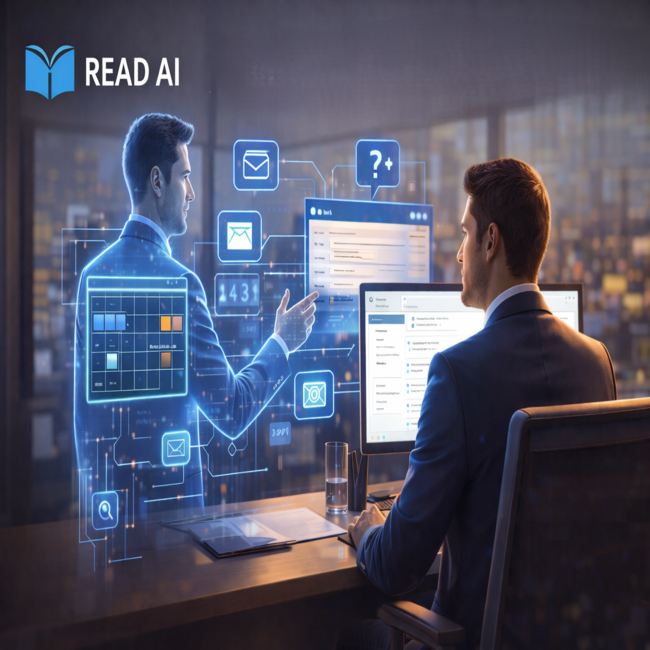
Productivity software startup Read AI has launched a new email based digital twin designed to help professionals manage schedules and respond to routine queries more efficiently. The feature positions itself as an AI powered extension of a user’s communication style, capable of drafting replies, coordinating meetings and handling everyday inbox interactions.
The company, known for its meeting intelligence tools that generate summaries and analytics from video conferences, is expanding into asynchronous communication with this launch. The digital twin integrates directly with email accounts, allowing it to monitor incoming messages and suggest or automate responses based on user preferences and historical patterns.
According to the company, the system learns from a user’s prior communications, calendar activity and meeting data to replicate tone and decision making cues. The objective is to reduce the time spent managing administrative email exchanges while maintaining consistency in professional interactions.
Email remains a central tool in enterprise workflows despite the rise of messaging platforms and collaboration suites. Professionals often spend significant portions of their workday responding to scheduling requests, status inquiries and follow up messages. AI driven assistance in this space has emerged as a key focus area for productivity technology firms.
Read AI’s digital twin aims to move beyond simple autocomplete suggestions by functioning as a semi autonomous agent. It can propose meeting times, answer frequently asked questions and summarise conversation threads. Users retain control over final approval, but the system is designed to streamline the drafting process.
The concept of a digital twin in productivity tools reflects broader experimentation with agent based AI. Rather than limiting AI to passive suggestions, companies are building systems that actively participate in workflows. These agents draw on contextual data to make decisions aligned with user behaviour.
Industry analysts note that the competitive landscape includes established email providers and productivity platforms integrating generative AI features. By introducing a specialised digital twin, Read AI is seeking to differentiate through personalisation and meeting centric intelligence.
The feature reportedly integrates with common calendar systems to coordinate availability and manage rescheduling. It can analyse previous commitments and preferences to propose suitable time slots, potentially reducing back and forth communication. This capability addresses a persistent friction point in professional communication.
Privacy and data security considerations are central to AI tools that access email content. Companies deploying such systems must ensure robust encryption, access controls and compliance with data protection regulations. Read AI has indicated that user consent and transparency remain priorities in the design of its digital twin.
From a martech and enterprise technology perspective, the launch highlights how generative AI is reshaping knowledge work. Automating routine correspondence can free professionals to focus on strategic tasks and relationship building. However, maintaining authenticity and trust in automated communication remains a key challenge.
The digital twin model also raises questions about boundaries between human and AI generated responses. Clear disclosure practices and user oversight may be necessary to prevent misunderstandings in sensitive communications.
Read AI’s expansion into email based assistance follows growing investor interest in AI agents capable of orchestrating multi step tasks. As large language models improve in reasoning and context retention, productivity applications are evolving toward more autonomous functionality.
The company’s existing meeting intelligence platform provides a foundation for contextual awareness. By analysing past meetings, action items and conversation patterns, the digital twin can tailor responses that reflect ongoing projects and priorities.
Observers suggest that adoption will depend on ease of setup and reliability. Professionals are unlikely to delegate communication tasks unless the system consistently reflects their intent and minimises errors.
The launch underscores a broader shift in workplace technology toward AI augmentation rather than replacement. Tools that support human decision making while preserving oversight may find stronger acceptance across enterprises.
As digital communication volumes continue to rise, solutions that address inbox overload are likely to attract attention. Email based AI assistants have become an increasingly competitive segment within the productivity software market.
Read AI’s introduction of a digital twin represents another step in the evolution of AI powered workplace tools. By combining meeting analytics with email automation, the company is positioning itself within a growing category focused on intelligent task management.
The long term impact of such systems will hinge on user trust, data governance and measurable efficiency gains. For now, the launch reflects ongoing experimentation in building AI agents that can act as personalised extensions of professional workflows.