
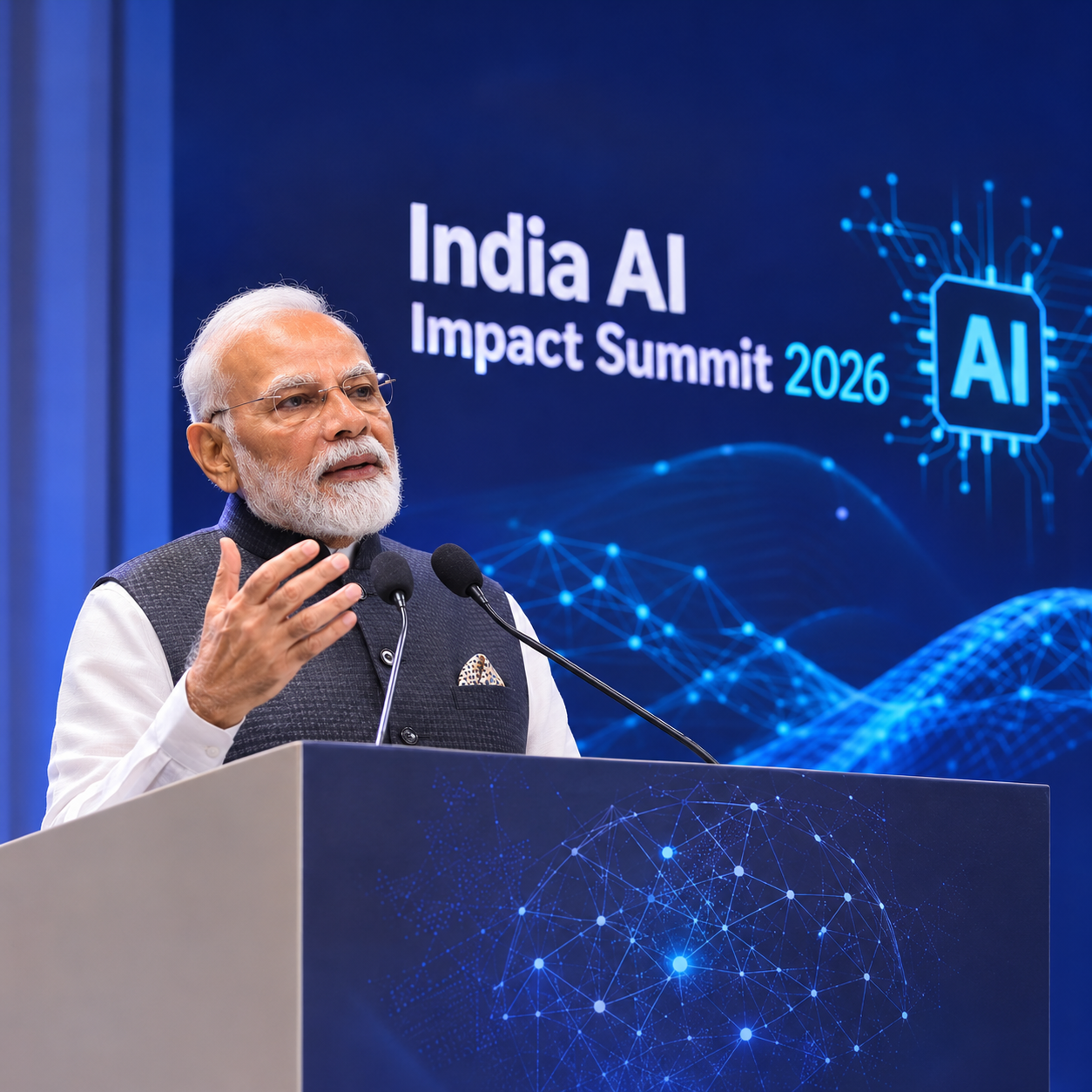

Prime Minister Narendra Modi unveiled India's MANAV Vision for artificial intelligence at the India AI Impact Summit 2026 in New Delhi on February 19, outlining a governance framework focused on ethical AI development, accountability, data sovereignty and accessibility.
Addressing delegates at the summit, Modi introduced MANAV, meaning human, as a framework intended to guide the development and deployment of artificial intelligence while placing human interests at the centre of technological advancement.
The five components of the framework include Moral and Ethical Systems, Accountable Governance, National Sovereignty, Accessible and Inclusive AI, and Valid and Legitimate AI.
Under the proposed approach, AI systems should operate within ethical guidelines, supported by transparent governance mechanisms and regulatory oversight. The framework also emphasises national sovereignty over data, advocating greater control over how information is collected, managed and utilised.
Modi highlighted the importance of making artificial intelligence accessible across populations, rather than allowing its benefits to remain concentrated among a limited number of organisations or countries.
Explaining the framework, the Prime Minister said AI should function as a tool for wider participation and development, supported by systems that are lawful, verifiable and accountable.
The announcement comes amid ongoing international discussions surrounding AI regulation, data protection, technological sovereignty and the responsibilities of companies developing advanced AI systems.
Addressing potential risks associated with artificial intelligence, Modi also called for stronger safeguards for children and families. He stressed that AI technologies should incorporate appropriate safety measures, particularly as their applications expand across digital platforms and everyday services.
The Prime Minister further discussed the evolving relationship between humans and intelligent systems, describing a technological environment in which people and AI increasingly collaborate across different activities.
During his address, Modi also announced that three Indian companies had introduced AI models and applications at the summit. He cited these developments while discussing India's domestic capabilities and its growing participation in the global artificial intelligence ecosystem.
He also invited international technology companies, developers and innovators to collaborate with India on AI development and deployment.
The India AI Impact Summit 2026 brought together policymakers, technology executives, researchers, academics and civil society representatives to discuss the economic, technological and societal implications of artificial intelligence.
Positioned as the first global AI summit hosted in the Global South, the event focused on international cooperation concerning AI governance, safety, accessibility and development.
The MANAV Vision adds India's proposed principles to the wider international discussion on responsible AI development. While the framework outlines priorities for governance and inclusion, specific implementation mechanisms, regulatory requirements and timelines were not detailed in the announcement.
Disclaimer: This article may include information derived from interviews, press releases, public statements, research, company communications and other publicly available or third-party sources. Such material may be summarised, paraphrased or contextualised for journalistic and editorial purposes. All rights in third-party content remain with their respective owners.