
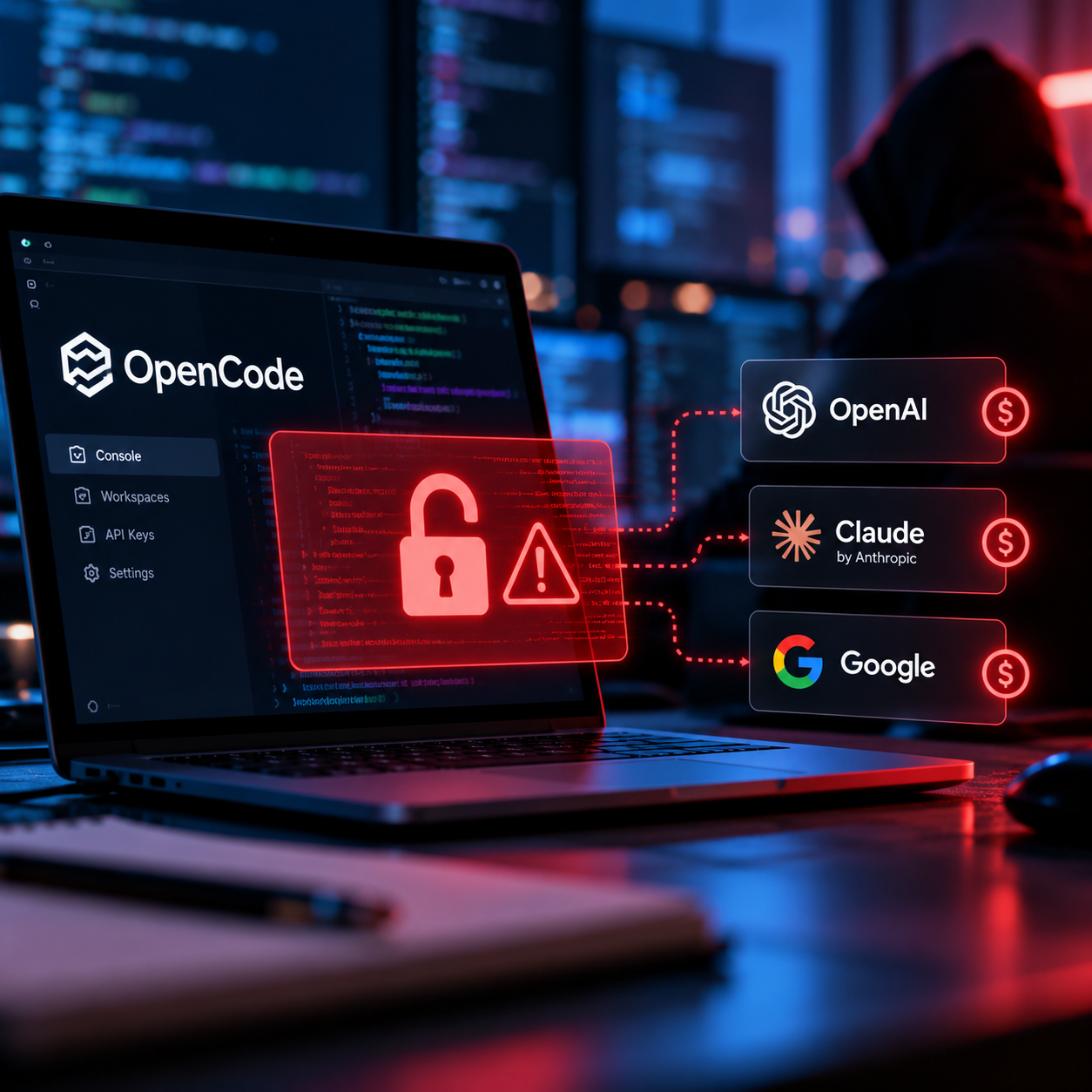

Open-source AI coding platform OpenCode has reported a security breach affecting 1.4% of users of its online service, OpenCode Console, after attackers gained access to an older system and allegedly misused exposed API keys, resulting in unauthorised charges on users' artificial intelligence accounts.
The incident, disclosed over the weekend, involved API credentials used to access services from AI providers, including OpenAI, Anthropic and Google. Several developers reported unexpected spending alerts, with some claiming charges exceeding $1,000.
OpenCode confirmed that the breach affected its Console service, where users can store API keys within workspaces. The company said affected users had been notified by email and that those who did not receive a notification were not impacted.
The company described the incident as a large-scale model distillation attack, although it has not disclosed sufficient technical details to establish how the attackers accessed the system or whether the exposed credentials were used for that purpose.
Model distillation generally involves using outputs from an existing AI model to train another system. However, some observers questioned whether the incident could be classified as a distillation attack without further evidence.
OpenCode co-founder Dax Raad clarified that the breach was limited to OpenCode Console and did not affect the company's open-source application or command-line coding tool.
Following the incident, Anthropic and Google blocked API keys believed to have been compromised. OpenAI said it had worked with OpenCode to restore access and refund affected API customers for credits consumed during the attack.
OpenCode also confirmed that refunds for unauthorised charges were being processed.
The company's response highlighted another challenge involving the use of AI systems in cybersecurity investigations.
According to Raad, attackers continued attempting to access OpenCode's systems for approximately 48 hours, requiring the company to deploy AI-based defensive tools continuously.
However, some AI models used to analyse malicious code reportedly refused to process certain material after their safety mechanisms identified potentially harmful content.
Raad said OpenCode subsequently received access to OpenAI's Daybreak Blue programme, which provides approved users with AI models configured to support defensive cybersecurity investigations with fewer restrictions.
The incident follows similar concerns raised by AI platform Hugging Face, which previously reported difficulties using commercial AI models to examine malicious activity because of safety-related restrictions.
The breach also comes amid increasing scrutiny of AI-enabled cyberattacks and the security implications of autonomous coding agents.
OpenCode has not disclosed how attackers entered the older system, how the compromised credentials were stored or the full extent of their misuse.
The company has advised affected users to revoke and replace their API keys directly through the relevant AI service providers while its investigation continues.
Disclaimer: This article may include information derived from interviews, press releases, public statements, research, company communications and other publicly available or third-party sources. Such material may be summarised, paraphrased or contextualised for journalistic and editorial purposes. All rights in third-party content remain with their respective owners.