
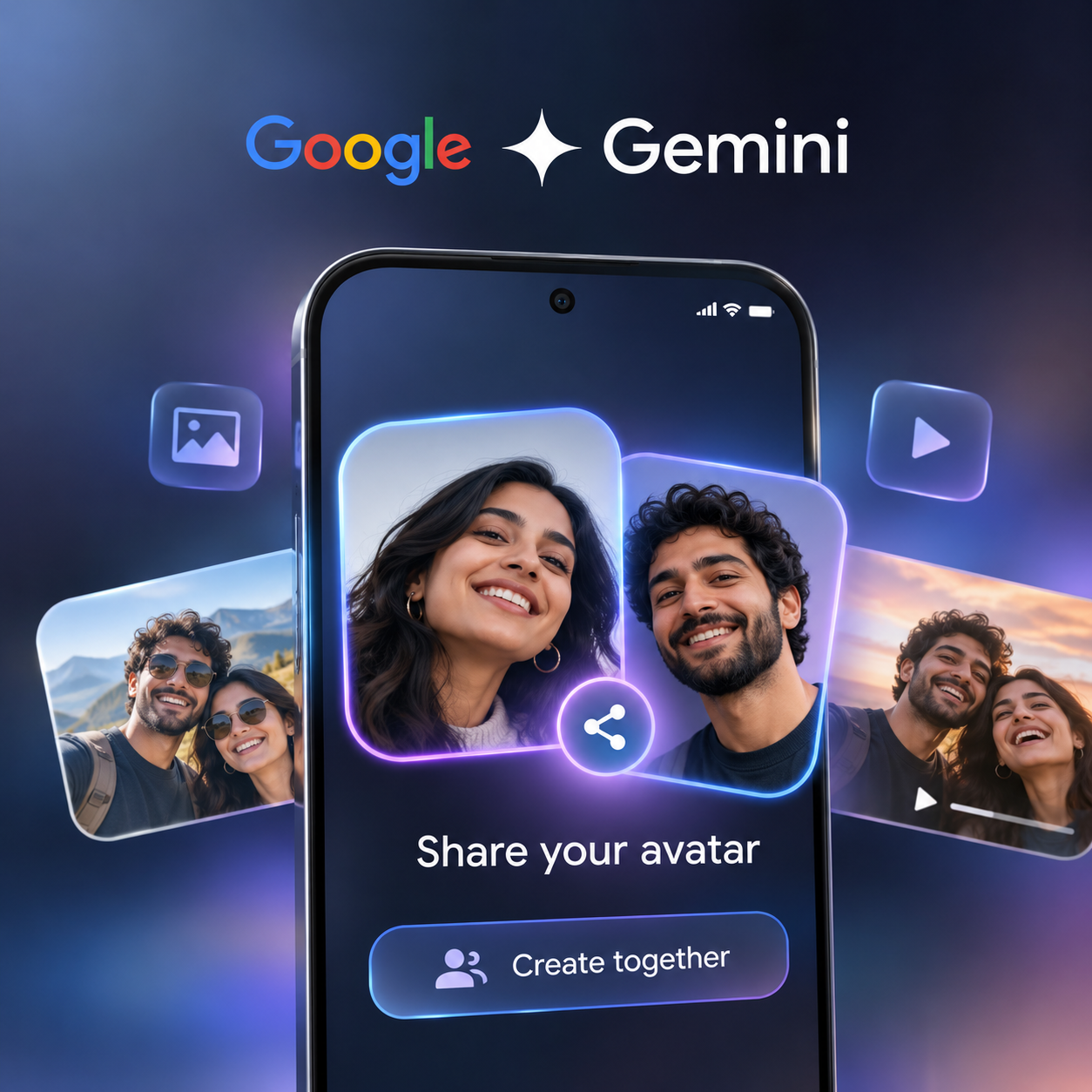

Google has introduced an avatar-sharing feature in its Gemini app, allowing users to share digital versions of their faces and voices with friends, family members and collaborators for creating AI-generated images and videos.
Announced on October 29, 2026, the feature expands Gemini's existing personal avatar capabilities by enabling multiple people to appear together in AI-generated content without recording footage together.
Users can create a personal avatar by recording their face and voice through a smartphone. Once created, the avatar can be shared with other Google users through an invitation sent to their Gmail address.
Recipients must accept the invitation before they can use the shared avatar. They can then include the person's digital likeness in generated content by mentioning their Google username with the @ symbol in a prompt.
For instance, two friends who have shared their avatars can generate an image or video featuring both of them in the same scene. The system is designed to maintain consistency in their appearance and voice across generated content.
Google uses its Nano Banana image-generation technology for creating images, while Gemini Omni supports AI-generated videos featuring personal avatars.
The sharing capability builds on Google's earlier introduction of personal avatars, which allowed users to create digital representations of themselves for AI-generated content. The latest update extends that functionality to collaborative creation.
According to Google's support documentation, the feature is available to users aged 18 and above who are signed in with personal Google accounts. Avatar functionality currently supports English and is unavailable in the European Economic Area, Switzerland and the United Kingdom.
Users creating videos with their personal avatars must have a paid Google AI subscription. Google has not specified whether recipients of shared avatars need separate paid subscriptions for every supported use.
The company has also introduced controls governing access to personal avatars. Users can select who is permitted to use their digital likeness and revoke access through Gemini's settings.
Removing access prevents the recipient from generating new content using that avatar. However, images and videos previously created with the shared likeness are not automatically deleted.
The feature introduces additional considerations around consent and the use of personal identity in AI-generated media. Since avatars reproduce a person's appearance and voice, access controls form an important part of the sharing process.
Google has previously incorporated its SynthID watermarking technology into AI-generated video content to support identification of synthetic media.
With the latest update, Gemini extends personal avatar creation beyond individual use, allowing multiple users to participate in shared AI-generated content while retaining controls over access to their digital identities.
Disclaimer: This article may include information derived from interviews, press releases, public statements, research, company communications and other publicly available or third-party sources. Such material may be summarised, paraphrased or contextualised for journalistic and editorial purposes. All rights in third-party content remain with their respective owners.