
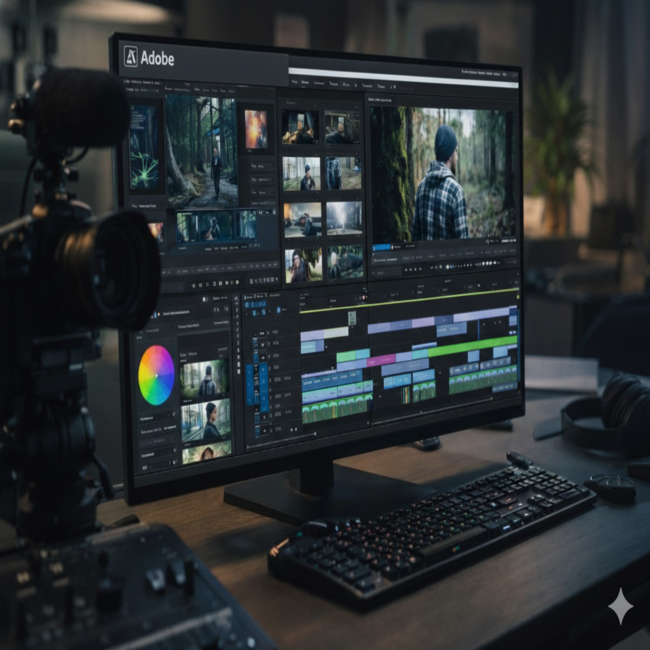

Adobe has announced a range of artificial intelligence video editing innovations along with a renewed commitment of $10 million to support video creators and filmmakers ahead of the Sundance Film Festival. The company’s latest upgrades aim to accelerate workflows for industry professionals and emerging talent while expanding access to AI-powered creative tools.
The announcements reflect Adobe’s continued focus on integrating AI into its core creative products. The innovations are designed to help editors, motion designers, and video creators reduce time spent on repetitive tasks and focus more on creative decision making. Adobe said that the updates will be rolled out across tools used widely in professional and independent film production. The company also detailed plans to expand financial support through its Adobe Film & TV Fund, reinforcing its role in supporting underrepresented communities in the film industry.
Adobe’s new AI-enhanced video features include improved masking capabilities in Premiere Pro, enhanced motion design tools in After Effects, and deeper integration with Adobe’s Firefly generative AI platform. Premiere’s updated tools are intended to simplify traditionally time-intensive tasks like masking, object selection, and shape adjustment. Adobe said these enhancements will reduce the manual effort required for detailed editing, allowing creators to complete complex tasks more quickly. After Effects improvements include expanded typography controls, new material options, and 3D motion design support. Both products are designed to support video professionals across creative and technical stages of production.
A significant part of Adobe’s strategy involves broadening access to generative AI technologies for ideation and early stage collaboration. The company is integrating Firefly Boards with Premiere, enabling teams to brainstorm ideas and visual concepts within a shared workspace that leverages both Adobe’s own models and models from leading partners. The integration aims to streamline collaboration between editors, directors, and designers by placing concept development and editing tools closer together in the workflow.
Adobe is also enhancing its Firefly video editing capabilities with a public beta version of a browser-based video editor. This feature allows creators to combine generative clips, footage, graphics, and audio into finished pieces without leaving their browsers. Adobe said the tool is intended to make generative video editing more accessible to a broader range of users and reduce the dependency on traditional desktop workflows. The integration of Firefly with Premiere and After Effects is expected to provide more flexible editing options for creators across skill levels.
In addition to the product updates, Adobe confirmed a $10 million allocation this year to support its Film & TV Fund, bringing the total investment in the programme to $20 million. The fund is aimed at fostering talent, offering grants, training, and industry partnership opportunities for creators, especially those from underrepresented communities. Adobe said that selected films will be spotlighted at the Sundance Film Festival, offering increased visibility to emerging voices in cinema.
The commitment to the Film & TV Fund builds on Adobe’s broader efforts to support diverse talent in film and television. The fund has provided grants, fellowships, apprenticeships, and in-kind support including software access, according to Adobe communications. Partnerships with organisations that provide mentorship, training, and creative skills development are part of the expanded initiative, reflecting an industry-wide focus on inclusion and professional development opportunities.
Adobe said that many films featured at the Sundance Film Festival historically rely on its creative software tools. The company noted that a large share of festival entries were created with Adobe products, highlighting their role across independent and professional filmmaking. By introducing AI-powered tools and financial support, Adobe aims to reinforce its relevance in creative production while enabling creators to take advantage of new workflow efficiencies.
Industry observers see Adobe’s AI video innovations as part of a broader trend in which creative technology companies embed artificial intelligence into everyday workflows. These tools are meant to reduce the complexity of editing and post-production processes while giving creators more control over their work. By automating routine tasks like masking and enhancing collaboration features, the company believes it can attract both seasoned professionals and newer creators seeking AI-assisted capabilities.
The integration of third-party AI models alongside Adobe’s own Firefly technology reflects a recognition that creators want flexibility and choice. By enabling access to models from partners such as Google, OpenAI, and others, Adobe is positioning its ecosystem as a versatile platform that accommodates diverse creative needs. The company said that this approach supports idea generation, pre-visualisation, and early stage editing, helping teams iterate faster from concept to completion.
The financial support through the Film & TV Fund is expected to have both practical and symbolic impact. Grants and training pathways can help individual creators build careers and sustain their work in a competitive industry. By showcasing funded projects at major festivals like Sundance, Adobe hopes to provide creators with prominent stages for exposure. The expanded programs are designed to offer more than funding alone and include opportunities for community building and professional advancement in film and television sectors.
Adobe’s announcements come at a time when AI-powered creative tools are rapidly evolving and being adopted across media industries. The company is positioning itself as a provider of both powerful technology and creative support systems that serve professional editors and emerging creators alike. As generative AI features become more deeply embedded in video editing and production tools, the creative community will be watching how these technologies affect storytelling, collaboration, and workflow efficiency.