

industry-trends News
Infosys and Roland-Garros Expand AI-Powered Fan Experience Partnership
" Infosys and Roland-Garros have extended their partnership through 2031 to expand AI-powered digital fan engagement experiences. "
- by Martech Desk
- May 29, 2026
Infosys and Roland-Garros have extended their technology partnership through 2031 as the companies continue expanding AI-powered digital fan experiences and data-driven engagement tools around one of tennis’ biggest global tournaments.
The renewed partnership will focus on enhancing how fans consume live tennis through artificial intelligence, analytics, immersive digital experiences, and interactive engagement systems. Infosys has been working with Roland-Garros for several years as the tournament’s official digital innovation partner.
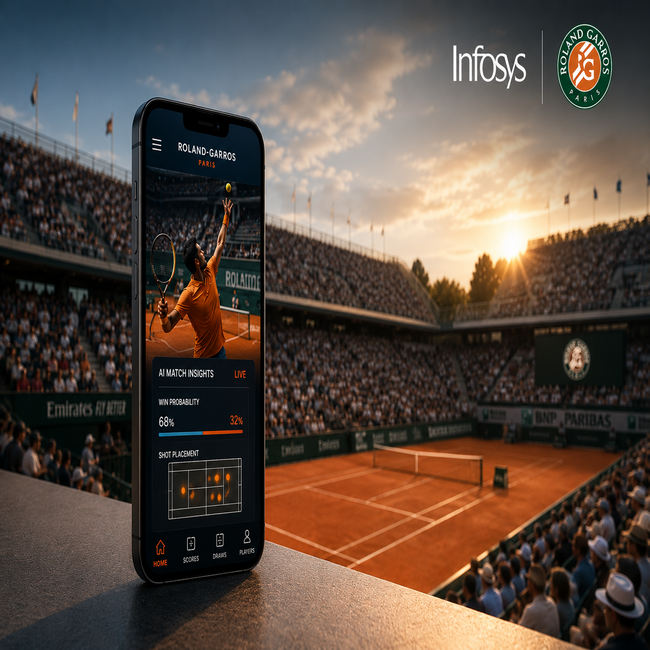
According to the announcement, the extended collaboration will continue integrating AI technologies into fan-facing digital platforms designed to improve real-time match insights, personalised content delivery, and interactive viewing experiences. Industry analysts say the move reflects the growing role of artificial intelligence in sports entertainment and audience engagement.
Sports organisations globally are increasingly investing in AI-powered technologies to strengthen fan retention, digital viewership, and data-driven engagement strategies. From predictive analytics and automated highlights to personalised recommendations and multilingual content delivery, AI systems are becoming central to modern sports broadcasting ecosystems.
Infosys said the partnership extension will support new AI-enabled experiences aimed at improving accessibility and digital interaction for tennis audiences worldwide. The collaboration is expected to include generative AI tools, player analytics, interactive match insights, and immersive storytelling features integrated across Roland-Garros digital platforms.
Industry observers note that major sports tournaments are increasingly competing not only for stadium attendance and television audiences but also for sustained digital engagement across mobile, streaming, and social platforms. Technology partnerships are becoming critical for delivering continuous fan interaction beyond live matches.
The Roland-Garros collaboration also reflects how enterprise technology companies are using sports partnerships to showcase AI capabilities within large-scale consumer environments. Sports events provide high-visibility platforms for demonstrating real-time analytics, cloud systems, automation, and digital engagement technologies.
Technology experts say AI adoption in sports has accelerated significantly over the past few years due to advances in data processing, machine learning, and generative content systems. Tournament organisers and broadcasters are now using AI to generate insights, optimise viewing experiences, and personalise fan communication.
Infosys has expanded its sports technology portfolio across tennis, motorsports, and other global sporting events. The company has increasingly focused on AI-driven fan engagement systems as part of its broader digital transformation and enterprise technology strategy.
Industry analysts believe sports technology partnerships are becoming more commercially valuable because digital fan experiences increasingly influence sponsorship, advertising, streaming engagement, and global brand visibility. AI-enabled systems also help organisations gather deeper audience insights and behavioural data.
The collaboration reportedly aims to create more immersive experiences for fans following Roland-Garros across digital channels. AI tools are expected to support multilingual accessibility, player performance analysis, match predictions, and contextual storytelling features during tournament coverage.
Global sports organisations are under increasing pressure to modernise audience engagement as younger consumers shift toward mobile-first and digitally interactive viewing behaviours. Personalised content and real-time engagement tools are becoming central to sports media strategies.
Industry experts say generative AI could significantly reshape sports broadcasting and fan interaction by automating content creation, summarisation, commentary assistance, and personalised highlight generation. Several major sports leagues and tournament operators are already experimenting with AI-powered production systems.
At the same time, analysts caution that AI adoption in sports also raises questions around data privacy, athlete analytics governance, and the balance between automation and human storytelling within sports media ecosystems.
The partnership extension comes as technology firms globally intensify investments in AI applications capable of supporting entertainment, media, and consumer engagement industries. Sports continue to emerge as a major testing ground for interactive AI-driven experiences because of their large, globally distributed audiences.
Industry observers believe digital fan engagement will become increasingly important for tournament operators seeking long-term audience growth and commercial sustainability. AI-powered personalisation and immersive experiences are expected to play a larger role in future sports consumption models.
The renewed Infosys-Roland-Garros partnership highlights how artificial intelligence is becoming deeply integrated into the global sports industry. Analysts expect sports technology ecosystems to continue evolving as tournaments, broadcasters, and technology firms invest in AI-driven audience engagement, real-time analytics, and digital fan experiences across global entertainment markets in the years ahead.