
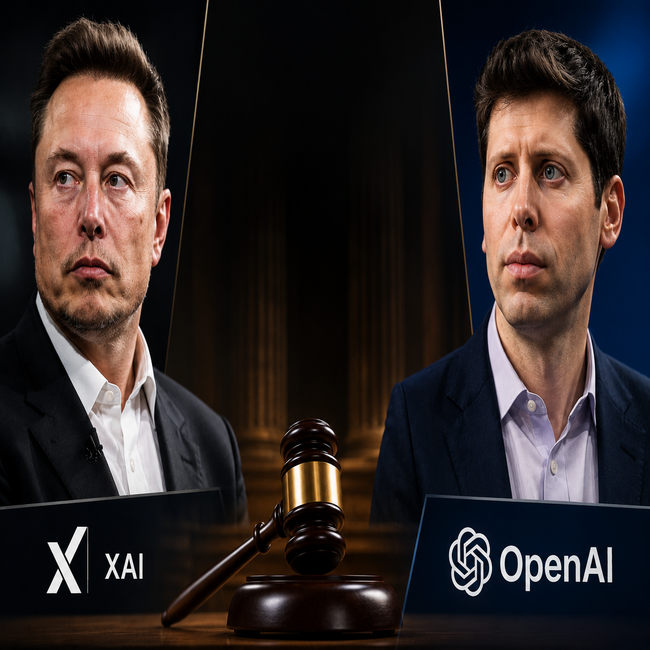

Elon Musk has reportedly lost his lawsuit against Sam Altman and OpenAI in the latest development surrounding the high-profile legal and strategic dispute involving the artificial intelligence company’s direction and governance structure.
According to reports, the court ruled against Musk’s claims linked to OpenAI’s operational and organisational evolution, marking a significant moment in the ongoing tensions between the Tesla and xAI chief and the company he helped co-found in 2015. The legal battle has drawn widespread attention across the global technology industry.
Industry observers say the case reflects broader disagreements emerging across the artificial intelligence sector around governance, commercialisation, transparency and the future control of advanced AI systems.
The broader AI industry has witnessed rapid expansion over the past two years as generative AI platforms become increasingly integrated into enterprise technology, digital services and consumer applications. OpenAI remains one of the most influential companies within the global AI ecosystem.
Reports suggest Musk’s legal arguments focused on concerns surrounding OpenAI’s transition toward commercial operations and its relationship with Microsoft. The dispute has intensified debate around how advanced AI companies should balance public-interest goals with commercial growth strategies.
Industry analysts believe legal and governance conflicts are becoming increasingly common as AI companies attract major investment, scale globally and compete for dominance within rapidly growing enterprise AI markets.
The latest ruling also highlights intensifying competition between major AI companies and technology leaders as generative AI becomes central to digital infrastructure, enterprise productivity and software development ecosystems.
Reports indicate Musk has continued criticising OpenAI publicly while simultaneously advancing his own AI ventures through xAI and related technology initiatives. Competition within the AI industry has accelerated significantly over the past year.
Industry executives say governance, transparency and safety concerns are becoming more important as AI systems grow more powerful and commercially influential. Regulators globally are also examining how AI companies operate and scale.
Analysts believe the dispute reflects deeper questions around whether advanced AI systems should remain open, publicly accountable or commercially controlled by private organisations. Governance models remain a major point of debate within the industry.
At the same time, experts continue raising concerns around market concentration, infrastructure dominance and the influence of major technology companies within the rapidly expanding AI ecosystem. Questions surrounding competition and access remain central to policy discussions.
Reports suggest OpenAI continues expanding enterprise partnerships, AI infrastructure and consumer-facing products despite mounting scrutiny and competitive pressures from rivals across the sector.
Industry observers note that legal disputes involving AI companies are likely to increase as governments, investors and technology leaders attempt to define ownership, accountability and ethical standards within rapidly evolving AI markets.
The global AI sector has witnessed unprecedented investment activity as businesses race to build generative AI tools, enterprise automation systems and advanced computing infrastructure. AI competition continues intensifying internationally.
Industry executives say companies developing foundational AI systems face increasing pressure to balance innovation speed with governance frameworks, operational transparency and responsible deployment practices.
Reports indicate regulators across multiple countries are examining AI governance structures, competition concerns and potential societal impacts as generative AI adoption accelerates across industries and public institutions.
Analysts believe disputes involving major AI organisations could influence future regulatory approaches and shape how governments oversee advanced artificial intelligence companies. Legal and policy frameworks around AI remain in early stages globally.
The latest ruling against Elon Musk underscores how governance and commercial strategy have become central issues within the rapidly evolving AI industry. Industry experts say debates around control, accountability and competition are likely to intensify further as artificial intelligence becomes more deeply embedded across enterprise systems, consumer technology and global digital infrastructure in the coming years.