
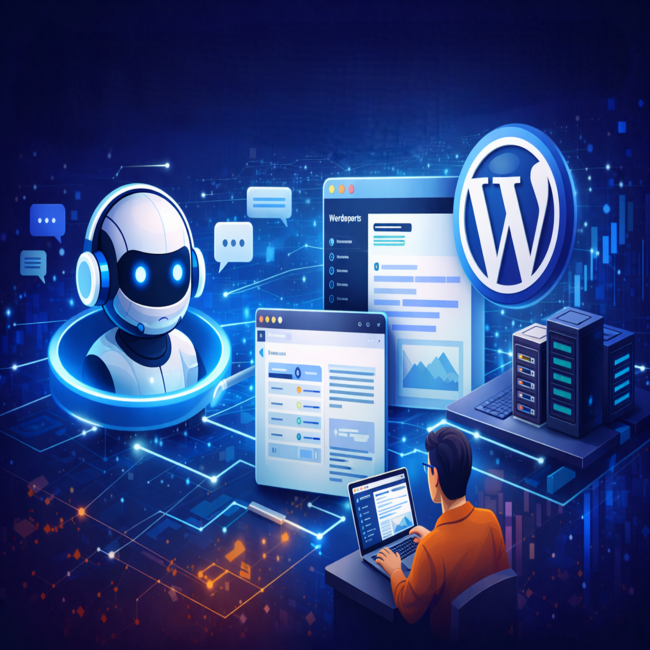

Anthropic has announced updates to its Claude artificial intelligence platform that make it easier for the AI model to access, monitor and interact with websites built on WordPress. The enhancements are aimed at developers, content creators and site owners who want to leverage generative AI tools for managing tasks such as site monitoring, page updates and content generation.
Content management systems like WordPress power a large share of the web and are widely used by businesses, bloggers and publishers. Anthropic’s move to extend Claude’s capabilities to WordPress reflects a broader trend of integrating AI models with popular digital infrastructure tools. By providing smoother access to site data and workflows, the company seeks to reduce technical friction for users who might otherwise need to use plugins or manual processes to connect their sites to third-party AI services.
The new functionality allows users to connect Claude to a WordPress site using secure authentication credentials. Once connected, the AI can check site status, review recent content changes and assist with administrative tasks. Earlier versions of Claude required users to employ more complex setup procedures or intermediate connectors to perform similar actions. The streamlined integration is designed to give website teams more direct control and visibility into how AI interacts with their content and structure.
Anthropic has been positioning Claude as a general purpose AI assistant that can support a wide range of business and creative workflows. The company says that giving Claude the ability to work with WordPress sites is part of this broader strategy. WordPress is one of the most widely adopted content management frameworks in use today, and the integration could make AI-assisted tools more accessible to a large community of users who manage web content professionally and personally.
To connect Claude to a WordPress site, users must provide the AI with the appropriate permissions through a secure API key or other approved authentication method. Once connected, Claude can generate content drafts, outline updates, summarise recent posts and help identify issues that may need attention. The tool can also suggest edits, assist in keyword optimisation and support planning editorial tasks. All interactions take place within the framework of standard content management workflows, preserving the core architecture and security model of the WordPress platform.
Anthropic says that the integration has been engineered with privacy and security considerations in mind. WordPress site owners retain control over what level of access is granted to Claude, and sensitive information is protected through encryption and access controls. The company encourages users to follow best practices for API key management and to ensure that they review permissions before enabling AI access to their content management system.
The launch of WordPress support for Claude comes amid rising interest in generative AI tools that help automate routine tasks across digital platforms. Businesses and independent creators alike have been exploring ways to use AI to reduce manual work, speed up content production and improve operational efficiency. The availability of integrated AI assistants within content management environments like WordPress can potentially alter how teams approach publishing calendars, editorial review cycles and quality control.
Developers have reacted to the update with cautious optimism. Some see the enhanced integration as a valuable step toward reducing the complexity of deploying AI workflows on common web platforms. Others note that the success of such tools will depend on clear user interface design and reliable performance when interacting with dynamic site content. In particular, scenarios involving multimedia, custom themes or nonstandard plugins may require thoughtful handling to ensure smooth AI operation.
WordPress itself has a large ecosystem of plugins and extensions that add functionality for SEO, analytics and security. Anthropic says that Claude’s WordPress support is designed to work alongside these tools without disrupting their operation. For example, the AI can help interpret analytics reports or make suggestions for metadata optimisation that complement existing SEO plugins. Integration tests have been conducted to validate compatibility with popular extensions, though site owners are advised to test the configuration in staging environments before enabling AI on live sites.
Anthropic’s Claude is part of a growing field of generative AI applications that bridge conversational intelligence with practical task execution. The company has focused on building models that are safe, steerable and contextually aware. By extending Claude’s reach into content management systems like WordPress, Anthropic is addressing a core need for tools that can help users manage the volume and pace of digital publishing.
The update also reflects larger shifts in how AI tools are being embedded into workflows across industries. In creative and publishing sectors, content teams are increasingly experimenting with AI to augment writing, editing and ideation processes. Integrated AI assistants are being tested for roles ranging from drafting newsletters to producing technical documentation. WordPress integration positions Claude within this landscape as a tool that can be directly plugged into daily work routines for site management and content creation.
Users interested in connecting Claude with their WordPress sites should review documentation provided by Anthropic that outlines setup steps, security considerations and examples of supported tasks. The integration is available to users with appropriate access to the AI platform and a compatible WordPress installation. Anthropic recommends that site owners assess their content workflows and determine where AI support can add value before enabling the connection.
The company has also signalled plans to broaden Claude’s ecosystem of integrations to include additional content platforms and developer tools. While WordPress remains an important first step due to its widespread adoption, future updates may expand support to other content management systems, ecommerce platforms and business productivity tools. This would extend the reach of AI-assisted content management and broaden the range of tasks that can be automated or augmented with AI support.
Early adopters of the WordPress integration have cited improvements in workflow efficiency and content planning. Teams that previously spent hours drafting and revising posts say that Claude’s suggestions help accelerate the process while maintaining editorial quality. At the same time, professionals emphasise the importance of human oversight, noting that AI can assist but not replace editorial judgement.
As generative AI continues to evolve, integrations like the one between Claude and WordPress point to a future where digital platforms and artificial intelligence work more closely together. The balance between automation and human control will be central to how these tools are adopted and trusted. For now, the new capabilities make it easier for WordPress site owners to experiment with AI assistance and gain insights into how generative tools can support their digital publishing needs.