
Multilingual artificial intelligence could help improve access to healthcare services in India by addressing language barriers between patients and medical professionals, according to Amitabh Nag, CEO of the Digital India BHASHINI Division (DIBD).
Speaking at the Global Digital Health Summit (GDHS) 2026 in New Delhi on Sunday, November 22, Nag highlighted the role of language technologies in improving doctor-patient communication, simplifying clinical documentation and making medical information more accessible across India's linguistically diverse population.
He emphasised that language remains an important but frequently overlooked component of digital healthcare infrastructure. According to Nag, effective healthcare delivery involves more than diagnosis and treatment, with communication and empathy playing a significant role in establishing trust between patients, doctors and caregivers.
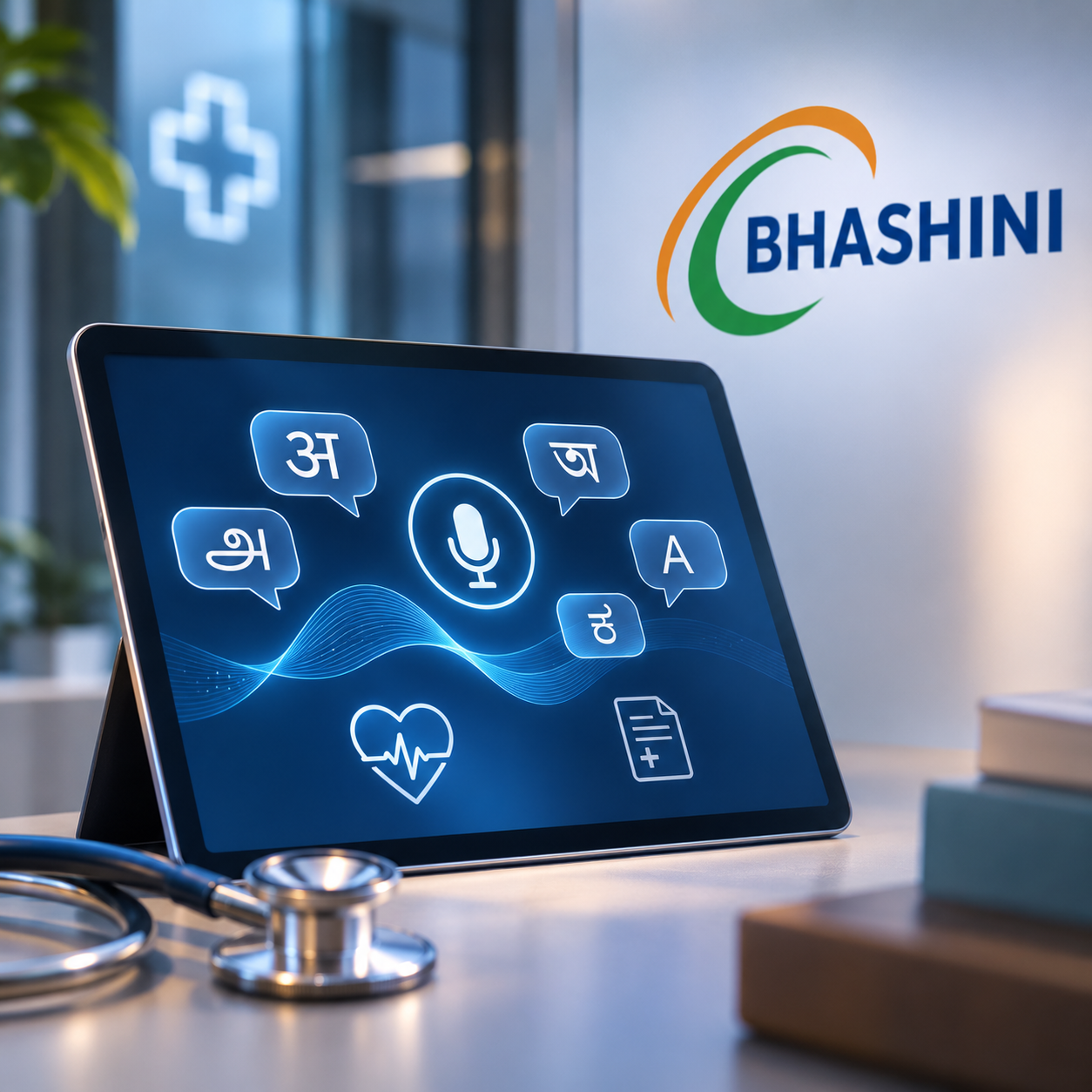
During the two-day summit, BHASHINI showcased its multilingual AI ecosystem and demonstrated how language-based technologies could be integrated into healthcare services and clinical workflows.
The initiative focuses on enabling patients to communicate medical concerns and understand healthcare information in their preferred languages, particularly in situations where language differences may affect interactions with medical professionals.
Nag highlighted the importance of supporting regional languages, including Bodo, Marathi, Punjabi and Maithili, to make healthcare communication more accessible. He noted that allowing patients to describe their symptoms and concerns in familiar languages could help improve their understanding of medical information and interactions with healthcare providers.
As part of its efforts, BHASHINI also highlighted BhashaDaan for Health, an initiative designed to encourage community participation in developing language resources for healthcare applications.
The programme seeks to strengthen multilingual AI capabilities by incorporating language contributions that can support medical communication and public health services.
Another initiative, Data Daan for Health, focuses on developing multilingual healthcare datasets by collecting commonly used expressions for symptoms and medical conditions and linking them with corresponding clinical terminology.
The initiative aims to capture how individuals describe health concerns in everyday conversations, including regional expressions that may differ from standard medical vocabulary.
Such datasets could support the development of AI-powered healthcare applications capable of recognising variations in language usage and interpreting patient-reported symptoms more effectively.
BHASHINI also highlighted the potential for multilingual AI to extend beyond conventional translation services by becoming part of the broader digital healthcare infrastructure.
The proposed applications include supporting clinical documentation, improving communication during medical consultations and expanding access to health-related information for communities with different linguistic backgrounds.
The developments form part of ongoing efforts to strengthen India's digital healthcare ecosystem through language technologies and improve the accessibility of technology-enabled public services.
While the summit outlined potential applications and ongoing initiatives, specific implementation timelines and measurable outcomes for the healthcare-focused programmes were not disclosed.
Disclaimer: This article may include information derived from interviews, press releases, public statements, research, company communications and other publicly available or third-party sources. Such material may be summarised, paraphrased or contextualised for journalistic and editorial purposes. All rights in third-party content remain with their respective owners.