
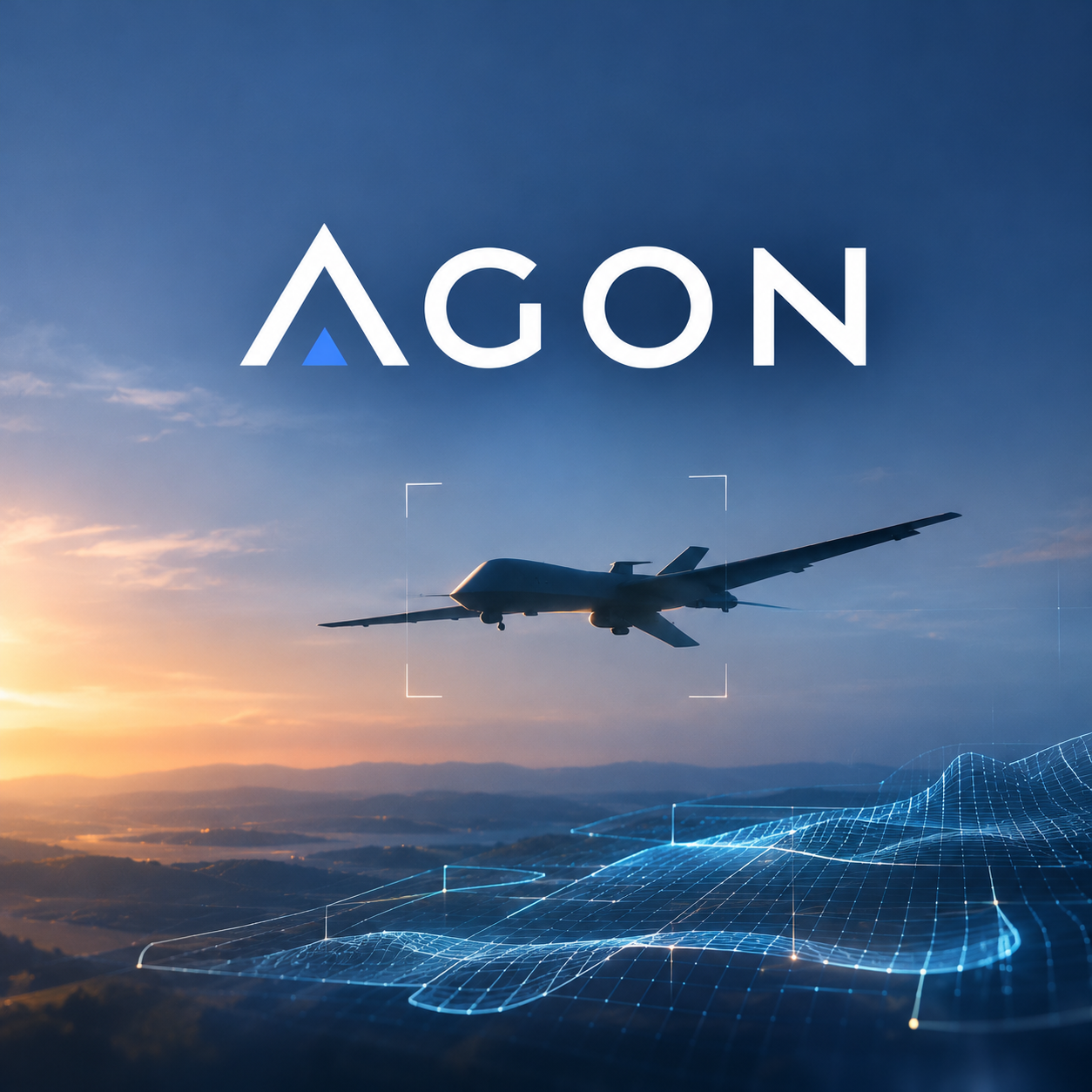

Agon, a UK- and Berlin-based artificial intelligence startup focused on defence technology, has raised $70 million in a Series A funding round at a valuation of $450 million. The investment will support the company's expansion from AI simulation infrastructure into developing foundation models for autonomous defence systems.
The funding round was led by Northzone, with participation from existing investors Lakestar, XYZ, Lux Capital and Global Founders Capital. The UK Sovereign AI Fund and the National Security Strategic Investment Fund (NSSIF) also participated, while former Sequoia Capital executive Roelof Botha joined as an investor.
The announcement comes less than five months after Agon emerged from stealth with $30 million in funding, bringing its disclosed fundraising to $100 million.
According to Tectonic Defense, Agon plans to use the latest investment to develop its existing synthetic training platform into an AI research laboratory focused on European defence applications.
Agon founder and CEO Tristam Constant said the company initially concentrated on building infrastructure for training defence AI systems but identified an opportunity to develop foundation models specifically designed for autonomous military applications.
The startup was founded earlier this year by Constant, who previously worked with Applied Intuition, Anduril and the British Army, alongside Junaid Hussain, who has been associated with Cambridge Aerospace and Iconic.
The company is chaired by David Helgason, founder of game engine developer Unity, and has recruited professionals with experience at organisations including Google, Palantir, Amazon, Helsing and Anduril.
Agon's original platform was developed as a virtual environment for training and evaluating autonomous systems against simulated threats. The technology allows developers to conduct experiments in digital environments before testing systems under real-world conditions.
The company maintains that simulation-based testing can reduce the costs and operational challenges associated with evaluating autonomous technologies, particularly when testing scenarios that would be difficult or dangerous to reproduce physically.
Hussain said real-world experimentation presents limitations in cost, speed and scalability, making synthetic environments important for assessing how autonomous systems respond to different conditions.
Agon now intends to extend these capabilities by developing foundation models that could support autonomous systems across the defence industry.
The company said its training environments incorporate information from defence sources, customers and publicly available datasets. However, it has not disclosed the specific sources or composition of its training data.
Most of the new funding will be allocated towards recruiting AI researchers and expanding computing infrastructure to support model development and research activities.
Constant described the investment as part of the company's next phase of expansion, citing growing international competition in defence-related artificial intelligence.
The funding reflects continued investor interest in AI infrastructure and autonomous defence technologies as European companies seek to develop specialised models and simulation capabilities for military applications.
Disclaimer: This article may include information derived from interviews, press releases, public statements, research, company communications and other publicly available or third-party sources. Such material may be summarised, paraphrased or contextualised for journalistic and editorial purposes. All rights in third-party content remain with their respective owners.