
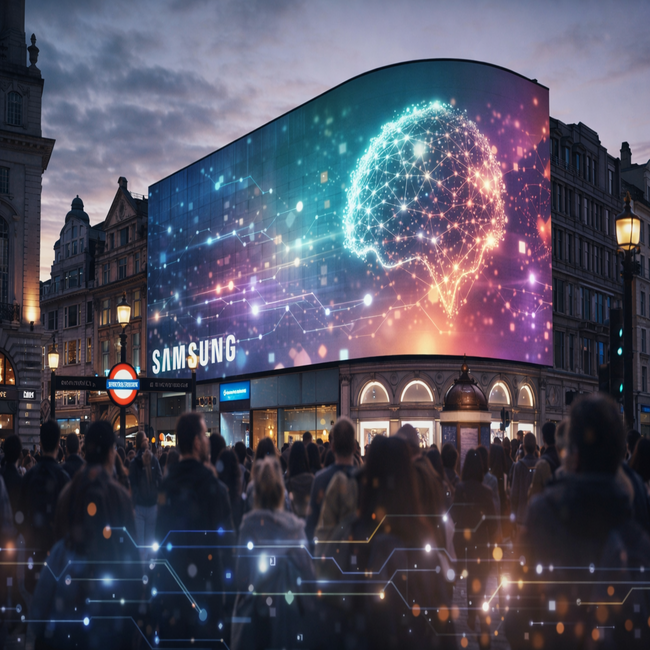

Samsung Electronics has introduced a new data-driven digital experience at London’s iconic Piccadilly Circus, using artificial intelligence and real-time environmental data to create dynamic visual content on one of Europe’s most prominent out-of-home billboards. The activation was developed in collaboration with integrated digital marketing and advertising agency Cheil UK, supported by media partners, and is designed to bring the live energy of the city to life through responsive visuals that highlight Samsung’s AI-enabled technology ecosystem.
The Landmark digital installation captures a range of real-time signals including anonymised crowd movement, local weather conditions and time-of-day data. These inputs are processed through a custom built system that generates a “Mood Score” for the area. The Mood Score then determines which of six creative mood states is displayed across the Piccadilly Lights screen, offering passersby a visually engaging experience that reflects London’s rhythm and activity.
On the launch day, the activation featured a lighting takeover that synchronised the surrounding architecture with themed content and colours tied to the mood states. The installation is scheduled to remain active for several days, with the responsive screen creative continuing to adapt to changes around Piccadilly Circus. The work aims to demonstrate how artificial intelligence can be harnessed to create real-time, context-aware digital content that mirrors urban life.
According to campaign leaders, the concept draws on the principle that technology should adapt to people’s changing needs and motivations. As lifestyles evolve toward healthier, more balanced routines, the installation is intended to show how AI-enabled products and services can support everyday moments across categories such as home, health, entertainment and productivity. The creative aims to link each of these categories to one of the mood states displayed on the screens, reinforcing how connected technology can integrate with daily life.
The installation has been positioned as both a showcase of Samsung’s AI leadership and a demonstration of how data and machine learning can be used in public facing media. By tapping into anonymised data that is processed securely on site, the experience avoids the use of facial recognition, personal identifiers or recorded imagery. Only numerical data derived from the environment is used to trigger creative outputs, ensuring that privacy considerations are maintained throughout.
Cheil UK, which worked on the activation, has described the project as a rare creative feat that brings together data, AI and visual storytelling in a way that resonates with residents and visitors alike. The campaign also highlights Samsung’s broader commitment to artificial intelligence across its consumer technology portfolio, including connected devices and AI-enabled platforms that support personalised experiences.
The Piccadilly Circus installation follows a broader trend in digital out-of-home advertising, where brands leverage real-time data and AI to create immersive experiences that go beyond static messaging. By linking the visuals to live conditions, the activation aims to make the content feel relevant and continually refreshed, rather than predefined and static.
Marketing and technology observers say that such activations are part of a growing emphasis on responsive brand experiences that leverage artificial intelligence to adapt in real time. As cities become more connected and digital signage infrastructure evolves, campaigns like Samsung’s reflect how marketers are testing new ways to engage audiences with contextually relevant content that can shift alongside local conditions.
The campaign has been rolled out on one of Piccadilly Circus’s largest screens, a landmark digital canvas that regularly hosts brands seeking global visibility. With hundreds of square metres of LED display area, the screen is a high-traffic platform that draws the attention of both commuters and tourists in London’s West End. The choice of this location underscores the campaign’s ambition to reach a broad audience with an innovative use of technology.
In addition to the digital experience, Samsung’s presence in Piccadilly Circus forms part of a larger pattern of global outdoor activations that include landmarks such as Times Square in New York. These initiatives reflect the company’s strategy to promote its artificial intelligence offerings and connected technologies in high-visibility locations worldwide. By turning public spaces into dynamic, AI driven stages, Samsung aims to highlight how its products fit into the everyday lives of consumers.
The use of real-time data to influence creative output also points to a larger shift in how brands think about context and relevance in advertising. Instead of serving generic visuals, adaptive content can respond to fluctuations in mood and movement, potentially making digital signage more engaging and meaningful. Such approaches are gaining traction as marketers explore how to blend technology, art and live data in public media.
Samsung has stated that the installation is part of its belief that technology should understand and respond to the ebb and flow of life. Brand representatives have said that experiences like the one at Piccadilly Circus offer a tangible demonstration of how artificial intelligence can be applied outside of traditional screens and devices, bringing a sense of continuity between digital and physical environments.
The activation is expected to run for a limited period, with responsive creative continuing to reflect live data signals throughout its course. As it unfolds, industry watchers and the public alike will observe how the installation resonates with audiences and how such applications of AI shape future campaigns in digital out-of-home media.